

How Are Jackets Made? The 2025 Guide for Fashion and Function


Jackets might look simple, but the way they come together in 2025 is anything but ordinary. Many people think style is all that matters, yet new fabrics and expert techniques have pushed these garments into a whole new league. One wild fact is that jackets now use recycled polyester made from plastic bottles and digital tools for custom fitting right in your browser. That is only the start, because the real surprise is how comfort, tech, and sustainability now shape every step of how jackets are made.
Table of Contents
- Raw Materials Used In Modern Jackets
- Crafting Techniques For Style And Safety
- Custom And Celebrity Jacket Trends In 2025
- Choosing The Perfect Jacket For Your Lifestyle
Quick Summary
| Takeaway | Explanation |
|---|---|
| Natural materials enhance jacket quality | Leather, wool, and other natural fibers offer unique benefits like durability, warmth, and moisture management in jackets. |
| Synthetic materials provide advanced performance | Innovations like Gore-Tex and high-tech synthetics deliver superior features such as breathability and water resistance, ideal for extreme conditions. |
| Personalization is now mainstream | Custom jacket design has become accessible, allowing consumers to express identity through unique styles and smart technology integration. |
| Sustainability is a priority in jacket design | Eco-friendly materials, like recycled polyester and plant-based alternatives, drive new trends in the fashion industry, balancing style with environmental responsibility. |
| Choose jackets based on lifestyle needs | Different activities and climates require specific jacket features; understanding these can help select functional and stylish options that enhance comfort and performance. |
Raw Materials Used in Modern Jackets
Modern jacket manufacturing represents a sophisticated blend of traditional craftsmanship and innovative material science. The selection of raw materials plays a crucial role in determining a jacket’s performance, durability, and aesthetic appeal. Understanding the diverse range of materials used in jacket production reveals the complex engineering behind every garment.
Natural Fibers and Animal Hides
Natural materials remain fundamental in jacket construction. Leather has long been a premium choice for creating high-quality outerwear. According to Britannica, modern jackets utilize an expansive array of materials including woven and knitted fabrics, animal hides, and skins. Specific leather types such as antelope, buckskin, goatskin, sheepskin, horsehide, and cowhide offer unique characteristics. Goatskin provides exceptional softness and durability, while cowhide delivers robust protection against harsh environmental conditions.
Wool remains another critical natural fiber, prized for its exceptional thermal regulation and moisture-wicking properties. Merino wool, in particular, offers superior temperature control and natural odor resistance, making it ideal for performance jackets designed for variable weather conditions.
Synthetic and Engineered Materials
Synthetic materials have revolutionized jacket manufacturing by introducing advanced performance capabilities. Polyester, nylon, and advanced synthetic blends provide lightweight, water-resistant, and quick-drying properties that natural fibers cannot match. The U.S. Environmental Protection Agency’s research highlights an emerging trend of designing jackets with materials that facilitate easier recycling and value retention.
Technical fabrics like Gore-Tex and other membrane materials represent the pinnacle of synthetic innovation. These advanced textiles offer breathability, waterproofing, and wind resistance while maintaining minimal weight. Manufacturers strategically layer these materials to create jackets that perform exceptionally in extreme environments.
Sustainable and Innovative Material Developments
The jacket manufacturing industry is increasingly focusing on sustainable material alternatives. Recycled polyester, derived from plastic bottles, offers an environmentally conscious approach to producing high-performance outerwear. Innovative materials like mushroom leather and plant-based synthetic alternatives are emerging as potential game-changers in sustainable jacket production.
Advanced composite materials are pushing the boundaries of jacket design. Graphene-infused fabrics provide unprecedented thermal regulation, while materials incorporating phase-change technology can actively manage body temperature. These cutting-edge developments demonstrate how jacket manufacturing continues to evolve, blending scientific innovation with fashion-forward design.
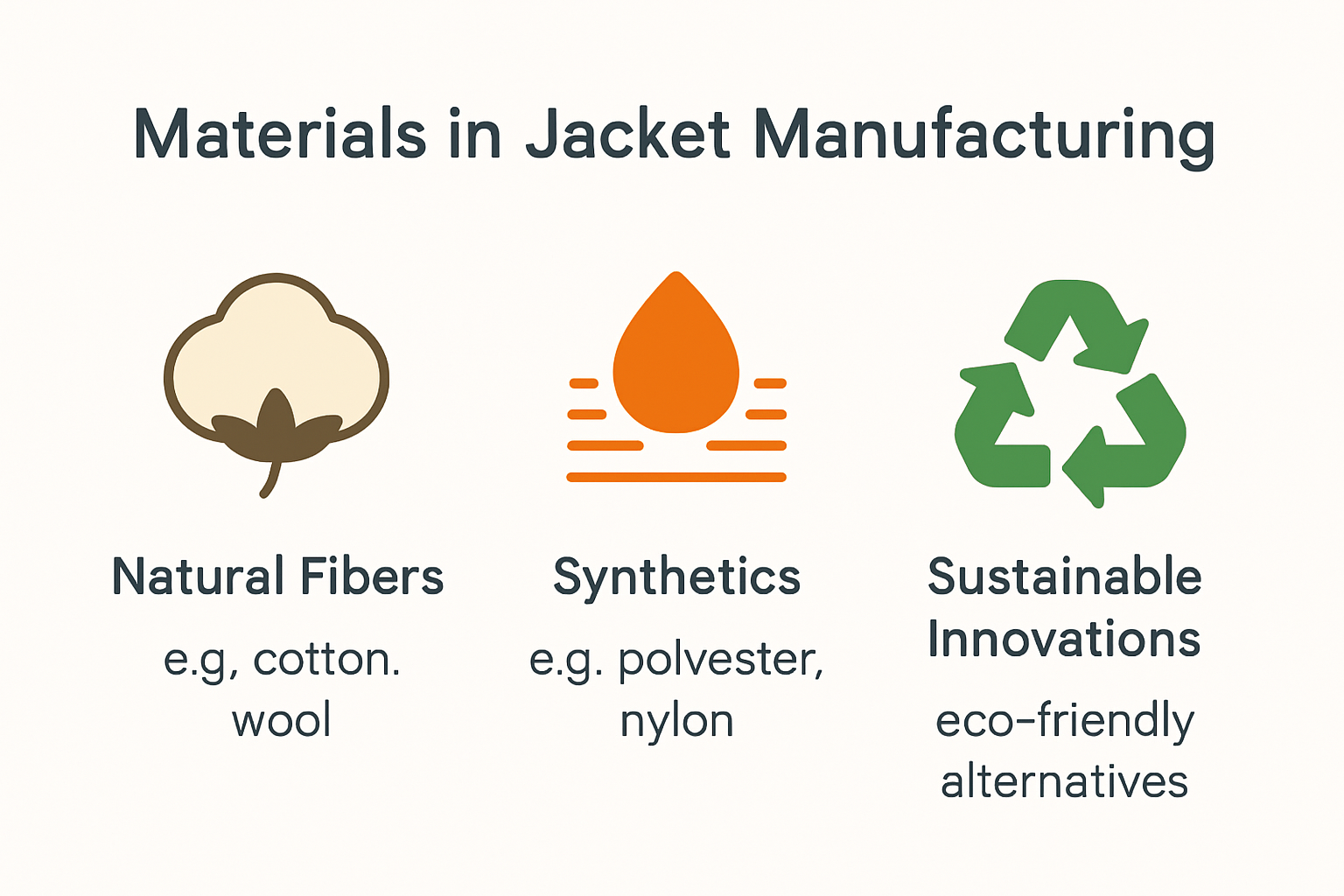

The selection of raw materials is not merely a technical decision but an intricate balance between performance, sustainability, comfort, and aesthetic appeal. As technology advances and environmental consciousness grows, we can expect continued innovation in the materials used to create the jackets of tomorrow.
To help you compare the types of materials used in modern jacket manufacturing, here’s a summary table highlighting their key characteristics and benefits:
| Material Type | Key Examples | Main Benefits |
|---|---|---|
| Natural Fibers & Animal Hides | Leather (cowhide, goatskin), Wool | Durability, thermal regulation, comfort |
| Synthetic & Engineered Materials | Polyester, Nylon, Gore-Tex | Lightweight, water resistance, performance features |
| Sustainable/Innovative Materials | Recycled polyester, mushroom leather | Eco-friendly, innovative, future-oriented |
| Advanced Composites | Graphene-infused, phase-change fabrics | Thermal regulation, smart adaptation |
Crafting Techniques for Style and Safety
Jacket manufacturing is a complex process that balances artistic design with technical precision. The crafting techniques employed transform raw materials into functional and stylish garments that protect and enhance the wearer’s experience.
Precision Cutting and Pattern Making
The foundation of exceptional jacket construction begins with meticulous pattern making and cutting. Modern manufacturers utilize advanced computer-aided design (CAD) systems to create precise templates that minimize material waste and ensure consistent sizing. Lean manufacturing methodologies have revolutionized this process, allowing for more efficient production strategies.
According to research published in the lean manufacturing journal, value stream mapping techniques have significantly improved garment production efficiency. These methods allow manufacturers to optimize each stage of jacket creation, from initial design to final assembly, reducing both material waste and production time.
Specialized Stitching and Construction Techniques
Stitching represents the critical junction between design and durability. Different jacket styles require unique construction approaches. Leather jackets demand robust techniques that ensure long-lasting wear, while performance jackets require specialized stitching that maintains waterproofing and structural integrity.
A fascinating study in ‘Fashion and Textiles’ explored the critical role of fabric finishes in protective clothing. Research from the textile safety study demonstrated how specific stitching and fabric treatments can dramatically enhance a garment’s protective capabilities. For instance, specialized thread types and reinforced seam techniques can improve a jacket’s resistance to environmental challenges and potential hazards.
Safety and Performance Engineering
Modern jacket crafting goes far beyond aesthetic considerations. Manufacturers now integrate advanced safety features directly into the construction process. Thermal protective layers, strategic reinforcement points, and ergonomic design elements transform jackets from simple coverings to sophisticated personal protection systems.
Advanced composite materials and innovative construction techniques allow for jackets that adapt to different environmental conditions. Specialized quilting methods create thermal pockets that enhance insulation, while strategic ventilation zones prevent overheating. Manufacturers employ complex engineering principles to create garments that provide optimal protection without compromising comfort or style.
The art of jacket crafting represents a sophisticated blend of traditional craftsmanship and cutting-edge technology. Each stitch, seam, and material selection tells a story of innovation, carefully balancing form, function, and safety. As manufacturing techniques continue to evolve, we can expect jackets that are increasingly intelligent, adaptive, and precisely engineered to meet the complex demands of modern wearers.
To better understand how various crafting techniques relate to different jacket needs, the table below summarizes key methods and their applications:
| Crafting Technique | Description | Primary Application/Benefit |
|---|---|---|
| CAD Pattern Making | Computer-aided design for patterns | Precision, reduced waste, efficient sizing |
| Lean Manufacturing Methods | Streamlined processes for efficiency | Faster production, less waste |
| Specialized Stitching (e.g., seam sealing) | Specific threads and seams for durability | Waterproofing, longevity, structure |
| Reinforced Seam Techniques | Additional stitching at stress points | Enhanced durability, environmental resistance |
| Thermal Quilting | Layered pockets for insulation | Improved warmth, heat retention |
| Ventilation Zone Engineering | Strategically placed breathable areas | Comfort, moisture control, performance |
Custom and Celebrity Jacket Trends in 2025
The jacket manufacturing landscape in 2025 is characterized by an unprecedented fusion of personalization, technological innovation, and cultural influence. Celebrity endorsements and custom design options are transforming how consumers perceive and interact with outerwear.
Personalization and Digital Customization
Custom jacket design has evolved from a niche market to a mainstream expectation. Pop culture trends are driving consumers toward unique, individually tailored garments that reflect personal identity. Advanced digital platforms now allow customers to virtually design jackets using augmented reality technologies, enabling real-time visualization of design modifications.
Technology has democratized jacket design, making sophisticated customization accessible to everyone. 3D modeling software and digital fabric printing techniques enable intricate personalization previously reserved for haute couture. Consumers can now incorporate personal artwork, select precise color gradients, and even integrate smart technology interfaces directly into their jacket designs.
Celebrity and Cultural Influence
Celebrity collaborations continue to significantly shape jacket design trends in 2025. Musicians, actors, and social media influencers are not just endorsing jackets but actively participating in their design process. These partnerships create limited edition collections that blur the lines between fashion, personal branding, and artistic expression.
Influencers are driving demand for jackets that tell a story. Vintage-inspired designs with modern technological enhancements are particularly popular. Jackets that incorporate elements from specific film characters, music genres, or cultural movements represent more than just clothing – they are statements of personal and collective identity.
Sustainable and Ethical Custom Design
In 2025, custom jacket trends are increasingly intertwined with sustainability and ethical production. Consumers demand transparency in manufacturing processes, seeking jackets that not only look exceptional but are also environmentally responsible. Recycled materials, carbon-neutral production methods, and fair labor practices have become key considerations in custom jacket design.
Advanced biomaterials and circular design principles are revolutionizing custom jacket manufacturing. Jackets can now be designed with end-of-life recycling in mind, allowing for modular components that can be easily disassembled and repurposed. This approach represents a significant shift from traditional linear manufacturing models toward a more sustainable, circular economy.
The custom jacket landscape of 2025 represents a dynamic intersection of technology, personal expression, and ethical consciousness. As boundaries between digital and physical design continue to blur, jackets are no longer just garments – they are personalized canvases that reflect individual creativity, cultural narratives, and technological innovation.
Choosing the Perfect Jacket for Your Lifestyle
Selecting the ideal jacket involves more than aesthetic preferences – it requires a strategic approach that considers personal lifestyle, functional needs, and individual style. The perfect jacket serves as a versatile companion that adapts to diverse environments and personal requirements.
Lifestyle Performance Considerations
Understanding your daily activities is crucial when selecting a jacket. Leather jackets offer remarkable versatility for individuals seeking a balance between style and functionality. Urban professionals might prioritize lightweight, water-resistant designs that transition seamlessly between office environments and outdoor settings, while outdoor enthusiasts require jackets with superior thermal regulation and durability.
Consider your primary activities: Are you a motorcycle rider needing protective gear, a commuter navigating urban landscapes, or an adventure enthusiast exploring challenging terrains? Each lifestyle demands specific jacket characteristics. Technical performance fabrics with moisture-wicking properties suit active individuals, while structured designs with multiple pockets work well for professionals carrying electronic devices.
Climate and Environmental Adaptation
Geographic location and typical environmental conditions play a significant role in jacket selection. Jackets are no longer simple protective layers but sophisticated systems engineered to manage temperature, humidity, and physical activity. Individuals living in regions with variable weather patterns require jackets with modular designs that allow quick adaptability.
Multi-layered jackets with removable inner linings provide exceptional versatility. Advanced textile technologies now enable jackets that can regulate body temperature dynamically. Lightweight insulation materials like synthetic down and advanced membrane technologies ensure optimal comfort across different climatic conditions. Windproof outer shells combined with breathable inner layers create a microclimate that maintains consistent body temperature.
Personal Style and Psychological Comfort
Beyond physical performance, jackets represent powerful expressions of personal identity. The psychological comfort derived from wearing a jacket that resonates with your aesthetic preferences is equally important as its technical capabilities. Contemporary jacket design recognizes this intersection between functional performance and personal style.
Color psychology and design elements contribute significantly to jacket selection. Darker tones might convey professionalism and sophistication, while brighter or textured designs communicate creativity and individuality. The jacket becomes an extension of personal narrative, reflecting individual experiences, cultural influences, and personal aspirations.
Choosing the perfect jacket transcends mere clothing selection – it represents a nuanced decision integrating technological innovation, personal lifestyle requirements, and individual expression. As jacket manufacturing continues evolving, consumers can expect increasingly sophisticated options that offer unprecedented levels of customization, performance, and style.
Frequently Asked Questions
What materials are jackets made from in 2025?
Jackets in 2025 are made from a mix of natural fibers like leather and wool, synthetic materials such as polyester and nylon, and innovative sustainable options like recycled polyester and mushroom leather.
How do jacket crafting techniques enhance durability?
Crafting techniques such as precision cutting, specialized stitching, and reinforced seams improve a jacket’s durability, ensuring it withstands wear and performs well in various conditions.
Why is personalization important in modern jackets?
Personalization allows consumers to express their individuality through custom designs, color choices, and integrated technology, making jackets not just functional items but also personal statements.
How do I choose the right jacket for my lifestyle?
Consider your activities, climate, and personal style when selecting a jacket. Look for features that match your needs, such as moisture-wicking properties for active lifestyles or stylish designs for urban environments.
Ready to Experience Next-Level Jacket Innovation?
You have just discovered how jackets in 2025 are blending cutting-edge materials, custom engineering, and personal style. Yet, finding a jacket that truly matches your life can still be tough. Maybe ordinary options do not quite fit your comfort, performance, or unique fashion sense. The good news is you do not have to settle. At Maker of Jacket’s collection, you can turn all the advanced concepts you learned about into reality.
Step up and make your own statement. Browse our curated range of customizable jackets or request a bespoke piece that reflects your personality and needs. Enjoy free worldwide shipping, see real customer reviews, and explore a fast and secure shopping experience at Maker of Jacket today. Your next favorite jacket is waiting—choose it now before our latest designs are gone.


