

How Cowhide Leather Performs Across Seasons: Comfort, Durability & Style for Riders

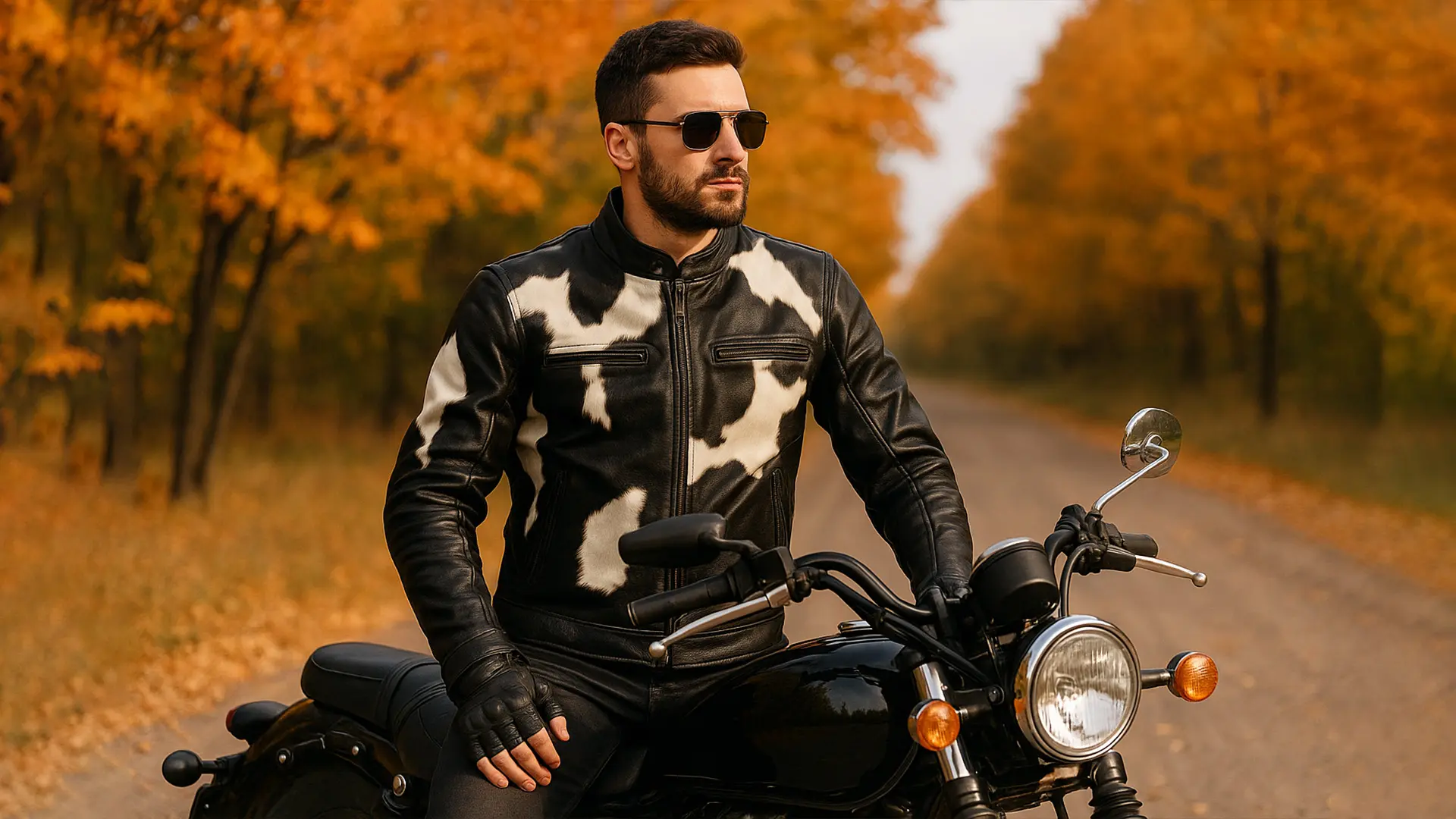
Why I Trust Cowhide Over Other Jackets
Based on my experience riding across climates from sun‑soaked highways to brisk mountain mornings, I’ve found that not all leather jackets perform equally. Cowhide leather jackets, especially those made from full‑grain or top‑grain hides, have a reputation for delivering consistent abrasion resistance, comfort, and timeless style year‑round.
Whether you’re a motorcycle rider, fashion‑forward enthusiast, or a gear buyer looking for protective outerwear, this guide explains:
- How cowhide motorcycle jackets perform in summer, winter, spring, and rainy conditions.
- How they compare to buffalo hide, goatskin, lambskin, and textile riding gear.
- The regulatory safety certifications and technical performance specs that matter.
- Proven care and maintenance practices from leather experts and heritage tanneries.
What Makes Cowhide Specifically Rider‑Ready?
Cowhide, especially full‑grain cowhide, offers a tensile strength averaging 20–25 MPa and tear resistance up to 80–100 N depending on thickness (1.1–1.5 mm). This translates to 4–6 seconds of slide time resistance on the Cambridge abrasion test, which is above most textile gear ratings.
The main leather grades:
- Full‑grain cowhide: Best abrasion resistance, natural grain, develops patina over time
- Top‑grain cowhide: Slightly sanded for uniformity, still highly durable
- Split cowhide: Inner layer, less abrasion resistance, often used in casual jackets
Tanning methods:
- Vegetable‑tanned cowhide: Traditional, breathable, rich patina, less water‑resistant
- Chrome‑tanned cowhide: More water‑resistant, softer break‑in, often used in all‑weather motorcycle jackets
Seasonal Performance: Comfort, Breathability & Thermal Balance
Summer Riding
Without ventilation, thick cowhide can trap heat. Modern designs integrate:
- Perforation density ratings (measured in holes per square inch).
- Zip‑ventilation systems for targeted airflow.
- Moisture-wicking base layers move sweat away from the skin.
- Mesh panel inserts for airflow while retaining protection.
Thermal comfort index testing shows perforated cowhide stays tolerable up to 80–85°F (27–29°C) at typical riding speeds.
Cold & Winter Riding
Full‑grain cowhide provides excellent wind resistance due to its dense fiber structure.
Pairing it with:
- Removable thermal liners (rated in g/m² insulation weight)
- Microfleece or wool mid‑layers
- Snug‑fit patterns like café racer or bomber motorcycle jackets
keeps riders comfortable even below 50°F (10°C).
Rainy & Humid Conditions
Chrome‑tanned cowhide resists moisture better than vegetable‑tanned.
Additional protection comes from:
- Waterproofing sprays (Nikwax, Obenauf’s, Renapur)
- Hydrostatic head rating improvements with treated leathers
- pH‑balanced leather cleaners to maintain suppleness after rain exposure
Humidity can cause mold growth, so post‑ride drying and conditioning are essential.
Spring & Fall: Variable Comfort
During transitional months:
- Zip‑out liners allow quick adaptation to morning‑evening temperature swings
- Adjustable waist tabs and arm gussets help layer flexibility
- Breathability with moderate insulation keeps you in your comfort zone
Durability: Why It Outlasts Other Materials
Cowhide is tested to:
- EN 17092 (protective garment safety standard)
- EN 1621‑1 / EN 1621‑2 (impact protection for armor inserts)
- SATRA & TÜV Rheinland abrasion testing
Compared durability:
| Season/Condition | Wear Factor | Cowhide Performance |
| Summer | UV Exposure | Need SPF SPF-rated leather finish to prevent fading |
| Winter | Dry Cold | Maintains flexibility with quarterly conditioning |
| Rainy/Humid | Moisture | Resists light rain, treat for prolonged wet use |
| Long-term Use | Repeated Abrasion | Gains Patina, Remains Structurally Sound |
Real Rider Voices
“In 100°F (38°C) weather, my perforated cowhide feels manageable as long as I’m moving.” Urban commuter rider, California
“At 50°F with perforated panels, you’ll freeze without a liner.” Touring rider, UK
Comparison: Cowhide vs Other Riding Materials
| Material | Abrasion Resistance | Flexibility | Breathability | Best For |
| Cowhide | 4–6 sec slide time | Medium | Medium (vented) | All‑season touring, café racer |
| Bufflo | 5–6 sec | Stiff | Low | Heavy cruiser riding |
| Goatskin | 3–4 sec | High | Medium | Summer city riding |
| Lambskin | 2–3 sec | High | Medium | Fashion/leisure wear |
| Cordura/Kevlar Textile | 2–4 sec | High | High | Hot climate riding |
| Mash Jacket | <2 sec | High | Very High | Summer commuting |
Expert Buying Guide
When choosing a cowhide motorcycle jacket:
- Full‑grain or top‑grain hide, 1.1–1.5 mm thick
- CE Level 2 armor in elbows, shoulders, and spine
- Double or triple stitching (bonded nylon thread)
- YKK zippers or Vislon Aquaguard
- Reflective piping for night visibility
- Removable liners for climate adaptability
- Heritage leather brands: Maker of Jacket
Pro Care Routine
- Clean quarterly with pH‑neutral leather cleaner (pH 5–7)
- Condition with Lexol, Bickmore, Fiebing’s every 3–4 months
- Waterproof with Nikwax Leather Restorer
- Avoid glycerin‑based cleaners on riding gear
- Store in breathable garment bags away from heat and sunlight
Cultural & Fashion Context
- Perfecto‑style jackets remain a staple in American biker fashion
- Many riders personalize jackets with club patches and embroidered back designs
- Cowhide has crossed into streetwear culture with fashion crossover jackets from brands like Belstaff and Schott NYC
FAQ
Q. Does cowhide leather stretch or shrink over time?
Cowhide leather naturally stretches by about 2–4% over its lifespan as the fibers relax and conform to the rider’s body shape. Thicker leather (1.2–1.4mm) stretches less than lighter weights (0.9–1.1mm).
Humidity accelerates stretching, while dry heat can cause up to 3% shrinkage if the jacket is improperly dried. To avoid permanent distortion, allow the jacket to dry naturally at room temperature and store it in a cool, dry place away from direct sunlight or heaters.
Q. How does the tanning method affect cowhide performance for riders?
Tanning changes how cowhide feels, resists weather, and lasts over time.
- Chrome‑tanned cowhide is softer, resists water better, and is easier to break in, making it ideal for all‑season riding. It typically achieves abrasion slide times of 4–5 seconds in EN 13595 testing.
- Vegetable‑tanned cowhide is stiffer initially but develops a deep patina over time. It is more eco‑friendly, using plant tannins instead of chromium salts. Abrasion resistance is similar to chrome‑tanned, but water resistance is lower unless treated.
Some jackets use semi‑aniline or full‑aniline finishes for appearance and water protection. Chrome tanning is generally preferred for riders needing versatility and weather resistance.
Q. Can cowhide leather be repaired if damaged in a crash?
Minor scuffs, surface scratches, and light abrasions can often be restored using professional leather reconditioning or patch repair kits. Typical repair costs range from $50–$150, depending on damage.
However, if the grain layer is penetrated or the leather is cut through in impact zones (shoulders, elbows), the jacket’s structural safety rating is compromised and it may no longer meet CE safety standards. In such cases, panel replacement or a new jacket is the safer choice for future riding.
Q. What is the difference between full‑grain and top‑grain cowhide in riding gear?
- Full‑grain cowhide retains the entire natural grain, making it the strongest and most abrasion‑resistant leather type. Thickness usually ranges from 1.2 to 1.4 mm, with slide times exceeding 5 seconds in testing. It breathes well and forms a patina over time.
- Top-grain cowhide is sanded to remove imperfections, resulting in a thickness of 0.9–1.1 mm. This makes it lighter and smoother but slightly less durable. Often finished with a PU coating for water resistance, though this reduces breathability.
For maximum motorcycle safety, full‑grain cowhide is preferred, while top‑grain appeals to those seeking lighter weight and style.
Q. Does cowhide offer UV protection for riders in sunny climates?
Yes, natural cowhide typically provides UPF 30–50+ protection, blocking over 95% of harmful UV rays.
However, darker leathers absorb more heat, while lighter colors reflect sunlight but may fade faster without treatment.
UV degradation can cause leather to lose flexibility and fade over time, with untreated jackets showing noticeable fading in 12–18 months of daily sun exposure.
Applying a UV‑protective leather conditioner every 3–4 months can extend fade resistance by 40–60% and preserve the jacket’s integrity.
Conclusion:
Cowhide motorcycle jackets remain the gold standard for year‑round protection, durability, and timeless style.
With the right fit, ventilation, and care routine, they will protect you across summer heat, winter cold, spring winds, and autumn rain while developing a distinct patina that tells your riding story.
If you’re seeking a jacket that combines protection, comfort, and timeless style, Maker of Jacket delivers expertly crafted cowhide motorcycle jackets designed for riders, fashion enthusiasts, and serious gear buyers who want performance across all seasons.


