

How Much Does a Custom Leather Jacket Cost

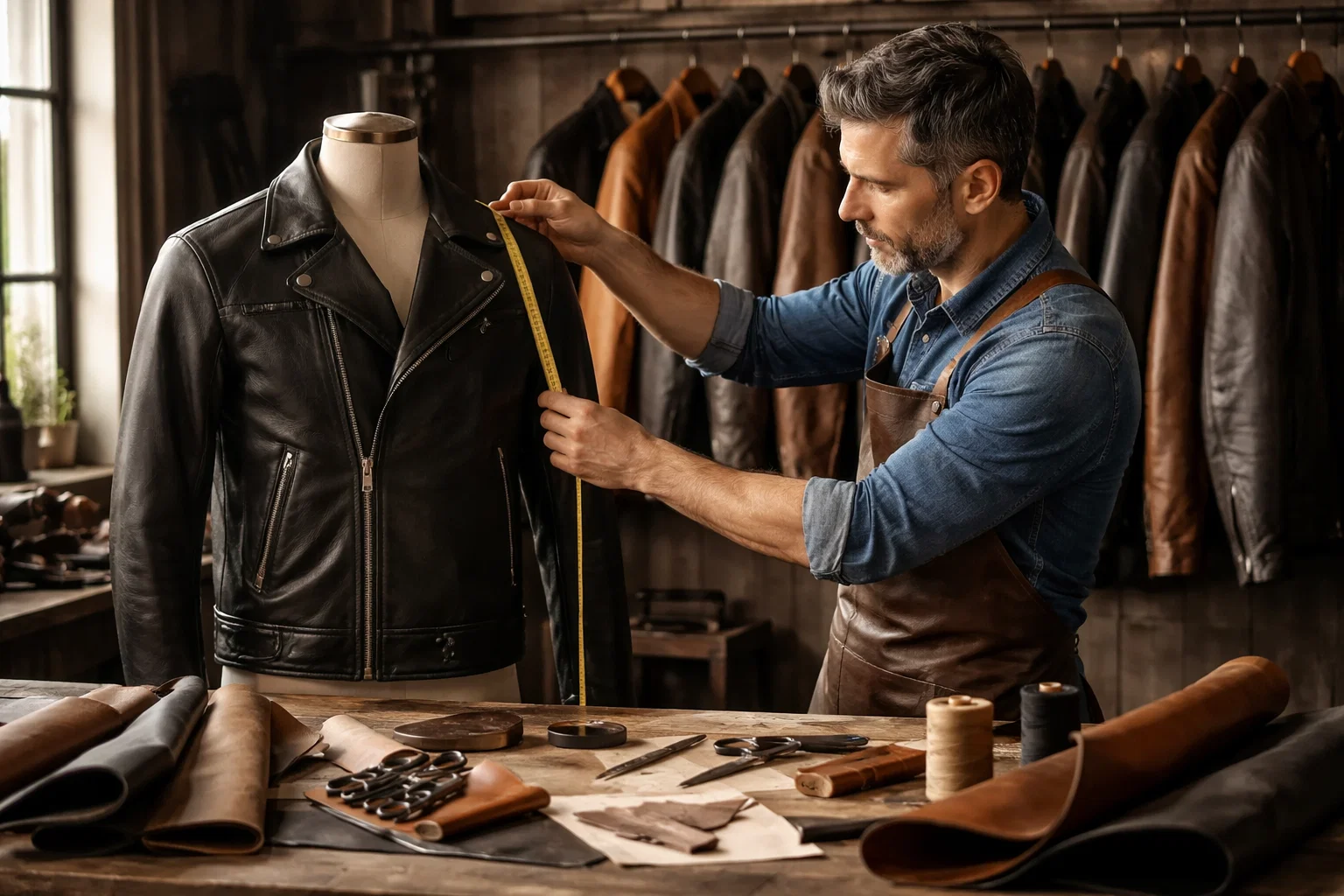
If you’ve ever searched for a custom leather jacket and felt surprised by the price tags, you’re not alone. Most first-time buyers walk in expecting a clear number and walk out with more questions than answers. That’s because the custom leather jacket price isn’t fixed; it’s a range shaped by several specific factors that are worth understanding before you spend a dollar.
So, how much does a custom leather jacket cost? In the USA, a quality custom jacket typically runs between $200 and $2,500 or more, depending on the leather grade, the level of customization you want, the craftsmanship behind it, and who makes it. Entry-level options exist, but if you want something built to last, made to your exact measurements with premium leather and solid hardware, plan to spend between $600 and $1,500.
This leather jacket pricing guide walks you through every factor that shapes the cost of personalized leather jackets, what each price tier actually gives you, and how to make a smart buying decision without second-guessing yourself.
Custom Leather Jacket Price Ranges – What to Expect
Before diving into the details, here’s a clear breakdown of what you can expect to spend and what you get at each level of custom leather jacket pricing:
| Jacket Type | Price Range | What You Get |
| Entry-Level Custom | $200 – $600 | Basic customization, standard leather, limited style options |
| Mid-Range Made-to-Measure | $600 – $1,000 | Better hides, stronger hardware, and a properly tailored fit |
| Premium / Bespoke | $1,000 – $2,500 | Top-grade leather, full customization, artisan craftsmanship |
| Designer / Luxury | $1,500 – $3,000+ | Brand prestige, exotic leathers, and the highest exclusivity |
These ranges reflect the current US market for genuine, handmade leather jackets. The price gap between tiers isn’t random; it reflects direct differences in leather grade, labor hours, hardware quality, and how much control you have over the final design. The more bespoke the jacket, the higher the cost, and for good reason.
5 Key Factors That Determine the Custom Leather Jacket Price
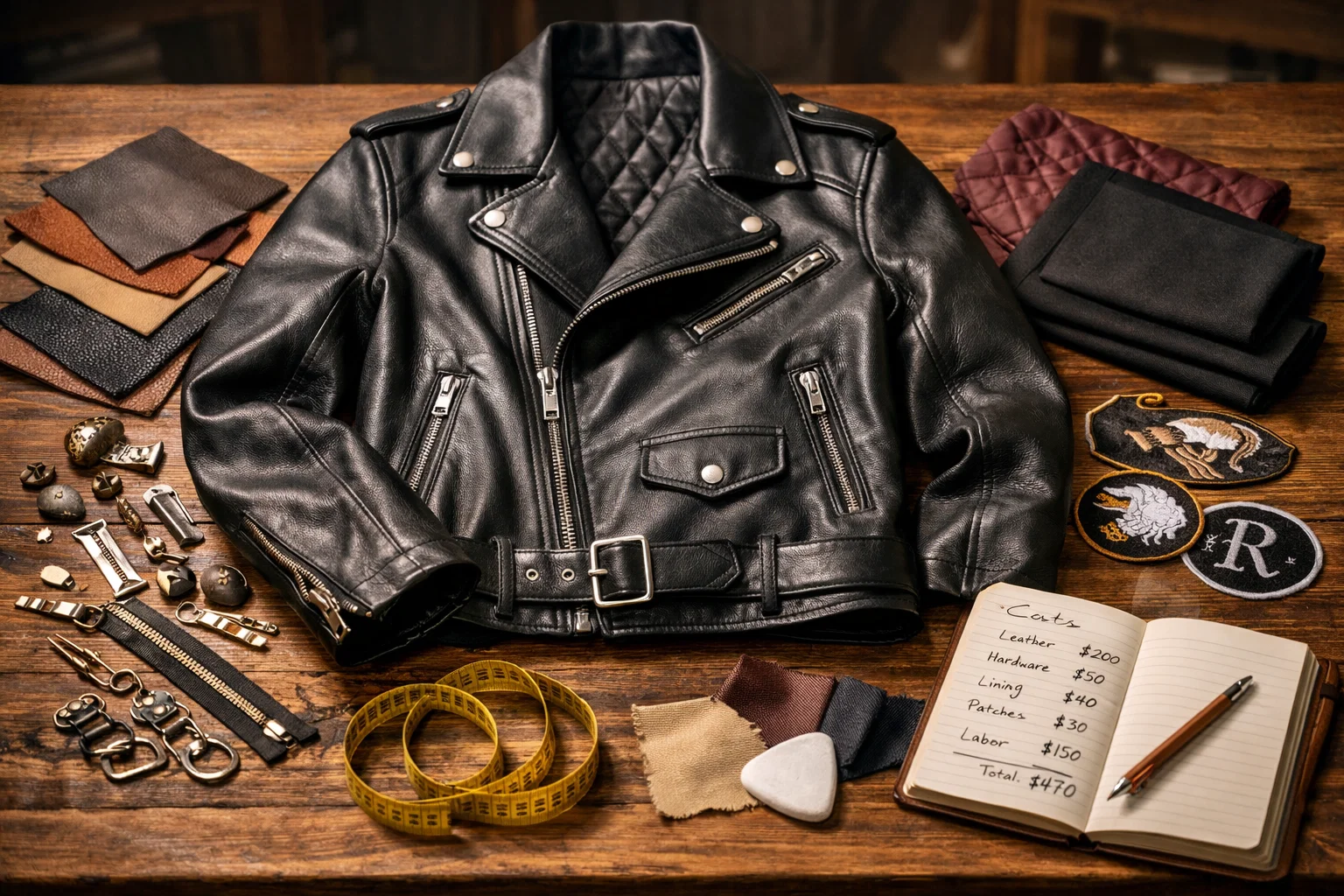
Most buyers focus only on the final price tag. But understanding the factors affecting leather jacket cost helps you see exactly what you’re paying for, and where you can make smart trade-offs.
1. Type and Grade of Leather
The leather itself is the single biggest cost variable. A typical jacket requires 30 to 40 square feet of hide, so even a small price difference per square foot adds up significantly. Here’s how leather grade pricing breaks down:
| Leather Type | Cost per Sq Ft | Best For |
| Full-Grain Cowhide | $8 – $25 | Biker, field, and flight jackets – most durable, age into a rich patina |
| Lambskin | $10 – $18 | Luxury and fashion jackets – ultra-soft, lightweight feel |
| Goatskin | $6 – $12 | Bomber and aviator styles – supple, lightweight, water-resistant |
| Exotic (Alligator, Ostrich) | $50 – $200+ | Statement pieces and ultra-luxury bespoke orders |
Full-grain cowhide is the gold standard. It’s the most durable option available, develops a natural patina over time, and is the hide of choice for the best handmade leather jackets. If you’re comparing genuine leather vs faux leather cost, keep this in mind: faux or bonded leather costs less upfront but wears out much faster and won’t hold its character over the years of use. You often end up paying more in the long run by going cheap on the hide.
2. Skilled Labor and Craftsmanship
Labor is one of the largest contributors to price in the USA. A master leather cutter or tailor who works on bespoke garments commands significantly above-average wages. Leather is an unforgiving material; one wrong cut wastes an entire section of expensive hide, and there’s no margin for error on a custom piece.
Hand-stitching alone adds $100 to $200 per jacket compared to machine assembly. Pattern making, creating a custom template from your exact body measurements, costs $100 to $400 on its own. When you pay for a handmade leather jacket from a skilled artisan, you’re paying for that expertise, not just the material.
3. Customization Options and Design Complexity
This is where the cost of personalized leather jackets can climb fast. Every addition you make to the base jacket adds both material and labor costs. Here’s what typical customization fees look like:
- Hardware (zippers, buckles, snaps): $30 – $100+ for premium hardware options
- Lining options (silk, shearling, quilted cotton): $20 – $200+, depending on material
- Custom dyeing or specialty finishes: $30 – $150 for non-standard colors or waxed finishes
- Embroidery or patches: $20 – $200+ based on size and design complexity
- Extra features (detachable hood, fur collar, added pockets): $20 – $200+ per feature
Features like embroidery or patches affect the cost more than most buyers expect. A small chest logo is a very different price from a full-back embroidered design. If you want to keep your budget manageable, be selective; each extra reflects real additional labor hours.
4. Brand Reputation and Who Makes It
The maker behind your jacket directly affects what you pay. Designer brand vs standard maker pricing can be dramatic. Luxury labels apply markups of 200% to 300% over their actual manufacturing cost, and a large portion of that premium goes toward the name, marketing, and retail presence rather than the jacket itself.
Direct-to-consumer makers who specialize in custom work sell closer to their actual production cost. That typically means more jackets for your money. The key is finding a maker with a proven track record of craftsmanship, clear material standards, and transparent pricing.
5. Leather Processing and Tanning Method
Beyond the hide grade, how the leather is processed also shapes the price. Vegetable-tanned leather, the more traditional method, takes weeks and costs significantly more than standard chrome tanning. Aniline dyeing, which lets the natural grain show through without a heavy coating, adds $1 to $3 per square foot. Waxed or oiled finishes, popular in motorcycle and vintage-style jackets,add another $2 to $5 per square foot.
These finishing choices shape both the look and the longevity of your jacket. If you want premium leather, ask your maker what tanning process they use; it tells you a lot about the quality you’ll actually receive.
Where Your Money Goes – The Manufacturing Cost Breakdown
When you’re calculating the total price of a custom jacket, it helps to see what production actually involves at each stage. Here’s what each step costs and how long it takes:
| Production Stage | Cost Range (USD) | Timeframe |
| Design Consultation | $50 – $300 | A few hours to several days |
| Pattern Making | $100 – $400 | 1 – 3 days |
| Leather Selection & Cutting | $160 – $600+ | 1 – 2 days |
| Stitching & Assembly | $200 – $600 | 2 – 5 days |
| Finishing (lining, hardware) | $50 – $200 | 1 – 2 days |
| Quality Control | $20 – $50 | Several hours |
| Total | $580 – $2,150+ | 2 – 4 weeks (standard) |
These figures represent wholesale manufacturing costs. The final retail price reflects an additional markup, typically 150% to 200% for direct-to-consumer makers and 200% to 300% or more for designer labels. This is also why online vs in-store pricing differs so significantly. Makers who sell directly to buyers online cut out retail overhead and can pass those savings on to you.
Custom vs. Off-the-Rack: Is It Worth the Price Difference?
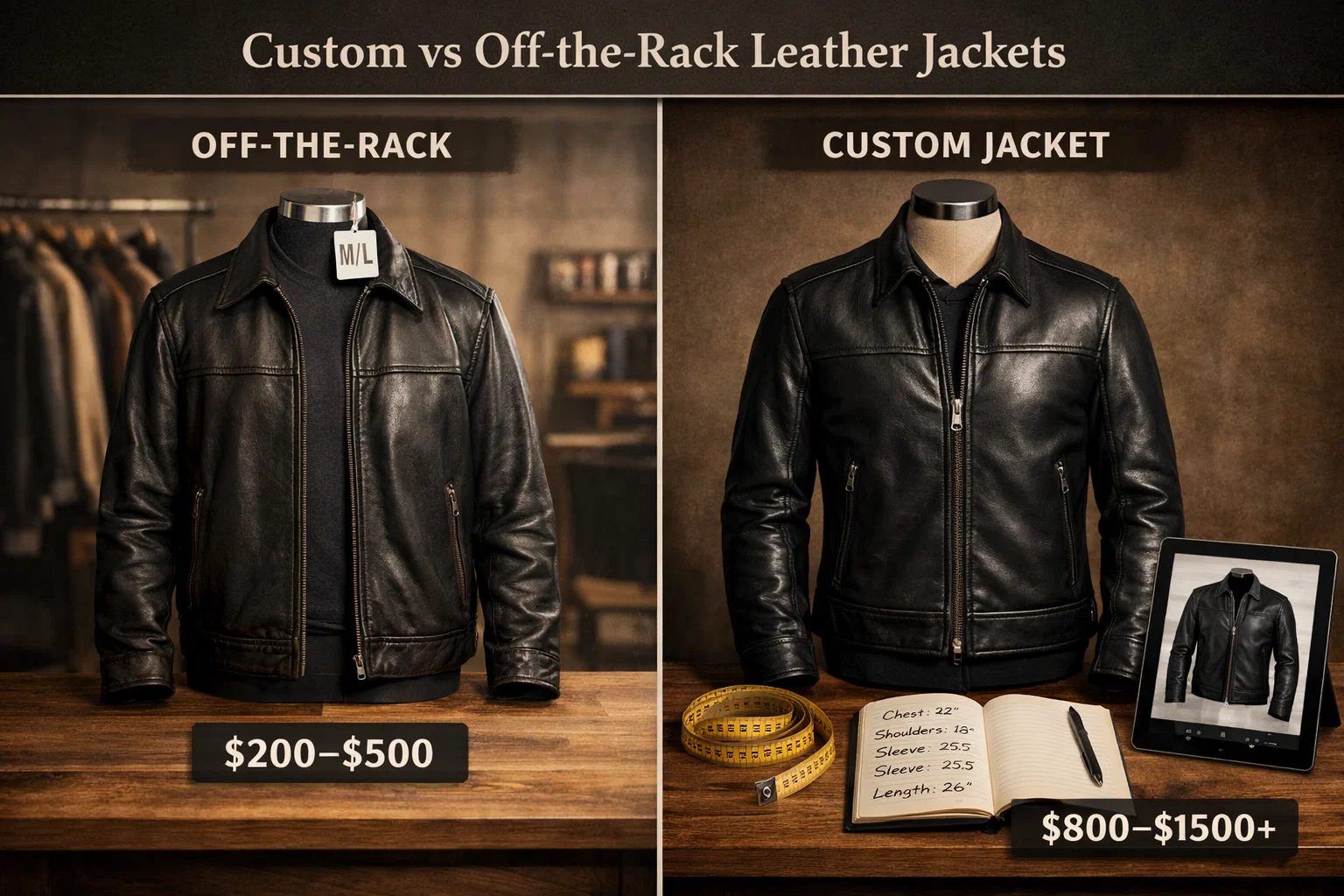
This is the question most buyers genuinely wrestle with, and the answer depends on what you actually need from a jacket.
Off-the-rack leather jackets can cost anywhere from under $200 for budget options to $1,500 for mid-range quality. But here’s the core problem: they’re built for an average body, not yours. If you’ve ever struggled to find a leather jacket that fits well through the shoulders without being too long in the body, or one that gets the sleeve length right, you already know the frustration.
A custom jacket solves all of that. You provide your exact measurements, chest, waist, shoulder width, sleeve length, jacket length, and the maker builds a pattern around your body, not a standard template. The result fits differently from anything you’d pull off a rack.
Who Benefits Most from Custom
Custom makes the most sense if you struggle with standard sizing, want a specific design that isn’t available ready-made, or plan to wear the jacket for many years. When you think about value vs price considerations over a 10 or 20-year lifespan, the cost difference between custom and off-the-rack becomes very small. A $1,200 full-grain jacket that lasts two decades is a better investment than a $300 bonded leather jacket that breaks down in two years.
Trade-Offs to Know Before You Order
- Production takes time; most reputable makers quote 2 to 4 weeks for standard orders and 6 to 8 weeks for fully bespoke pieces.
- The upfront cost is higher than a comparable ready-made jacket.
- Some makers charge a separate custom sizing fee of around $150; confirm what’s included before placing your order.
Hidden Costs Buyers Often Miss
When you’re comparing leather jacket prices across makers, the listed price doesn’t always tell the full story. A few common costs catch buyers off guard:
- Shipping and handling fees: Some makers charge separately for delivery, adding $50 to $150+ to your total.
- Rush order surcharges: A faster turnaround than the standard production window often comes with a premium.
- Post-delivery alteration fees: If measurements weren’t precise, adjustments after the fact may carry an additional charge.
- Multiple fitting sessions: For in-person bespoke orders, each fitting session can add to your total cost.
One way to avoid these surprises is to choose a maker who is upfront about exactly what’s included. Maker of Jacket, for example, offers free worldwide shipping on all custom orders, no hidden shipping charges, and no surprise fees at checkout. When you’re already making a meaningful investment in a quality jacket, that kind of transparency makes a real difference.
How to Budget for a Custom Leather Jacket
Knowing how to budget for a custom jacket comes down to prioritizing what matters most to you and letting go of what doesn’t. Before you start comparing prices, ask yourself these questions:
- What leather grade do I actually need? Full-grain is worth the cost for a jacket you’ll wear regularly. For occasional use, top-grain may serve you just as well.
- Which extras are non-negotiable? Embroidery, custom hardware, and specialty jacket lining options add up quickly. Pick the ones that matter to you and skip the rest.
- Who is making it? A maker with a strong reputation and clear material standards is worth more than a cheaper option with no track record.
- Is shipping included? Factor in shipping and handling fees when comparing prices across different makers. Free shipping can save you a meaningful amount.
If you want a practical starting point, Maker of Jacket specializes in fully custom leather jackets, custom biker jacket, custom bomber jacket, studded jacket , varsity, and more, built to your exact measurements. You choose from cowhide, sheepskin, or goatskin leather for the outer material, and select your inner lining from options like quilted, satin, or cotton. Hardware finish, design details like embroidery or custom patches, and color are all yours to decide. Every jacket ships free worldwide, with a standard production time of 4 to 5 weeks. It’s a direct path to a genuine handmade leather jacket without navigating hidden fees or unclear pricing.
2026 Market Trends Affecting Custom Leather Jacket Prices
The custom leather jacket market has shifted in a few meaningful ways, and these trends directly affect what you pay today:
- Sustainability premium: Eco-friendly tanning and ethical material sourcing are increasingly common among quality makers, often adding 25% to 30% to production costs.
- Rising demand for handcrafted quality: More buyers are choosing exclusivity and craftsmanship over fast-fashion volume, which keeps premium prices steady.
- Seasonal pricing patterns: Demand peaks in autumn and winter, and roughly 55% of annual leather jacket sales happen. If you can place your order in spring or early summer, you’ll likely see faster turnaround times.
- Online vs in-store pricing: Over 38% of leather apparel now sells online. Direct-to-consumer makers skip retail markup and often pass those savings on to buyers, making online custom orders increasingly competitive.
How Maker of Jacket Approaches Custom Leather Jackets
When discussing the cost of custom leather jackets, it’s also useful to look at how different manufacturers approach the process. Maker of Jacket focuses on combining measurement-guided sizing, material choice, and design flexibility, which are the same factors that typically influence the final price of a custom jacket.
One of the most notable aspects is the size range available to customers. While many brands limit their jackets to a narrow sizing range, Maker of Jacket offers sizes from XS all the way up to 16XL. This extended sizing allows more people to access custom leather jackets without being restricted by traditional retail sizing limits. For buyers who fall outside standard size charts, this can make a significant difference when trying to achieve a proper fit.
Alongside the wide size range, the brand also provides a detailed sizing guide that explains how to measure important areas such as chest, shoulders, sleeve length, and jacket length. These measurements help ensure that the final jacket fits closer to the wearer’s body proportions rather than following a generic template.
Material selection is another part of the process that aligns with the factors discussed earlier in this guide. Customers can choose from several leather types such as cowhide, sheepskin, and goatskin, each offering different characteristics in terms of durability, softness, and weight. This choice allows buyers to balance comfort, longevity, and budget depending on how they plan to use the jacket.
Beyond sizing and leather type, buyers can also adjust design elements such as lining materials, hardware finishes, colors, embroidery, or patches. Because each jacket is produced after the order is placed, these design choices can be incorporated during production rather than being limited to a fixed catalog design.
Understanding these elements helps explain why custom leather jacket prices vary across the market. Factors like fit, leather quality, craftsmanship, and customization options all contribute to the final cost, and they are the same variables that shape the value of a well-made custom jacket.
Final Thoughts
The custom leather jacket price you pay reflects the sum of specific choices, the leather you select, the details you add, the maker you choose, and the craftsmanship that goes into the finished jacket. There’s no single right number, but there is a right number for what you need.
For most buyers looking for a quality, fully custom leather jacket, expect to invest between $600 and $1,500. If you want premium materials, artisan craftsmanship, and complete control over every detail from the hide to the hardware, that’s exactly the range where well-made jackets live.
Do your research, know your measurements, and choose a maker who is transparent about materials, timelines, and pricing. A well-built leather jacket isn’t just a purchase; it’s something you’ll reach for year after year. Getting it right from the start is worth every dollar.
Frequently Asked Questions
How much does a basic custom leather jacket usually cost?
A basic custom leather jacket typically starts around $400 to $600. At this price point, you get standard leather, custom sizing, and limited design choices. For better hides and fuller personalization, expect to spend closer to $600 to $1,000.
What factors can increase the price of your custom leather jacket?
The main cost drivers are leather grade, customization options like embroidery and hardware, skilled labor, and the maker’s reputation. Each design detail you add, such as extra pockets, custom dyeing, specialty stitching, or premium lining, adds to both material and labor costs.
Does the type of leather affect how much you pay?
Yes, significantly. Full-grain cowhide runs $8 to $25 per square foot, while exotic leathers like alligator and ostrich cost $50 to $200 or more per square foot. Since a jacket uses 30 to 40 square feet of hide, your leather choice alone can add hundreds of dollars to the total price.
How do customization options like embroidery or patches impact cost?
Embroidery and patches add $20 to $200 or more, depending on size and design complexity. A small logo costs far less than a detailed full-back design. Hardware upgrades, specialty linings, and custom color finishes each carry their own fees; choose your extras selectively to stay on budget.
What’s the price range you can expect for handmade leather jackets?
Handmade leather jackets range from around $600 for quality entry-level pieces up to $2,500 or more for fully bespoke artisan work with premium materials. Most well-crafted custom jackets from reputable US makers fall between $1,000 and $1,600 for premium builds.


