

How to maintain your leather jacket for lasting style

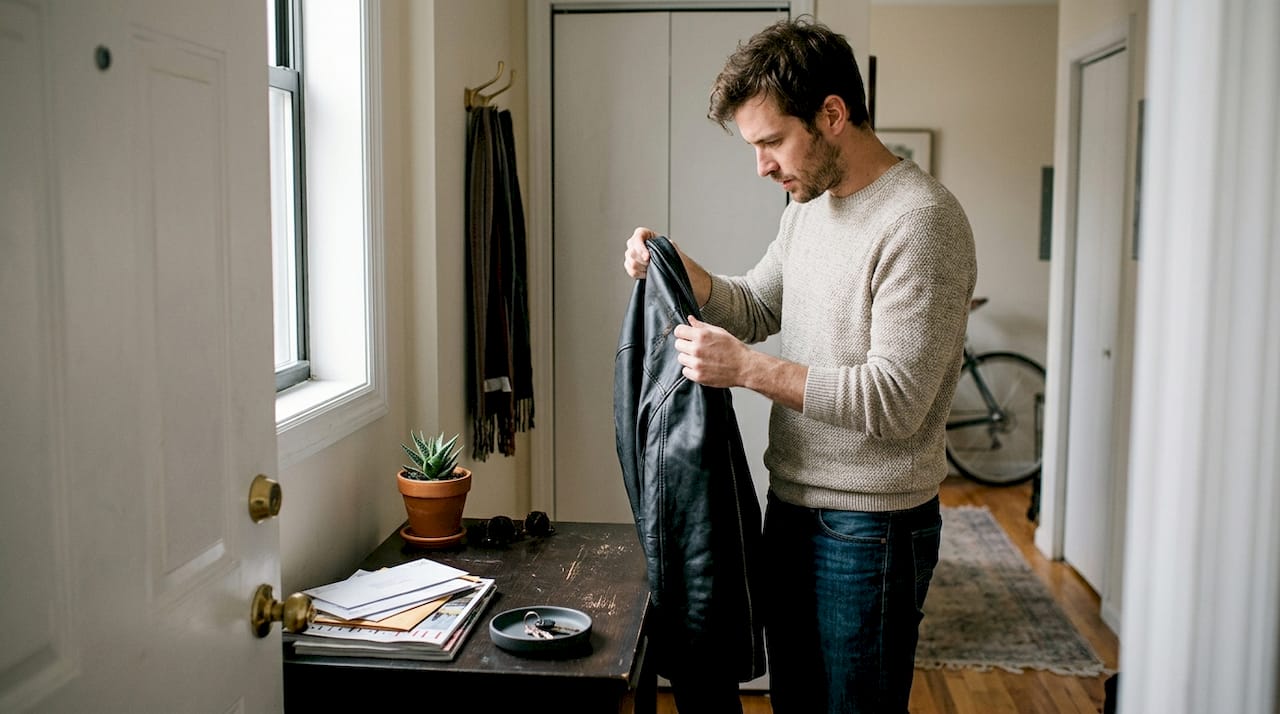
Your leather jacket is more than just outerwear. It’s an investment in style and durability that deserves proper care. Many owners struggle with common issues like stiffness, cracking, fading, and stubborn stains that diminish their jacket’s appearance and lifespan. Without regular maintenance, even premium leather loses its supple texture and rich color over time. This comprehensive guide walks you through essential preparation steps, effective cleaning and conditioning techniques, smart storage practices, and troubleshooting solutions to keep your leather jacket looking sharp for years. Whether you ride motorcycles daily or wear your jacket as a fashion statement, these practical tips ensure your leather stays soft, protected, and stylish.
Table of Contents
- Key takeaways
- Gathering essential materials and preparing your leather jacket for maintenance
- Step-by-step guide to cleaning and conditioning your leather jacket
- Proper storage and handling to extend your leather jacket’s life
- Troubleshooting common leather jacket problems and small repairs
- Explore custom leather jackets and expert care at Maker of Jacket
- Frequently asked questions
Key Takeaways
| Point | Details |
|---|---|
| Preparation checklist | Gather a mild pH balanced leather cleaner, quality leather conditioner, soft microfiber cloths, a soft bristle brush, distilled water, a leather repair kit, and a padded hanger before starting. |
| Patch test importance | Always test any cleaner or conditioner on a hidden spot for 24 hours to prevent damage. |
| Gentle cleaning method | Remove surface dust with a dry cloth, then dampen a cloth with a diluted cleaner and wipe in small sections before applying conditioner. |
| Proper storage guidelines | Store the jacket on a padded hanger and keep it away from heat to prevent deformation and cracking. |
Gathering essential materials and preparing your leather jacket for maintenance
Before you begin any maintenance work, assembling the right tools and products makes the process smooth and effective. Using specific cleaning and conditioning products designed for leather is critical for maintaining leather jackets and avoiding damage. Generic household cleaners contain harsh chemicals that strip natural oils, causing dryness and cracking.
Essential Items:
Start by gathering these essential items:
- Mild pH-balanced leather cleaner
- Quality leather conditioner appropriate for your jacket’s finish
- Soft microfiber cloths (at least three)
- Soft-bristle brush for textured leather
- Distilled water in a spray bottle
- Leather repair kit for minor fixes
- Padded hanger for proper storage
Once you have your materials ready, inspect your jacket thoroughly. Check for visible stains, scratches, worn areas, or loose stitching that need attention. Identify your leather type, whether it’s smooth, suede, nubuck, or textured, since each requires slightly different care approaches. Turn the jacket inside out to examine the lining for tears or odors.
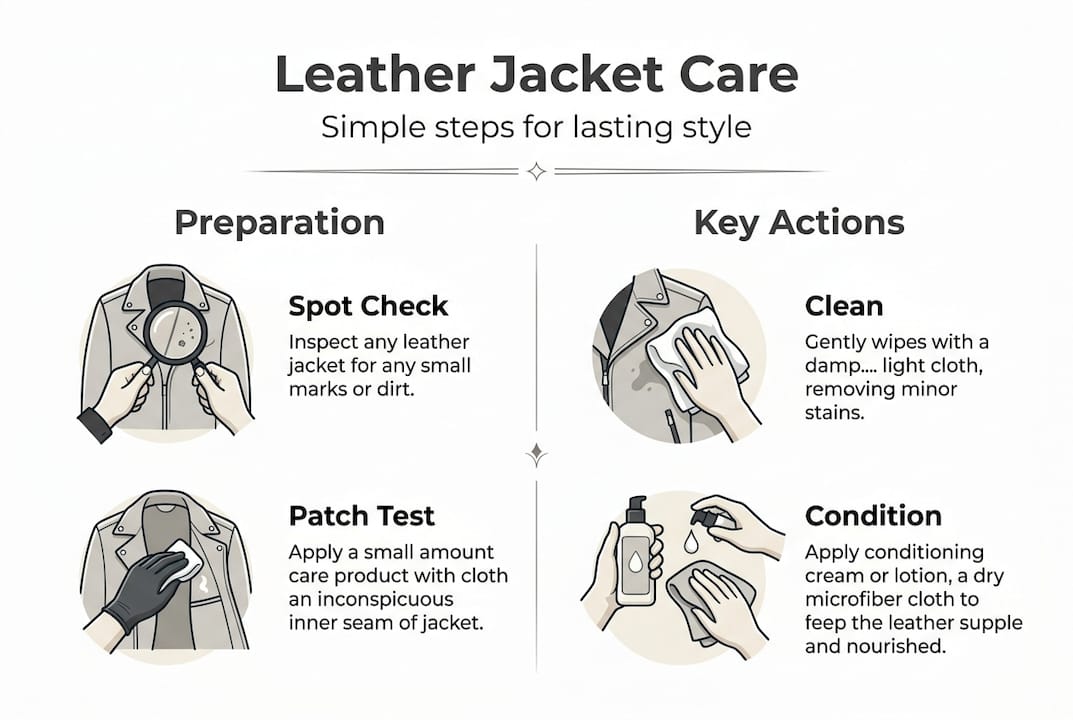
The most critical preparation step is the patch test. Apply a small amount of your chosen cleaner and conditioner to a hidden area, like the inside hem or under the collar. Wait 24 hours to ensure no discoloration, darkening, or texture changes occur. This simple test prevents ruining visible areas with incompatible products.
Essential Materials for Leather Jacket Maintenance
| Material | Purpose | Selection Criteria |
|---|---|---|
| Leather cleaner | Removes dirt and oils | pH-balanced, specifically formulated for leather |
| Leather conditioner | Restores moisture and flexibility | Matches your leather type and finish |
| Soft cloths | Application and buffing | Lint-free, non-abrasive microfiber |
| Brush | Textured leather cleaning | Natural soft bristles, never wire or stiff |
Pro Tip: Always test new products on a hidden spot first, even if they’re labeled safe for all leather types. Different tanning processes and dyes react differently, and a 24-hour test saves you from permanent visible damage.
For detailed guidance on selecting the right products, explore our leather conditioner guide and review comprehensive leather jacket cleaning steps before starting your maintenance routine.
Step-by-step guide to cleaning and conditioning your leather jacket
Cleaning and conditioning work together to maintain your leather’s health and appearance. Conditioning leather regularly prevents dryness and cracking, extending jacket lifespan significantly. Follow this proven process for optimal results.
1. Remove Surface Dust and Dirt
Remove surface dust and loose dirt by gently wiping the entire jacket with a dry microfiber cloth. Pay special attention to seams, pockets, and collar areas where debris accumulates.
2. Prepare Leather Cleaner
Mix your leather cleaner according to package directions, typically diluting with distilled water. Dampen a clean cloth with the solution, never saturating it. Excess moisture penetrates leather and causes water stains or stiffness.
3. Clean in Sections
Work in small sections, wiping gently in circular motions. Start at the shoulders and work downward, cleaning one area completely before moving to the next. This systematic approach ensures you don’t miss spots.
4. Address Stubborn Stains
For stubborn stains, apply cleaner directly to the cloth and gently rub the affected area. Never scrub aggressively, as this damages the leather’s surface and finish. Patience works better than force.
5. Remove Residue
Wipe away cleaner residue with a cloth dampened with plain distilled water. Remove all soap traces, as leftover cleaner attracts dirt and leaves residue that dulls the leather’s appearance.
6. Air Dry Naturally
Allow the jacket to air dry completely in a well-ventilated area away from direct sunlight, heat sources, or fans. Forced drying causes leather to shrink, crack, or become brittle. Natural drying takes 2 to 4 hours depending on humidity.
7. Apply Leather Conditioner
Once fully dry, apply leather conditioner sparingly with a clean cloth. Use circular motions to work the product into the leather, covering the entire surface evenly. Let it absorb for 15 to 20 minutes, then buff gently with a dry cloth to restore shine.
Pro Tip: Apply conditioner in thin, even layers rather than thick coats. Excess conditioner doesn’t absorb properly and leaves a greasy residue that attracts dirt. Two light applications work better than one heavy treatment.
Proper storage and handling to extend your leather jacket’s life
Even perfect cleaning and conditioning can’t protect your jacket if you store it incorrectly. Proper storage techniques including temperature control and using padded hangers preserve leather jackets by preventing deformation and environmental damage. Smart storage practices maintain shape, prevent cracking, and keep your jacket ready to wear.
Essential Storage Guidelines:
Follow these essential storage guidelines:
- Use wide, padded hangers that support the shoulders without creating pressure points or stretching. Wire hangers cause permanent shoulder bumps and distort the jacket’s shape.
- Store in breathable garment bags made from cotton or canvas. These protect against dust while allowing air circulation that prevents moisture buildup and musty odors.
- Keep your jacket in a cool, dry location away from direct sunlight, which fades color and dries out leather. Ideal temperature ranges from 60 to 70 degrees Fahrenheit.
- Maintain moderate humidity levels between 40 and 50 percent. Too much moisture encourages mildew growth, while too little causes brittleness and cracking.
- Never fold or compress your leather jacket into tight spaces like suitcases or storage bins. Creases become permanent and damage the leather’s structure.
- Avoid hanging near heat sources like radiators, furnaces, or heating vents. Heat accelerates moisture loss and causes leather to become stiff and crack.
“Leather is a natural material that breathes and responds to its environment. Proper storage in controlled conditions with adequate air circulation prevents the most common forms of deterioration, including mildew, cracking, and color fading. Think of storage as passive maintenance that works 24/7 to protect your investment.”
For seasonal storage, take extra precautions. Clean and condition your jacket thoroughly before putting it away for months. Check on it every 4 to 6 weeks, removing it from the bag to air out for a few hours. This prevents moisture accumulation and allows you to catch any developing issues early. Rotate the jacket’s position on the hanger to prevent permanent creasing in the arms.

Never store leather jackets in plastic bags or airtight containers. Plastic traps moisture and prevents the leather from breathing, creating perfect conditions for mildew and unpleasant odors. If your jacket gets wet, let it dry completely before storage. Storing damp leather guarantees mold growth and permanent damage.
For comprehensive storage solutions and seasonal care tips, visit our detailed leather jacket storage tips page.
Troubleshooting common leather jacket problems and small repairs
Even with excellent care, leather jackets encounter occasional problems. Small leather repairs, such as scratch restoration and stain removal, can significantly prolong jacket usability when addressed promptly. Knowing how to handle common issues saves money and extends your jacket’s life.
Common Problems and Solutions
| Problem | Common Causes | Solution |
|---|---|---|
| Surface scratches | Normal wear, sharp objects | Apply leather conditioner, use scratch repair kit |
| Water stains | Rain exposure, improper drying | Dampen entire section evenly, air dry naturally |
| Stiffness | Lack of conditioning, age | Apply conditioner liberally, work leather gently |
| Fading | Sun exposure, harsh cleaners | Use leather dye or color restorer products |
| Unpleasant odors | Moisture, poor ventilation | Air out thoroughly, use leather-safe deodorizer |
| Cracking | Dryness, neglect | Condition heavily, consider professional restoration |
Targeted Fixes for Specific Issues
For specific issues, try these targeted solutions:
Light Scratches:
Light scratches often disappear with gentle rubbing using your finger or a soft cloth. Your skin’s natural oils help blend minor surface marks. For deeper scratches, apply a small amount of leather conditioner and massage it into the damaged area.
Water Stains
Water stains require evening out the moisture. Lightly dampen the entire panel with distilled water using a sponge, then let it air dry naturally. This prevents the ring-shaped marks that occur when only one spot gets wet.
Oil-Based Stains:
Stubborn stains need specialized treatment. For oil-based stains, sprinkle cornstarch or talcum powder on the spot and let it sit overnight to absorb the oil. Brush away gently and clean with leather cleaner.
Persistent Odors:
Persistent odors respond to baking soda. Sprinkle it inside the jacket, let it sit for 24 hours, then vacuum or shake it out thoroughly. For exterior odors, wipe down with a vinegar and water solution (one part vinegar to three parts water), then condition.
Stiff Leather:
Stiff leather needs intensive conditioning. Apply conditioner, let it absorb, then gently flex and work the leather with your hands to restore suppleness. Repeat every few days until flexibility returns.
Pro Tip: Address problems immediately when you notice them. A small scratch ignored today becomes a crack tomorrow. Early intervention with appropriate products prevents minor issues from becoming major repairs that require professional restoration.
For detailed scratch repair techniques and product recommendations, explore our comprehensive leather scratch repair tips guide.
Explore custom leather jackets and expert care at Maker of Jacket
Now that you understand how to maintain your leather jacket properly, consider taking your style to the next level. Maker of Jacket offers premium custom leather jackets designed to your exact specifications, combining quality craftsmanship with personalized details that make your jacket truly unique. Whether you need a rugged motorcycle jacket or a sleek fashion piece, customization ensures perfect fit and distinctive style.

Beyond custom creations, Maker of Jacket provides expert guidance and professional-grade care products to keep your jackets in pristine condition. Our detailed resources cover everything from selecting the right conditioner to addressing specific leather types and finishes. When you order custom leather jackets from us, you’re investing in quality that lasts decades with proper care. Explore our comprehensive leather care tips and learn how to customize jackets for unique style and fit that perfectly matches your personality and needs.
Frequently asked questions
How often should I clean and condition my leather jacket?
Clean your leather jacket lightly every 3 to 6 months and condition it 2 to 3 times yearly under normal wear conditions. Increase frequency to monthly cleaning and quarterly conditioning if you wear your jacket daily, ride in dusty environments, or live in extremely dry climates. Heavy use demands more attention to prevent premature aging. For detailed maintenance schedules, check our leather jacket care tips.
Can I use household cleaners on my leather jacket?
No, avoid household cleaners completely as they contain harsh chemicals that damage leather by stripping natural oils and causing dryness, discoloration, or cracking. Products like dish soap, all-purpose cleaners, and baby wipes are formulated for synthetic surfaces, not natural leather. Always use pH-balanced cleaners specifically designed for leather to maintain its integrity and appearance.
What is the best way to store a leather jacket in summer?
Store your leather jacket in a cool, dry location away from direct sunlight and heat sources during summer months. Use padded hangers to maintain shape and breathable cotton or canvas garment bags to prevent dust accumulation while allowing air circulation. Keep temperature between 60 to 70 degrees and humidity around 40 to 50 percent to prevent mildew and cracking. For complete seasonal storage guidance, visit our leather jacket storage tips.
How can I fix small scratches on my leather jacket?
Use specialized leather scratch repair kits or high-quality leather conditioners to address minor scratches effectively. Apply a small amount of product to the scratched area and gently rub it in using circular motions with a soft cloth. The conditioner fills in the scratch and helps blend it with surrounding leather. Buff gently after application to restore shine and even out the surface. For detailed repair techniques and product recommendations, explore our leather scratch repair tips.
Recommended
- Leather Jacket Care Tips: Keep Your Style Fresh in 2025 – Maker of Jacket
- How to Care for a White Leather Jacket – Maker of Jacket
- Jacket Maintenance 2026: 50% Longer Life & Style – Maker of Jacket
- Leather Jacket Cleaning Process for Lasting Results – Maker of Jacket
- Designer handtasche pflegeanleitung 2026: langlebigkeit – BVPRIVE


