

How to Read Size Charts for Perfect Leather Fashion Choices

Finding a leather jacket that fits just right is tougher than most people think and the numbers prove it. Over 60 percent of online returns in fashion are due to poor sizing or fit issues. That might sound discouraging if you are shopping for your first genuine leather piece. But get ready, because mastering size charts for leather fashion is actually much simpler when you know where to start and the smallest details can make all the difference.
Table of Contents
- Step 1: Gather Your Measurements For Accurate Sizing
- Step 2: Locate The Size Chart For Your Chosen Item
- Step 3: Compare Your Measurements With The Size Chart
- Step 4: Understand Size Varieties And Design Differences
- Step 5: Verify Fit With Customer Reviews Or Fitting Guides
Quick Summary
| Key Point | Explanation |
|---|---|
| 1. Accurately measure your body | Use a flexible measuring tape and record dimensions clearly to ensure a proper fit. |
| 2. Find the right size chart | Look for size charts specific to your chosen item, as sizing varies by manufacturer. |
| 3. Compare measurements carefully | Align your measurements with the size chart, choosing the larger size if you’re between sizes. |
| 4. Consider design impacts on fit | Different jacket styles and designs may fit differently; factor this into your selection. |
| 5. Leverage customer reviews for fit | Read reviews focusing on similar body types for insights on real-world fit beyond size charts. |
Step 1: Gather Your Measurements for Accurate Sizing
Successfully reading size charts for leather fashion begins with obtaining precise body measurements. Understanding your exact dimensions is the foundation for selecting leather apparel that fits perfectly and complements your physique.
Understanding Measurement Essentials
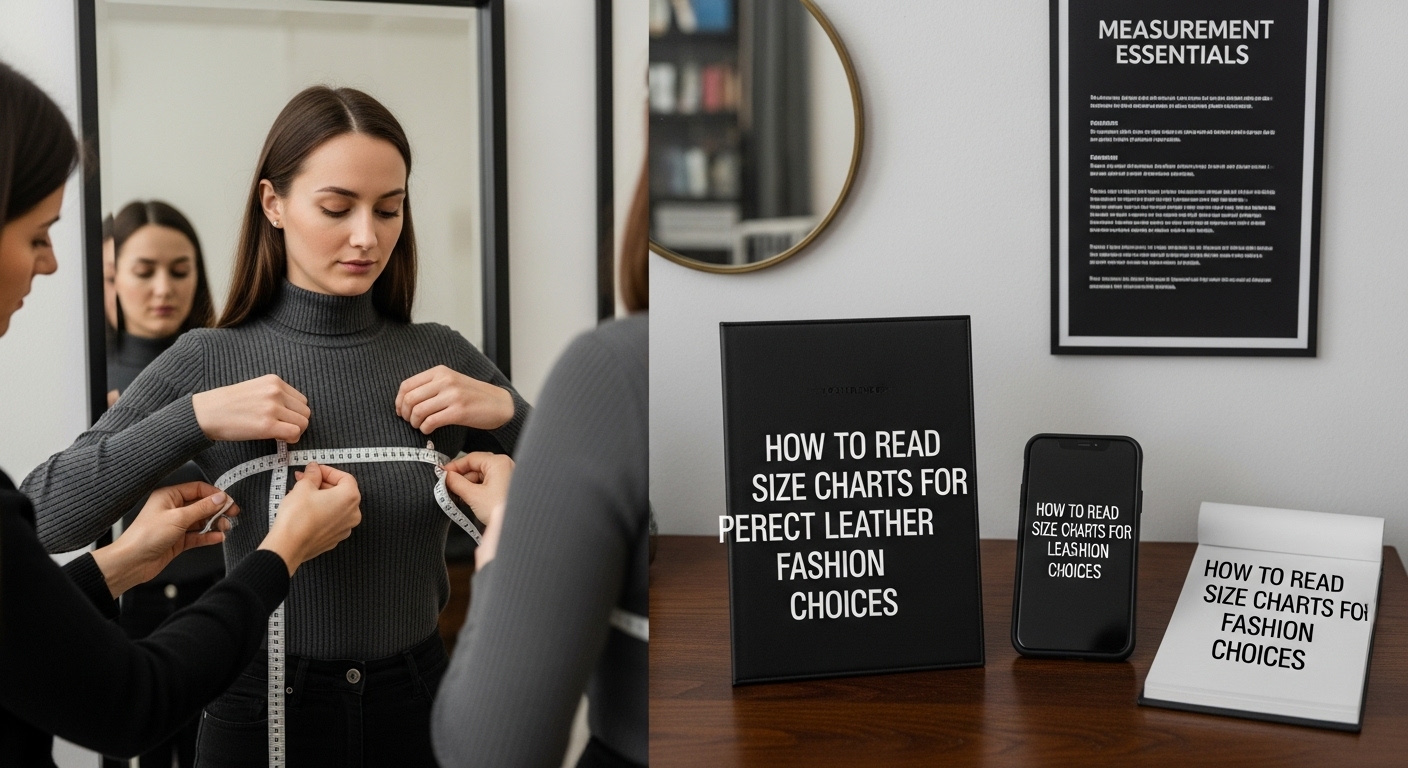
Taking accurate measurements requires more than just grabbing a tape measure. You will need a flexible measuring tape, preferably cloth or tailor’s tape, and a full length mirror to help you track your positioning. According to National Institute of Standards and Technology, precision is critical when measuring for clothing.
Start by wearing form-fitting clothing or undergarments that closely represent your body shape. Stand naturally with your feet shoulder width apart and maintain a relaxed posture. Avoid pulling the measuring tape too tight or leaving it too loose. The tape should rest comfortably against your body without compressing or creating slack.
Key Measurement Points
For leather jackets and fashion pieces, focus on these critical measurement areas:
- Chest: Measure around the fullest part of your chest, keeping the tape horizontal and parallel to the ground
- Waist: Locate your natural waistline and measure around your torso at this point
- Sleeve Length: Measure from the shoulder seam to your wrist, keeping your arm slightly bent
- Shoulder Width: Measure from one shoulder point to the other across your back
Take each measurement at least twice to confirm accuracy. When in doubt, ask a friend or family member to help you measure for the most precise results. Remember that leather garments often have less stretch compared to other materials, so accuracy becomes even more crucial.
Once you have your measurements, record them immediately in both inches and centimeters. This dual notation ensures you can easily reference size charts from different manufacturers and regions. By meticulously gathering your measurements, you set the stage for finding leather fashion that fits like a second skin.
The table below summarizes the essential tools and materials needed for accurately measuring your body before consulting a leather fashion size chart.
| Tool/Material | Purpose | Notes |
|---|---|---|
| Flexible measuring tape | Measures body dimensions accurately | Cloth or tailor’s tape is preferred for flexibility |
| Full length mirror | Helps ensure correct tape positioning during measurement | Stand naturally to get accurate body shape representation |
| Form-fitting clothing | Provides an accurate outline of your body during measuring | Avoid wearing bulky clothes for best results |
| Notepad/app for recording | Records measurements immediately in inches and centimeters | Dual notation helps with charts in different measurement units |
| Friend/family member | Assists with hard-to-reach or tricky measurements | Increases accuracy, especially for shoulders and back |
Step 2: Locate the Size Chart for Your Chosen Item
After carefully measuring your body, the next critical step in how to read size charts is finding the appropriate sizing reference for your specific leather fashion piece. Not all size charts are created equal, and understanding where and how to locate the right chart can make the difference between a perfect fit and a disappointing purchase.
Most leather fashion retailers display their size charts in specific locations. Online shoppers will typically find size charts directly on the product page, usually located near the item description or in a dedicated sizing tab. Look for a button or link that says “Size Chart” or “Measurement Guide.” If you cannot immediately locate the chart, check the website’s footer menu or customer service section.
Navigating Different Size Chart Formats
According to California State University Maritime Academy, size charts can vary significantly between manufacturers and clothing types. Some charts use numerical sizes like S, M, L, while others provide precise measurements in inches or centimeters. Pay close attention to the specific measurement units and compare them directly with the body measurements you recorded in the previous step.
When examining a size chart, you’ll typically find a grid or table that correlates body measurements with corresponding clothing sizes. Common measurements include:
- Chest circumference
- Waist size
- Sleeve length
- Shoulder width
- Total garment length
For leather jackets and fashion pieces, international sizing can be particularly tricky. European, American, and Asian size charts might use different standards, so always verify the origin of the size chart. Some advanced online platforms offer conversion tools that help translate measurements across different sizing systems.
If a size chart seems unclear or you cannot find one, do not hesitate to contact the retailer’s customer service. Many companies have trained representatives who can help you interpret sizing information and recommend the most appropriate size based on your specific measurements. Remember, taking a few extra minutes to understand the size chart can save you significant time and frustration in returning or exchanging ill-fitting leather apparel.
Step 3: Compare Your Measurements with the Size Chart
Comparing your personal measurements with a size chart is the most critical step in ensuring a perfect leather fashion fit. This process requires careful attention to detail and a strategic approach to matching your body dimensions with the manufacturer’s sizing specifications.
Begin by laying out your recorded measurements next to the size chart. Do not rely on your memory or assume you know your size. Leather garments, unlike stretchy materials, demand precise fitting. According to California State University Maritime Academy, accurate measurement comparison is essential for selecting the right apparel.
When comparing measurements, focus on these key principles.
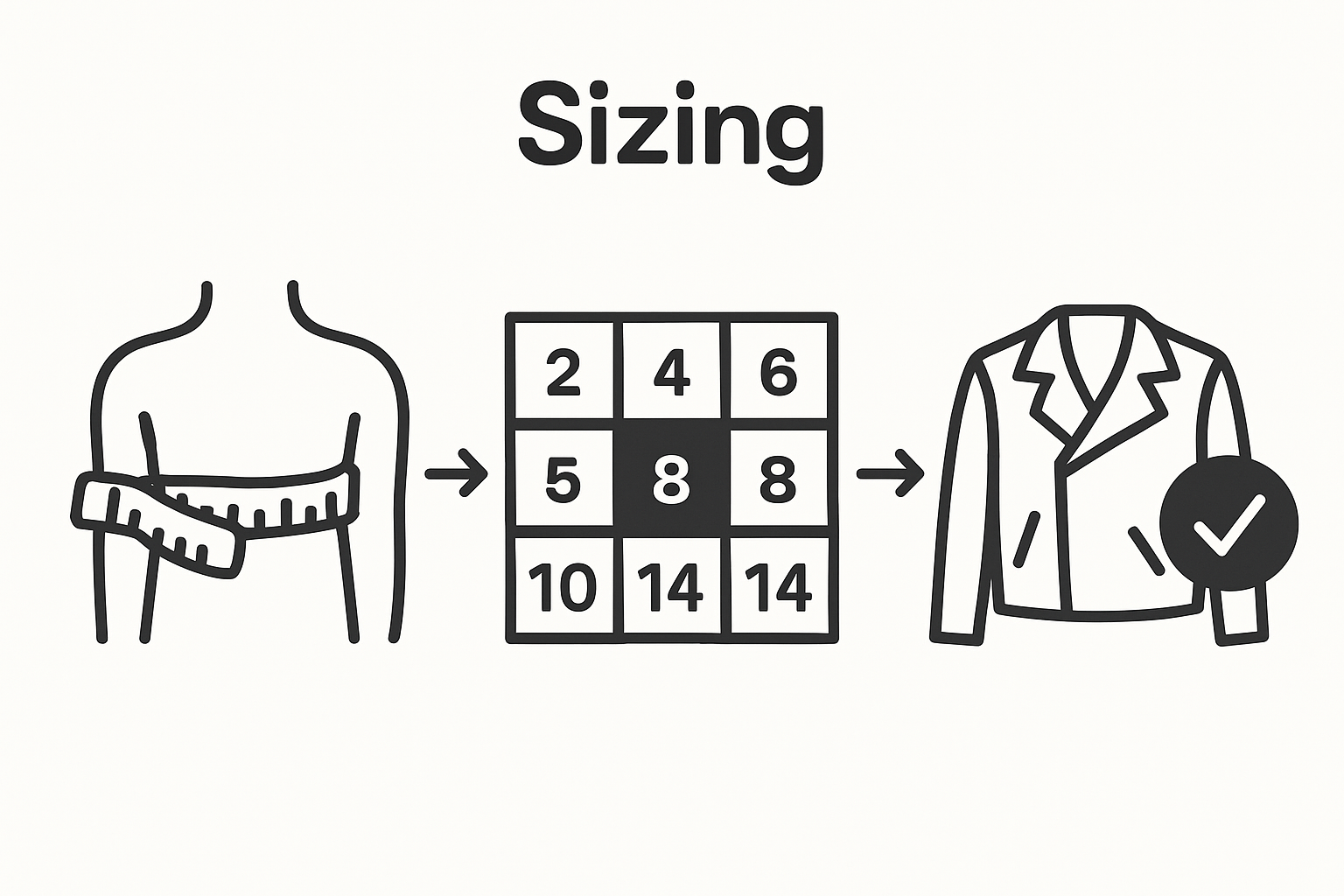 First, if your measurements fall between two sizes, always choose the larger size. Leather typically does not stretch as much as other fabrics, and a slightly looser fit is more comfortable than a restrictive garment. Pay special attention to critical areas like chest, shoulder width, and sleeve length.
Analyze each measurement individually and holistically. Some size charts might show that your chest measurement fits one size, while your sleeve length corresponds to another. In such cases, prioritize the measurement that provides the most comfort. Shoulder width is particularly crucial for leather jackets, as an ill-fitting shoulder can make the entire garment feel uncomfortable.
Here are strategies for handling measurement discrepancies:
- If your chest is one size, but sleeve length is different, consider the overall fit
- For leather jackets, shoulder width should be your primary fitting consideration
- When measurements span multiple sizes, always err on the side of a slightly larger size
Remember that different brands and styles might have subtle variations in their sizing approach. Some designers create more slim-fit designs, while others offer relaxed cuts. Take time to read product descriptions and customer reviews that might provide insights into how a particular leather piece fits.
Verify your size selection by double-checking all measurements against the chart. A successful comparison means your body measurements align closely with at least two to three key points on the size chart.
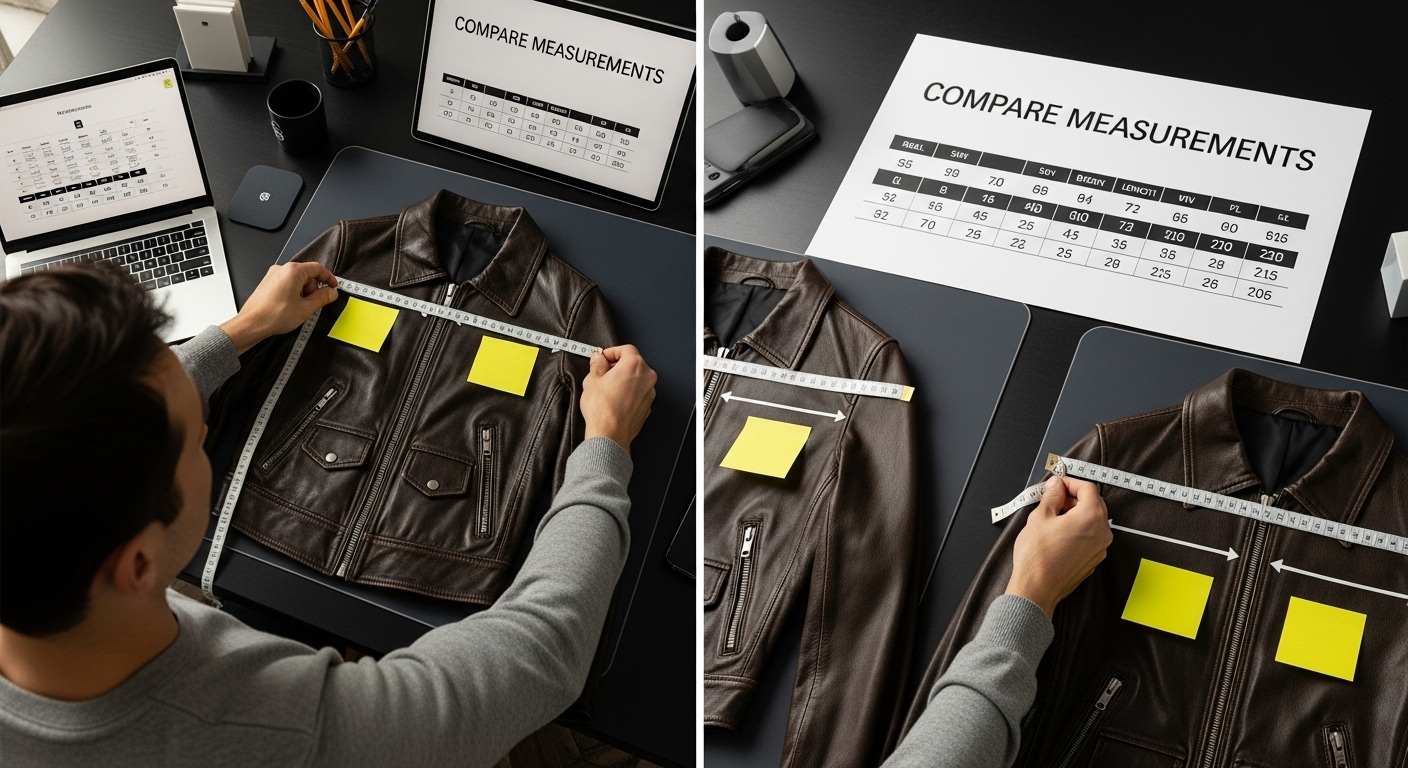 If you find significant disparities or feel uncertain, do not hesitate to contact the retailer’s customer service for personalized sizing advice.
Step 4: Understand Size Varieties and Design Differences
Navigating leather fashion sizing goes beyond simple numerical measurements. Design differences play a crucial role in how a garment fits and feels, making it essential to understand the nuanced variations across different styles and manufacturers.
According to Utah State University Extension, clothing design principles like balance, proportion, and emphasis dramatically impact how a garment fits and looks on different body types. Leather jackets, in particular, come in diverse design styles that can significantly alter their sizing and appearance.
Biker jackets typically feature a more structured, fitted silhouette with minimal ease, meaning they will feel snugger compared to classic or relaxed leather jacket designs. Bomber jackets often provide more room around the chest and shoulders, offering a more relaxed fit. Vintage or classic leather jackets might have additional considerations like traditional cut lines and room for layering.
International design variations add another layer of complexity to sizing. European designers might create slimmer, more tailored pieces, while American designs often prioritize comfort and provide more generous cuts. Asian sizing tends to run smaller, with narrower shoulders and shorter sleeve lengths.
Consider these critical design factors when selecting your leather garment:
- Jacket length impacts overall proportions and comfort
- Shoulder construction determines mobility and fit
- Sleeve width affects layering capabilities
- Cut style influences how the garment drapes on your body
Pay attention to specific design elements that might affect sizing. Leather jackets with quilted linings, additional padding, or heavy inner constructions will fit differently compared to lightweight, unlined versions.
The following table compares common leather jacket designs and highlights their typical fit characteristics, helping you anticipate how each style may affect your sizing decisions.
| Jacket Style | Typical Fit | Key Design Features | Sizing Considerations |
|---|---|---|---|
| Biker | Structured and fitted | Minimal ease, articulated sleeves | Feels snugger, less room for layering |
| Bomber | Relaxed, roomier around chest/shoulders | Ribbed trims, shorter length | More forgiving fit |
| Classic/Vintage | Traditional, straight cut | Cleaner lines, room for layering | Fit may allow extra space |
| Motorcycle-specific | Functional, articulated | Pre-curved sleeves, strategic stretch panels | Allows for mobility, can be snug |
| European | Slim, tailored | Narrower shoulders, trimmer waist | May require sizing up |
| American | Roomier, comfort-focused | Broader shoulders, relaxed chest | More generous cuts |
| Asian | Smaller, narrow fit | Shorter sleeves, narrower build | Frequently runs a size smaller |
Motorcycle-style jackets, for instance, often have pre-curved sleeves and articulated shoulders to enhance rider mobility, which changes their fundamental fit.
When trying on or ordering a leather jacket, always consider your intended use. A jacket for casual weekend wear might require a different fit compared to a piece designed for motorcycle riding or professional settings. Some designs incorporate strategic stretch panels or adjustable features like side laces or waist tabs, providing more flexibility in fit.
Ultimately, understanding size varieties and design differences means recognizing that no single size chart tells the complete story. Your perfect leather jacket combines accurate measurements, design awareness, and personal comfort preferences.
Step 5: Verify Fit with Customer Reviews or Fitting Guides
After meticulously measuring your body and comparing those measurements with size charts, the final step in selecting the perfect leather garment involves leveraging customer experiences and professional fitting guides. This crucial verification process can save you from potential sizing disappointments and provide real-world insights into how a specific piece actually fits.
According to University of Arkansas research, fit satisfaction significantly improves when consumers have access to comprehensive sizing information. Customer reviews are your secret weapon in understanding how a leather jacket truly performs beyond the manufacturer’s official size chart.
When reading customer reviews, focus on comments from individuals who describe similar body types to yours. Look for detailed reviews that discuss specific measurement comparisons, not just generic statements like “fits great.” Reviewers who mention their height, weight, chest, and shoulder measurements provide the most valuable sizing insights. Pay special attention to reviews that discuss the jacket’s fit in different positions like standing, sitting, or moving around.
Professional fitting guides offer another critical resource for verifying size selections. Many high-quality leather fashion retailers provide detailed fitting guides that go beyond basic measurements. These guides often include:
- Recommended layering space
- Shoulder placement techniques
- Sleeve length adjustment suggestions
- Body type specific fitting recommendations
Online visual fitting tools can be incredibly helpful**. Look for websites offering interactive size selectors where you can input your measurements and receive personalized recommendations. Some advanced platforms even provide virtual try-on technologies that simulate how a garment might look on your specific body shape.
Do not hesitate to contact the retailer’s customer service if you remain uncertain. Many leather fashion specialists can provide personalized sizing advice based on your specific measurements and the particular design of the jacket you are considering. They might offer insights about a specific style’s cut, potential alterations, or recommendations for achieving the best possible fit.
Remember that fit is not just about measurements, but also about personal comfort and style preference. A perfectly sized leather jacket should allow comfortable movement, provide enough room for layering, and make you feel confident. Trust your instincts and be willing to exchange or return a piece if it does not meet your expectations.
Say Goodbye to Sizing Surprises—Your Custom Fit Awaits at Maker of Jacket
After learning how important accurate measurements and size charts are for a flawless leather look, you want confidence in every purchase. The worry of choosing the wrong fit, especially with unique jacket styles and limited stretch in leather, can quickly turn excitement into frustration. Your goal is simple: find a leather jacket that feels tailored to you and eliminates any guesswork.
Let Maker of Jacket transform your sizing experience. Our comprehensive size guides work hand-in-hand with detailed product galleries to help you compare, preview, and choose your ideal leather style. Stand out in jackets designed for you with our custom order options, trusted reviews, and global free shipping. Do not wait to find your perfect fit. Visit Maker of Jacket today and experience leather fashion that feels as good as it looks.
Frequently Asked Questions
How do I take accurate body measurements for leather fashion?
To take accurate measurements, use a flexible measuring tape and wear form-fitting clothing. Measure key areas like your chest, waist, sleeve length, and shoulder width. It’s important to take each measurement at least twice for accuracy.
What should I look for in a size chart for leather garments?
When searching for a size chart, make sure to locate it on the product page. Look for measurements that correspond with your recorded dimensions, focusing on units like inches or centimeters. Be aware that size charts can vary between manufacturers.
How do I choose the right size if my measurements fall between two sizes?
If you’re between sizes, select the larger size. Leather does not stretch as much as other materials, so a slightly looser fit will be more comfortable than a tight one. Prioritize key measurements like chest and shoulder width for the best fit.
Why is design and style important when reading size charts for leather clothing?
Design and style can greatly affect how a garment fits. Different styles like biker jackets or bombers may offer varying degrees of room and structure. Understanding the design’s unique characteristics can help you predict how the piece will fit your body shape.


