

How to Take Care of Wool: Maintain Your Wool Garments Effortlessly

Wool is one of the most durable and luxury fabrics found in wardrobes across the US and the world. You might think its magical warmth makes it easy to forget about maintenance. But the surprising truth is over 60 percent of wool damage happens during home care, not from daily wear. Simple shifts in your routine can preserve your favorite sweaters for decades without that dreaded shrink or moth hole.
Table of Contents
- Step 1: Gather Necessary Supplies For Wool Care
- Step 2: Inspect Your Wool Items For Damage
- Step 3: Wash Your Wool Gently To Prevent Shrinkage
- Step 4: Dry Your Wool Correctly To Maintain Shape
- Step 5: Store Your Wool Properly To Avoid Moths
- Step 6: Regularly Check And Refresh Your Wool Items
Quick Summary
| Key Point | Explanation |
|---|---|
| 1. Assemble a Wool Care Kit | Gather essential tools like gentle detergents and clothing brushes to maintain wool quality. |
| 2. Inspect for Damage Regularly | Conduct monthly checks for signs of wear, ensuring quick action against potential issues. |
| 3. Wash Wool Gently | Use lukewarm water and wool-specific detergent to clean without risking shrinkage or damage. |
| 4. Properly Dry Wool Garments | Avoid twisting; press excess water out and reshape items while drying to maintain form. |
| 5. Store Wool Items Carefully | Clean and store in breathable bags with moth deterrents to prevent damage and deterioration. |
Step 1: Gather Necessary Supplies for Wool Care
Taking care of wool requires strategic preparation and the right tools. Before diving into wool maintenance, assembling a comprehensive care kit will ensure your garments remain pristine and protected. Proper wool care starts with understanding which specific supplies can help you preserve the delicate fibers and extend the life of your cherished wool pieces.
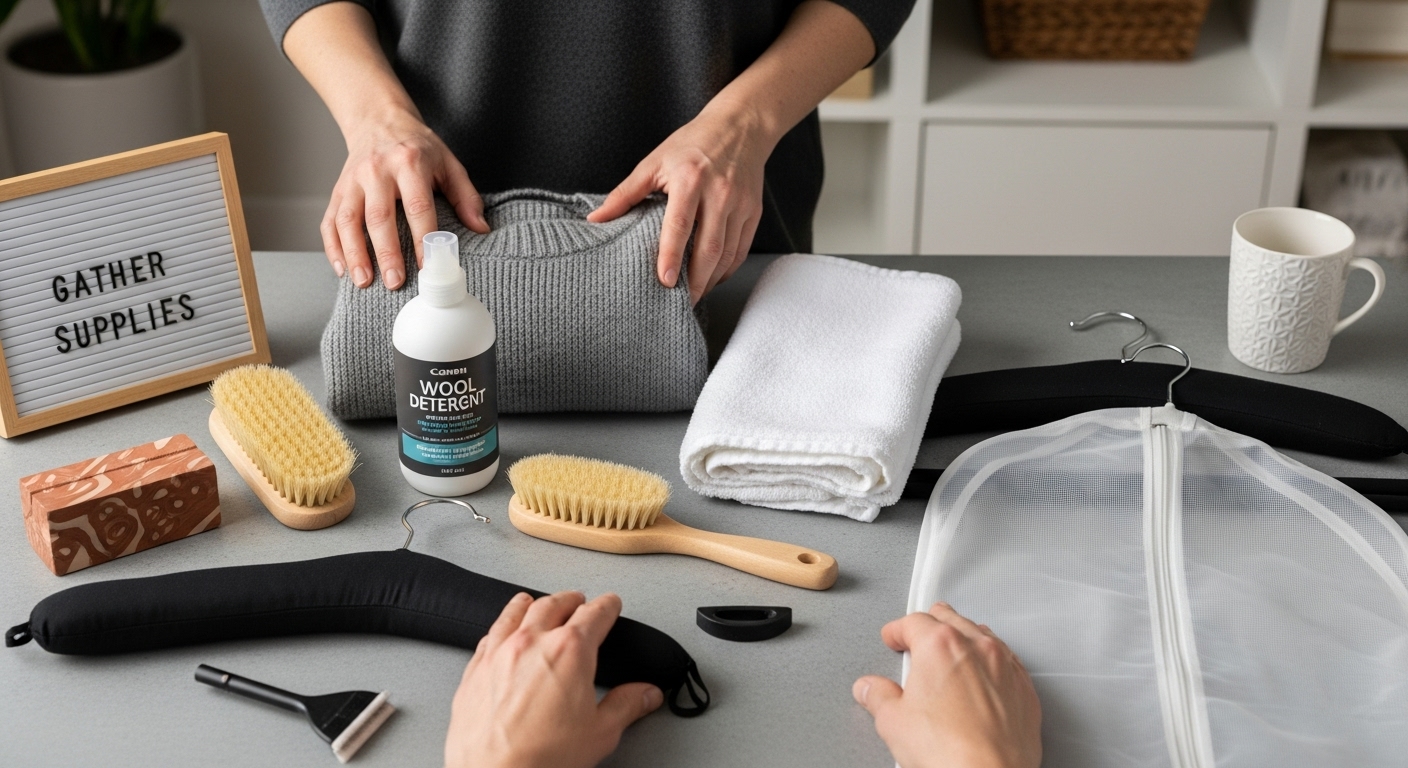
Your wool care toolkit should include several essential items that work together to clean, protect, and maintain your garments. Gentle detergent specifically formulated for wool is your first critical purchase. These specialized cleaners are designed to protect protein-based fibers from damage, preventing shrinkage and maintaining the fabric’s structural integrity. Look for pH neutral solutions that do not contain harsh chemicals which could compromise wool’s natural properties.
Additional must-have items include soft-bristled clothing brushes, which help remove surface dirt and restore wool’s natural texture without causing abrasion. A clean, white towel for drying and padded hangers will prevent stretching and maintain the garment’s shape during storage and cleaning processes. According to International Wool Textile Organisation, using the right tools is paramount in preventing potential fabric damage.
For storage protection, invest in cedar blocks or lavender sachets as natural moth deterrents. These alternatives provide chemical-free protection against fabric-damaging insects while imparting a pleasant, subtle fragrance. Mesh garment bags with breathable materials can further shield your wool items from dust and potential environmental contaminants.
A complete wool care kit should also include fabric shaver or lint remover to address pilling, a common issue with wool garments. These tools help maintain a clean, fresh appearance by gently removing accumulated surface fibers without causing additional wear. By gathering these supplies beforehand, you create a comprehensive system for maintaining your wool wardrobe with professional-level care and attention.
Below is a table summarizing the essential tools and supplies needed for effective wool care, along with their main purposes and brief notes on usage.
| Tool/Supply | Purpose | Notes |
|---|---|---|
| Wool-specific gentle detergent | Safely cleans wool without damaging fibers | Use pH neutral, no harsh chemicals |
| Soft-bristled clothing brush | Removes surface dirt, restores texture | Prevents abrasion, maintains appearance |
| Clean white towel | Absorbs moisture during drying | Avoids color transfer, gentle on wool |
| Padded hangers | Maintains garment shape during storage/cleaning | Prevents shoulder stretching |
| Cedar blocks/lavender sachets | Natural moth deterrent for storage | Chemical-free, adds pleasant fragrance |
| Mesh garment bags | Shields from dust and contaminants | Breathable, avoids moisture buildup |
| Fabric shaver/lint remover | Removes pilling and fuzz | Gently removes surface fibers |
Step 2: Inspect Your Wool Items for Damage
Before cleaning or treating your wool garments, a thorough and careful inspection is crucial to understanding their current condition and identifying potential issues. This step serves as a diagnostic process that helps prevent further damage and determines the most appropriate care strategy for each unique wool item in your wardrobe.
Begin your inspection by finding a well-lit area with natural daylight, which allows you to see subtle fabric details and potential damage more clearly. Spread the wool garment on a clean, flat surface, ensuring you have enough space to examine every section methodically. Start with an overall visual assessment, looking for obvious signs of wear such as discoloration, stretched areas, or visible fabric thinning.
Focus your attention on high-stress areas like underarms, elbows, and seams where fabric experiences more friction and potential deterioration. Gently stretch the fabric in these regions to check for structural integrity and potential weakening. Pay special attention to moth damage, which often appears as small, irregular holes or thinned patches. According to The Smithsonian’s Museum Conservation Institute, regular inspection is key to preventing extensive textile damage.
Carefully examine the fabric’s surface for pilling, those small, fuzzy balls that form from repeated friction. While minor pilling is normal, excessive accumulation might indicate the need for more gentle handling or potential replacement. Run your hands softly across the fabric, feeling for any unusual textures, snags, or loose threads that might require repair.
To complete your inspection, check the garment’s edges and hemlines for loose stitching or unraveling. Note any areas of concern such as small tears, stretched sections, or developing weak points. This detailed examination not only helps you understand your wool item’s current condition but also guides your subsequent cleaning and maintenance approach, ensuring you address specific vulnerabilities before they become more significant problems.
This table provides an overview of common wool garment problems, their typical causes, and recommended solutions as described in this article.
| Problem | Common Cause | Recommended Solution |
|---|---|---|
| Shrinkage | Hot water, harsh detergents, agitation | Hand wash in lukewarm water with wool detergent; avoid wringing |
| Moth damage | Dirty garments, improper storage | Store clean and dry; use natural moth deterrents (cedar, lavender) and breathable bags |
| Pilling | Friction on fabric surfaces | Use a fabric shaver/lint remover; brush garment gently |
| Stretching/distortion | Hanging wet or heavy wool | Dry flat on towels; avoid hanging sweaters |
| Mildew or odor | Storing while damp | Ensure garments are completely dry before storage |
| Stains | Spills, food, body oils | Spot clean promptly with wool-safe stain remover |
Step 3: Wash Your Wool Gently to Prevent Shrinkage
Washing wool requires a delicate approach that preserves the fabric’s integrity and prevents potential damage. Your goal is to clean the garment thoroughly while maintaining its original shape, texture, and quality. Unlike synthetic fabrics, wool demands a specialized washing technique that minimizes stress on its natural fibers.
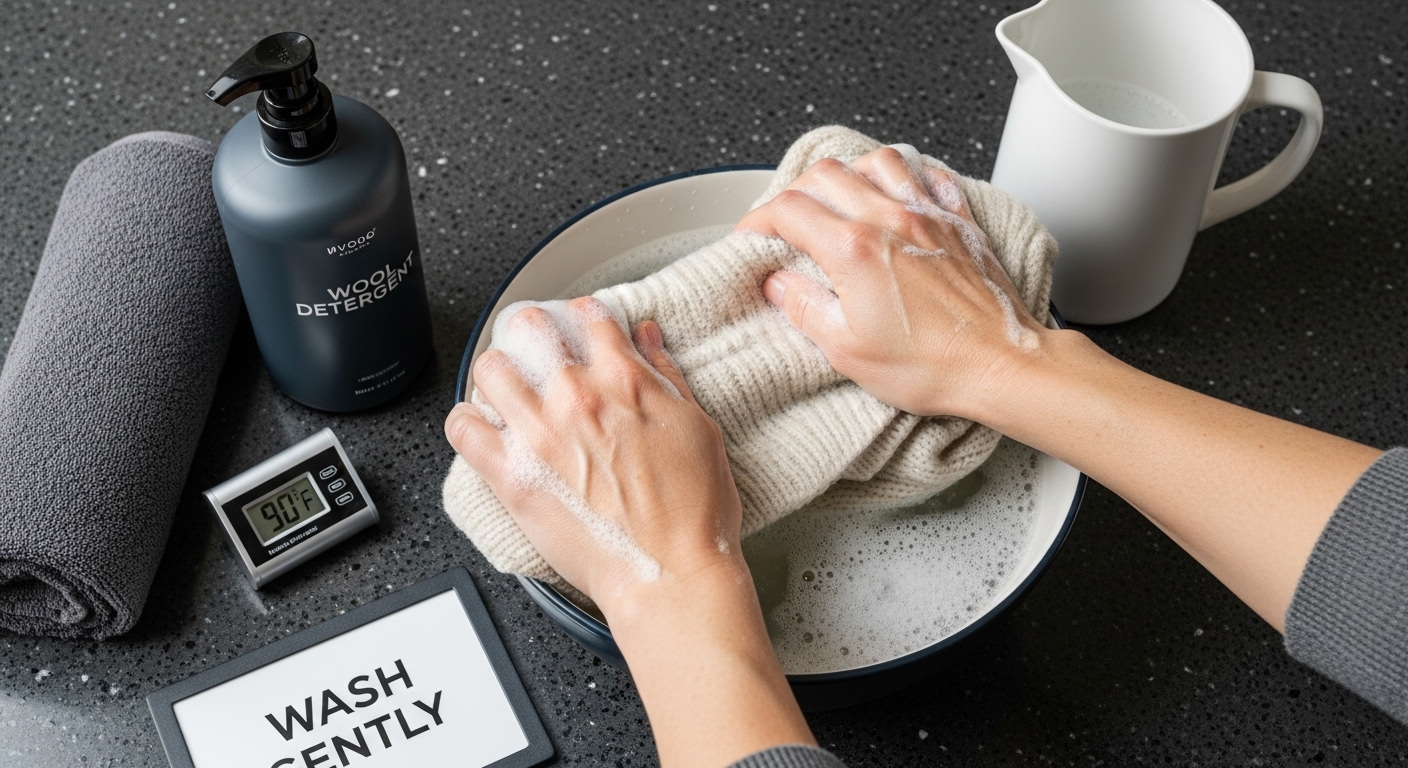
Prepare a clean basin or sink with lukewarm water, ensuring the temperature remains consistent and does not exceed 90 degrees Fahrenheit. Select a wool-specific detergent that is pH neutral and designed to protect protein-based fibers. These specialized cleaners help maintain the wool’s natural properties without causing shrinkage or fiber breakdown. Avoid using standard laundry detergents, which can be too harsh and potentially damage the delicate fabric.
Dissolved detergent should create a gentle, sudsy environment for your wool garment. According to University of Georgia Extension, minimizing agitation is crucial during the washing process. Submerge the wool item carefully, allowing it to soak for approximately 10 minutes without excessive manipulation. Gently press the fabric to help the cleaning solution penetrate the fibers, but refrain from twisting, wringing, or scrubbing, which can cause permanent damage.
After soaking, drain the soapy water and rinse the garment with cool water multiple times until all detergent is removed. Press excess water out using a clean, white towel, rolling the wool item carefully to absorb moisture without stretching the fabric. Avoid hanging wool garments, as this can cause distortion and stretching. Instead, lay the item flat on a fresh, dry towel, reshaping it to its original dimensions and allowing it to air dry naturally away from direct heat or sunlight.
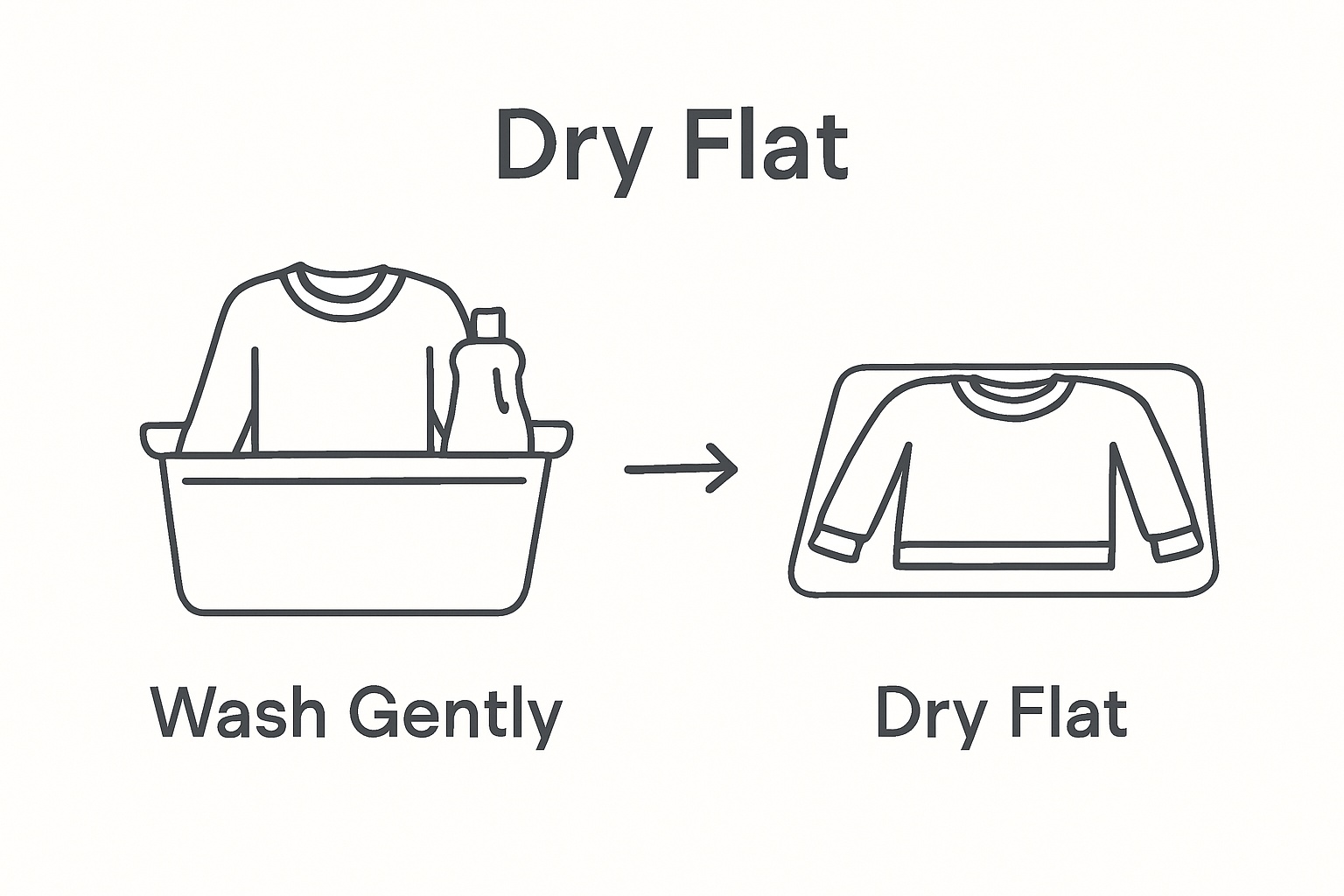
Your final step involves patience and careful monitoring. Wool requires gentle handling during the drying process, so resist the temptation to speed things up with a dryer or direct heat source. By following these meticulous washing instructions, you will successfully clean your wool garments while preserving their quality, appearance, and longevity.
Step 4: Dry Your Wool Correctly to Maintain Shape
Drying wool requires a precise and gentle approach that preserves the garment’s structural integrity and prevents potential damage. Your primary goal is to remove moisture without compromising the fabric’s natural properties, ensuring the wool maintains its original shape, texture, and size.
Immediately after washing, carefully remove excess water by gently pressing the wool item between clean, white towels. Avoid twisting or wringing the fabric, which can cause permanent stretching or misshaping. Instead, roll the garment in the towel, allowing the fabric to absorb moisture without direct pressure. This technique helps prevent unnecessary stress on the delicate wool fibers.
Prepare a flat drying surface using a clean, breathable mesh drying rack or a fresh white towel spread on a flat surface. Reshape the wool garment to its original dimensions, carefully stretching and smoothing out any potential wrinkles or distortions. This step is critical in maintaining the item’s intended fit and appearance. According to American Wool Organization, proper reshaping during the drying process is essential for preserving the garment’s original form.
Choose a drying location that offers consistent room temperature and indirect lighting. Avoid direct sunlight, radiators, or any heat sources that could cause rapid moisture evaporation or potential fiber damage. Position the wool item away from drafty areas to ensure uniform drying and prevent potential misshaping. If possible, turn the garment occasionally to promote even air circulation and prevent moisture accumulation in specific areas.
Verify the drying process by gently touching the wool garment periodically. The fabric should feel cool and slightly damp, gradually becoming dry to the touch. Patience is key during this stage. Rushing the drying process or applying artificial heat can lead to irreversible damage, including shrinkage, texture changes, or structural deformation. By following these meticulous drying instructions, you will successfully preserve your wool garment’s quality, ensuring it remains a cherished piece in your wardrobe for years to come.
Step 5: Store Your Wool Properly to Avoid Moths
Storing wool garments requires a strategic approach that protects against potential moth damage and preserves the fabric’s quality. Your ultimate goal is to create an environment that discourages insect infestation while maintaining the wool’s natural properties and preventing unnecessary wear.
Clean your wool items thoroughly before storage, as any residual food stains, body oils, or organic matter can attract moths and provide nutrients for larvae. Ensure each garment is completely dry and free from moisture, which can lead to mildew and fabric deterioration. Fold wool items carefully, using acid-free tissue paper between layers to prevent creasing and maintain the garment’s shape. Avoid hanging wool sweaters, as this can cause stretching and distortion of the fabric’s natural structure.
Select storage containers that offer protection from environmental factors. Breathable cotton garment bags or cedar-lined storage boxes provide excellent protection while allowing minimal air circulation. According to University of Georgia Extension, natural moth deterrents like cedar blocks or lavender sachets can be strategically placed to repel insects without causing fabric damage. These natural alternatives offer a chemical-free method of protecting your wool garments.
Temperature and humidity control are critical in wool storage. Maintain a consistent, cool environment between 50-70 degrees Fahrenheit with moderate humidity levels around 50%. Avoid storing wool in damp basements or hot attics, as extreme conditions can encourage moth reproduction and fabric degradation. Periodically inspect stored wool items every few months, gently unfolding and airing them to prevent permanent creasing and check for any signs of moth activity.
A final protective measure involves using pheromone moth traps in your storage area. These traps attract and capture adult moths, interrupting their reproductive cycle and preventing potential fabric damage. By implementing these comprehensive storage strategies, you create a robust defense system that preserves your wool garments, ensuring they remain pristine and moth-free for years to come.
Step 6: Regularly Check and Refresh Your Wool Items
Maintaining wool garments is an ongoing process that requires consistent attention and care. Regular checks and refreshing techniques help preserve the fabric’s quality, extend its lifespan, and ensure your wool items remain in pristine condition between more thorough cleaning cycles.
Develop a monthly inspection routine for your wool wardrobe. Carefully remove each item from storage, examining it thoroughly for any signs of potential damage such as moth holes, loose threads, or developing wear patterns. Use natural light to help identify subtle changes in the fabric’s texture or color. Gently brush the garment with a soft-bristled clothing brush to remove surface dust and restore the wool’s natural luster, paying special attention to areas that experience frequent friction like elbows, underarms, and hem edges.
Wool’s remarkable natural properties allow for less frequent washing compared to other fabrics. Airing out wool garments is an excellent method of refreshing them without subjecting the fabric to unnecessary cleaning. Hang the item in a well-ventilated area away from direct sunlight for several hours, allowing natural air circulation to eliminate any accumulated odors and restore the fabric’s freshness. According to International Wool Textile Organisation, this method helps maintain the garment’s structural integrity while keeping it clean and odor-free.
Spot cleaning becomes your strategic approach for managing minor stains or marks. Keep a specialized wool-safe stain remover in your garment care kit, using it sparingly and following the product’s instructions precisely. Blot stains gently rather than rubbing, which can damage wool fibers and potentially spread the stain. For more significant soiling or after multiple wearing cycles, consider professional dry cleaning to maintain the garment’s original shape and quality.
Your final verification involves assessing the wool item’s overall condition. Check for any changes in fit, texture, or appearance. A well-maintained wool garment should retain its original shape, color vibrancy, and soft texture. By implementing these regular checking and refreshing techniques, you create a proactive maintenance strategy that preserves your wool items, ensuring they remain a cherished part of your wardrobe for years to come.
Elevate Your Wool Garment Care with Custom Solutions from Maker of Jacket
You have invested time and attention into keeping your wool garments fresh, clean, and protected from the risk of moths and everyday wear. But if you are looking for more than just maintenance—if you want outerwear that blends the luxury of premium care with lasting quality—discover what true customization can offer. At Maker of Jacket, we understand the challenges that come with maintaining delicate fibers, preventing shrinkage, and keeping your favorite pieces looking sharp year after year.

Why settle for ordinary when you can own jackets made with the finest materials and tailored care in mind? Explore our custom jacket options and choose designs that reflect your unique style while offering long-term durability and comfort. Upgrade your wardrobe with pieces that are easy to care for and built to last. Visit Maker of Jacket today to browse the collection and create your own trusted essentials. Take action now and protect the investment you wear every day.
Frequently Asked Questions
How do I wash wool garments without causing shrinkage?
To wash wool garments, fill a clean basin with lukewarm water and use a wool-specific, pH neutral detergent. Submerge the garment gently, allowing it to soak for about 10 minutes without agitation. Rinse with cool water, press out excess water using a towel, and lay the item flat to dry.
What can I use to remove moths from my wool clothes?
To protect your wool clothes from moths, use cedar blocks or lavender sachets as natural deterrents. Additionally, regularly inspect your garments and store them in breathable cotton garment bags or cedar-lined storage boxes to prevent infestations.
How do I properly store wool garments?
Store wool garments by cleaning them thoroughly and ensuring they’re completely dry. Fold them carefully with acid-free tissue paper between layers to prevent creasing, and keep them in a cool, dry environment with moderate humidity. Use breathable containers and consider using natural moth repellents.
What should I do if my wool garment has pilling?
To address pilling on a wool garment, use a fabric shaver or lint remover gently to remove the fuzzy balls without causing additional wear. Regularly brushing the garment with a soft-bristled clothing brush also helps maintain its appearance and texture.


