

Jacket Fit: Why It Matters for Riders

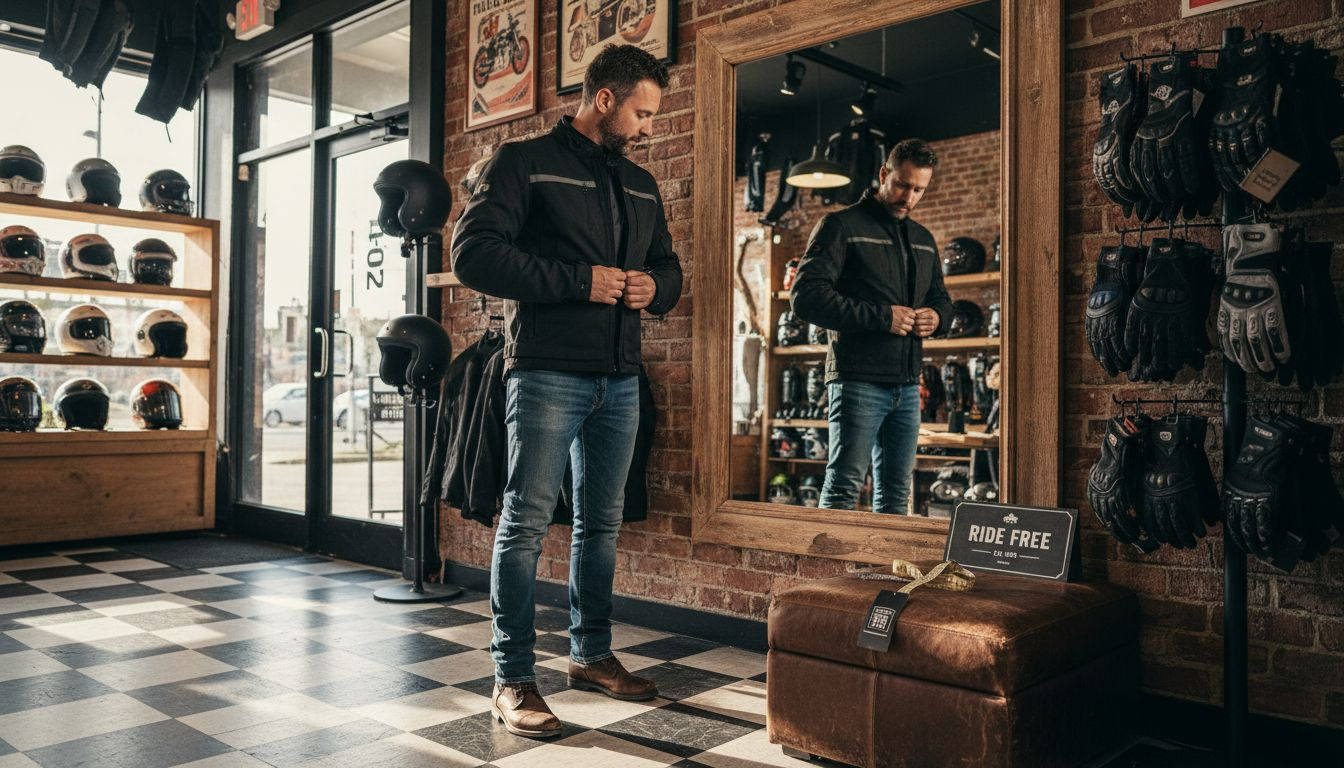
Choosing a leather motorcycle jacket that truly fits can feel like a challenge when balancing personal style with protection on every ride. For fashion-conscious American riders, the right jacket offers both head-turning style and the confidence that comes from a comfortable, secure fit. Proper fit is not just about looking sharp in city lights or on open highways—it is about feeling unrestricted and protected in every riding position.
Table of Contents
- Understanding Jacket Fit Essentials
- Types of Jackets and Fit Requirements
- Key Features That Affect Jacket Fit
- Safety and Performance Impacts of Poor Fit
- Common Fit Problems and Solutions
Key Takeaways
| Point | Details |
|---|---|
| Proper Fit is Essential | A well-fitting jacket enhances safety and comfort while providing mobility during riding. |
| Consider Riding Position | Always try on jackets in a riding position to ensure they accommodate arm and shoulder mobility. |
| Know Your Jacket Type | Different jacket styles have varying fit requirements, impacting safety and comfort based on riding needs. |
| Regular Fit Assessments | Schedule annual measurements to maintain an optimal fit that adapts to body changes over time. |
Understanding Jacket Fit Essentials
Choosing the right motorcycle jacket isn’t just about style – it’s about safety, comfort, and protection. A jacket that fits poorly can compromise your riding experience and potentially your safety on the road. Proper fit is the difference between feeling confident and feeling restricted while navigating through urban streets or open highways.
When assessing jacket fit for riders, several critical factors come into play:
- Body Measurements: Chest, shoulder width, and arm length determine jacket sizing
- Riding Position: Jacket must accommodate aggressive riding postures
- Movement Range: Allows full arm and shoulder mobility without bunching
- Layer Compatibility: Space for thermal liners or additional protective gear
Riders should understand that fit testing protocols aren’t just industrial safety procedures – they apply directly to motorcycle gear. Just like professional respirator testing, your jacket needs precise fitting to ensure maximum protection and comfort.
Key fitting zones require special attention for motorcycle jackets. The sleeve length should reach your wrist when arms are extended, preventing wind gaps. Shoulder seams must align precisely with your natural shoulder line, allowing unrestricted movement. Torso fit should be snug but not constrictive – think of it as a second skin that moves with your body.
Professional sizing tips include:
- Always try jackets in riding position, not standing straight
- Check arm and shoulder mobility before purchasing
- Consider potential protective armor placement
- Allow slight room for movement and potential layering
Pro tip: Visit a specialized motorcycle gear retailer and get professionally measured to understand your precise jacket fit requirements.
Types of Jackets and Fit Requirements
Motorcycle jackets come in diverse styles, each with unique fit considerations that directly impact rider safety and comfort. Understanding the nuanced fit requirements for different jacket types can mean the difference between a great riding experience and potential discomfort or risk.
The primary motorcycle jacket types include:
- Leather Racing Jackets: Extremely form-fitting with pre-curved sleeves
- Textile Touring Jackets: More relaxed fit with layering capabilities
- Cruiser Leather Jackets: Looser fit, emphasizing style and wind protection
- Adventure/Dual-Sport Jackets: Versatile fit with robust armor integration
When considering protective equipment fit requirements, motorcycle jackets must provide comprehensive protection while maintaining mobility. Professional riders understand that a jacket isn’t just about looking good – it’s a critical safety component that needs precise sizing.
Each jacket type demands specific fit parameters. Racing jackets require an almost second-skin approach, minimizing material movement during aggressive riding. Touring jackets need more room for layering and long-distance comfort. Cruiser jackets prioritize wind resistance and aesthetic flow, while adventure jackets balance protection with adaptability across multiple riding environments.
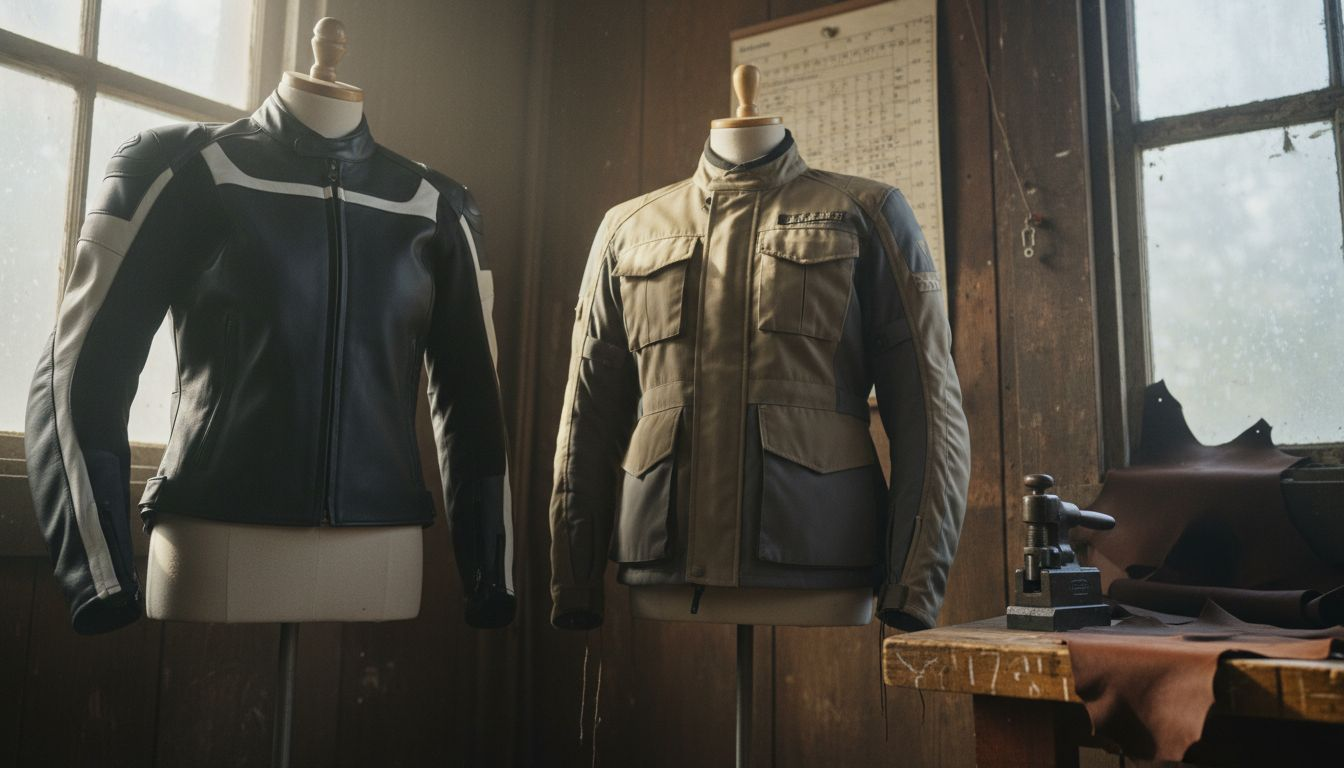
Key Fit Considerations for Different Jacket Types:
Here’s a comparison to help choose the right motorcycle jacket type for your riding needs:
| Jacket Type | Typical Fit | Best Use Case | Fit Customization Level |
|---|---|---|---|
| Racing | Very snug | Track or sport riding | Minimal adjustment |
| Touring | Relaxed/Layered | Long-distance travel | Multiple adjustments |
| Cruiser | Looser, stylish | Casual city rides | Basic belt/side straps |
| Adventure/Dual-Sport | Flexible/adjustable | Off-road, mixed terrain | Extensive adjustment |
- Racing Jackets: Tight fit with minimal slack
- Touring Jackets: Relaxed fit with articulated panels
- Cruiser Jackets: Slightly looser, emphasizing comfort
- Adventure Jackets: Adjustable fit with modular protection
Pro tip: Always try motorcycle jackets in a riding position to accurately assess true fit and movement potential.
Key Features That Affect Jacket Fit
A motorcycle jacket’s fit is far more complex than simply choosing the right size. Multiple intricate features interact to create the perfect riding experience, directly impacting safety, comfort, and performance. Understanding these key elements can transform your riding gear from a basic garment to a precision-engineered piece of protective equipment.
Critical features that determine jacket fit include:
- Shoulder Construction: Determines mobility and protection zones
- Sleeve Articulation: Allows natural arm movement while riding
- Waist and Torso Adjustment: Prevents wind penetration and ensures snug fit
- Armor Placement: Critical for impact protection and comfort
- Material Stretch Panels: Enables dynamic movement during riding
When examining protective equipment fit requirements, riders must consider how individual body characteristics interact with jacket design. Body shape, muscle mass, riding posture, and even subtle physical variations can dramatically influence how a jacket performs and protects.
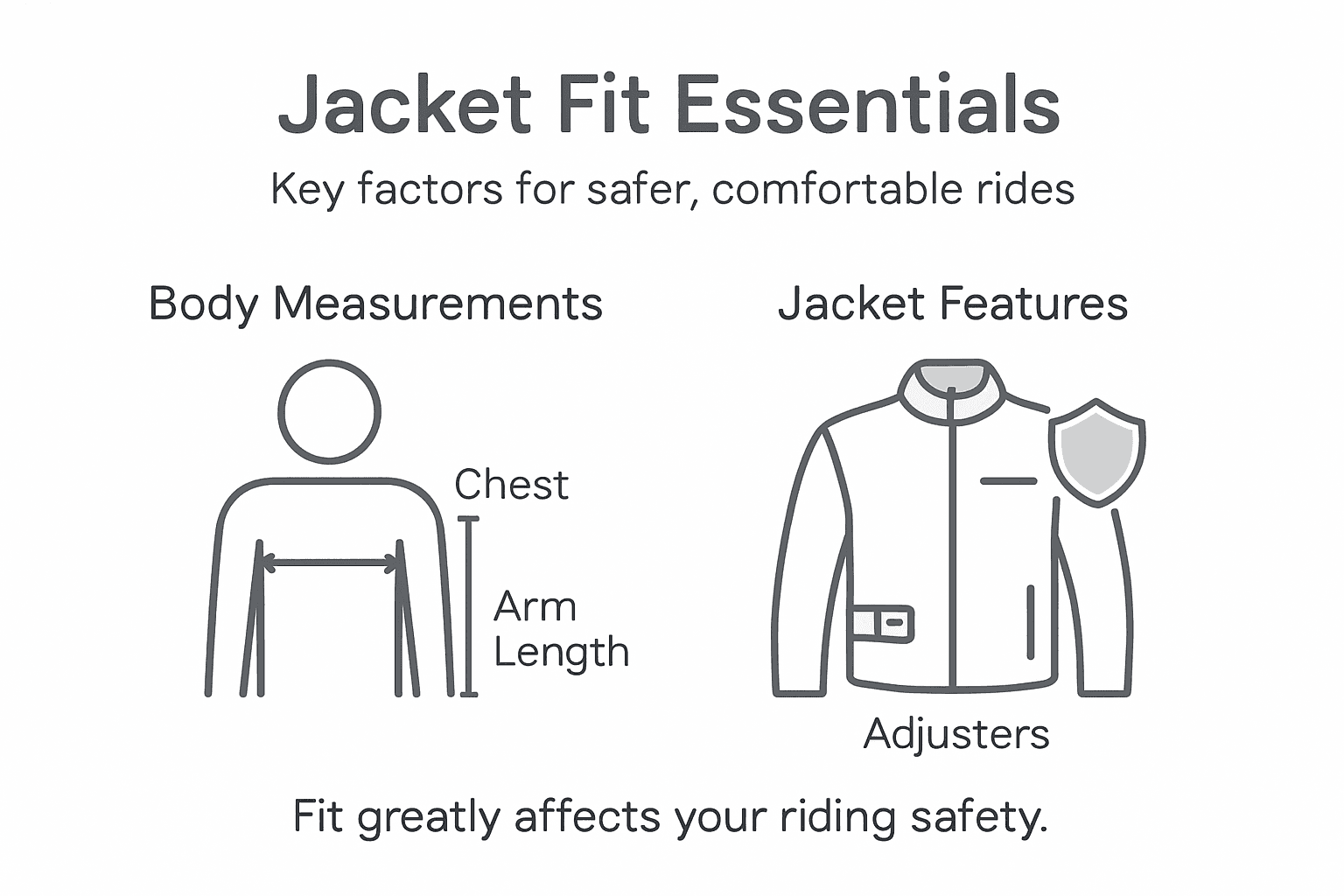
Each jacket component plays a strategic role in overall fit. Shoulder seams should align precisely with natural shoulder lines, preventing bunching during aggressive riding positions. Sleeve lengths require careful consideration – too short restricts movement, while overly long sleeves can bunch uncomfortably and reduce protective coverage. Waist adjustments and stretch panels become critical for maintaining a secure yet flexible fit across diverse riding conditions.
Jacket Fit Optimization Strategies:
- Measure body while in riding position
- Check arm mobility with simulated riding posture
- Ensure armor sits directly over key impact zones
- Verify minimal fabric movement during dynamic motion
Proper jacket fit isn’t about tight or loose – it’s about precision engineering that moves with your body.
Pro tip: Invest in jackets with multiple adjustment points to customize your fit precisely for maximum comfort and protection.
Safety and Performance Impacts of Poor Fit
Motorcycle jackets are more than fashion statements – they’re critical safety equipment that can mean the difference between walking away from an accident and serious injury. A poorly fitting jacket compromises protection, reduces mobility, and creates potentially dangerous riding conditions that no motorcyclist should risk experiencing.
The primary safety risks of an ill-fitting motorcycle jacket include:
- Restricted Movement: Limited range of motion during critical maneuvers
- Exposed Impact Zones: Armor and padding misaligned with body protection points
- Wind Infiltration: Increased rider fatigue and potential loss of control
- Sliding Vulnerability: Increased risk of road abrasion during potential accidents
- Thermal Inefficiency: Poor temperature regulation and comfort management
When examining personal protective equipment risks, riders must understand that improperly fitted gear can dramatically reduce expected protection levels. A jacket that slides, bunches, or shifts during a potential accident transforms from a protective layer into a liability.
Technical performance degradation occurs through multiple mechanisms. Loose jackets can catch wind, creating unexpected drag and reducing rider stability. Tight jackets restrict critical muscle groups, hampering quick reactions and increasing rider fatigue. The precise balance between mobility and protection requires meticulous fit considerations that go far beyond simple sizing.
Performance Compromise Indicators:
- Armor shifts during movement
- Fabric creates drag at higher speeds
- Restricted shoulder or arm rotation
- Gaps between jacket and body
Safety isn’t about having protective gear – it’s about having protective gear that works precisely when you need it most.
Pro tip: Schedule an annual gear fit assessment to account for body changes and ensure ongoing motorcycle jacket performance and protection.
Common Fit Problems and Solutions
Motorcycle jacket fit challenges are as diverse as the riders who encounter them. Understanding these common issues can transform a frustrating gear experience into a comfortable, safe riding solution. The key is recognizing problems early and knowing precisely how to address them before they compromise your safety or riding performance.
The most prevalent motorcycle jacket fit problems include:
- Shoulder Pinching: Restricts arm movement and creates discomfort
- Sleeve Length Mismatch: Exposes wrists or bunches uncomfortably
- Chest Tightness: Limits breathing and restricts upper body flexibility
- Torso Gapping: Creates wind channels and reduces protective coverage
- Armor Misalignment: Shifts critical protective elements away from impact zones
When addressing jacket measuring and fit challenges, riders must approach sizing with surgical precision. Professional measurements aren’t just about numbers – they’re about understanding how different body shapes interact with motorcycle gear design.
Each fit problem requires a targeted solution. Shoulder pinching might necessitate a jacket with pre-curved sleeves or raglan-style construction. Sleeve length issues can be resolved through adjustable straps or finding brands that offer specific arm length options. Chest tightness often indicates the need for a slightly larger size or a jacket with stretch panels that accommodate different body types.
The following table highlights how common jacket fit issues affect safety and comfort, along with ideal solutions:
| Fit Issue | Potential Safety Risk | Rider Comfort Impact | Best Solution |
|---|---|---|---|
| Shoulder pinching | Reduced arm reaction speed | Persistent discomfort | Pre-curved or raglan sleeves |
| Sleeve too short | Exposed wrists during crash | Cold or wind at wrist | Select longer sleeve option |
| Chest tightness | Impaired breathing, less focus | Restrictive chest feel | Size up or add stretch zones |
| Torso gapping | Wind infiltration, less armor | Flapping and draft | Waist adjusters or tailoring |
| Armor misalignment | Impact not absorbed properly | Awkward, misplaced pads | Adjust or reposition armor |
Fit Problem Troubleshooting Strategies:
- Use multiple measurement points beyond basic sizing
- Try jackets in riding position, not just standing
- Check mobility with simulated riding movements
- Consider aftermarket tailoring for critical adjustments
Precision matters more than perfection – a 90% perfect fit is better than no protection at all.
Pro tip: Invest in a professional measuring session and keep those measurements updated annually to ensure consistent motorcycle jacket fit.
Achieve the Perfect Jacket Fit with Maker of Jacket
Finding the right motorcycle jacket fit is essential for rider safety and comfort. If you’ve experienced issues like restricted movement, armor misalignment, or uncomfortable tightness, you know how frustrating it can be to compromise on protection. Maker of Jacket understands these pain points and offers a wide selection of customizable jackets designed to move with your body and suit your riding style. Whether you prefer the snug fit of racing jackets or the flexibility of touring styles, our Maker of Jacket’s collection has options tailored for precision and performance.
Take control of your riding safety today by exploring high-quality, made-to-measure motorcycle jackets from https://makerofjacket.com. Discover designs that prioritize perfect fit, comfort, and protection. Start your customization journey now to enjoy jackets that are more than apparel – they are your trusted riding companion. Don’t wait until poor fit compromises your ride. Visit our Mustang jacket collection and browse our complete offerings to find your ideal match.
Frequently Asked Questions
What are the key measurements to consider for motorcycle jacket fit?
When choosing a motorcycle jacket, focus on body measurements such as chest, shoulder width, and arm length. These dimensions help determine the proper size and ensure a snug fit that enhances comfort and safety.
How should I test the fit of a motorcycle jacket?
Always try the jacket in a riding position rather than standing straight. Move your arms and simulate riding to check for mobility and comfort, ensuring that the jacket allows for full arm movement without bunching up.
What are the common fit problems with motorcycle jackets and their solutions?
Common fit problems include shoulder pinching, sleeve length mismatch, chest tightness, torso gapping, and armor misalignment. Solutions may involve selecting jackets with pre-curved sleeves, opting for a larger size with stretch panels, or adjusting armor placement for better protection.
How does a poorly fitting motorcycle jacket impact safety?
A poorly fitting motorcycle jacket can restrict movement, expose impact zones, allow wind infiltration, increase the risk of sliding in an accident, and lead to thermal inefficiency. Each of these factors can seriously compromise a rider’s safety and performance on the road.


