

Motorcycle Jacket Safety Features Guide for Secure Riding

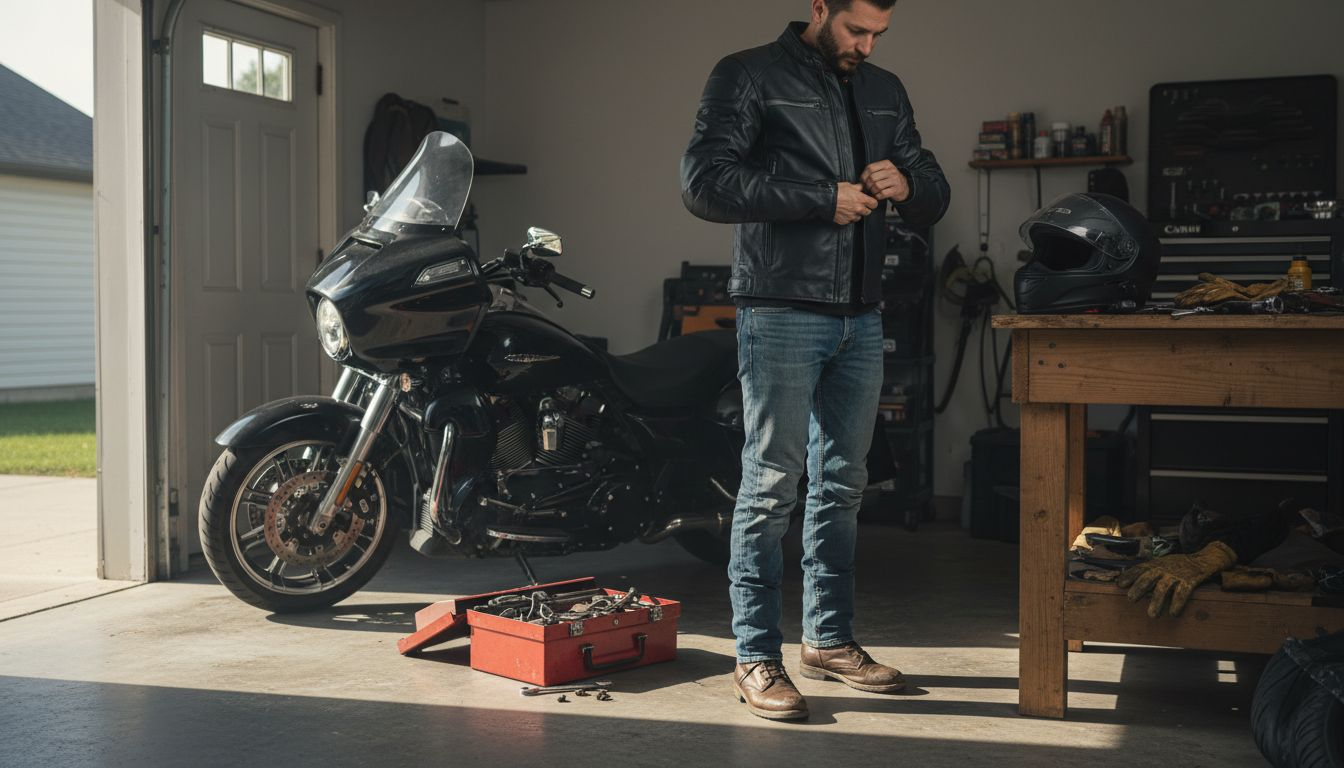
Choosing a motorcycle jacket is about more than just timeless style and attitude. For riders who crave both fashion and peace of mind, understanding what sets true protective gear apart is non-negotiable. The right leather jacket blends bold looks with abrasion resistance and impact protection, keeping you confident on every ride from the city streets to the country highways. This guide shows how careful material choices, proper armor, and thoughtful customizations make all the difference when your safety is on the line.
Table of Contents
- Step 1: Identify Essential Safety Features In Motorcycle Jackets
- Step 2: Evaluate Protective Materials And Impact Zones
- Step 3: Assess Fit And Adjust Customization Options For Safety
- Step 4: Test Visibility Enhancements And Reflective Panels
- Step 5: Verify Certifications And Inspect Quality Standards
Quick Summary
| Key Insight | Explanation |
|---|---|
| 1. Choose Quality Leather for Protection | Opt for thick, full grain leather for superior abrasion resistance over synthetic materials. |
| 2. Focus on Proper Armor Placement | Ensure the jacket has armor in key impact zones like shoulders and elbows for maximum safety. |
| 3. Verify Visibility Features | Look for reflective panels and bright colors to enhance visibility during day and night rides. |
| 4. Check for Certifications | Select jackets with recognized safety certifications, indicating that they’ve passed rigorous testing standards. |
| 5. Ensure a Snug Fit | The jacket should fit snugly without restricting movement, keeping armor in place during a crash. |
Step 1: Identify essential safety features in motorcycle jackets
When you’re shopping for a motorcycle jacket, knowing what to look for makes all the difference between a jacket that looks good and one that actually protects you when it matters. Your goal here is to understand the core safety features that separate quality protective gear from fashion jackets that fail when you need them most.
Start by examining the material. Leather remains the gold standard for motorcycle jackets because it provides natural abrasion resistance that synthetic materials struggle to match. Real leather takes the brunt of road contact and slows you down significantly before your skin gets damaged. Look for thick, quality leather, typically 1.2 to 1.4 millimeters. Cheaper jackets use thin leather that tears apart instantly. Run your hand over the material and feel the weight. Heavy leather feels substantial, not papery.
Next, check where the padding sits. Impact protection zones matter tremendously. Your shoulders, elbows, and back take the most punishment in crashes. Quality motorcycle jackets have reinforced padding in these exact areas because these joints bear your weight when you slide. Feel inside the jacket for foam padding or protective inserts. Some jackets now use impact foam that hardens on impact, absorbing energy far better than standard padding. Don’t settle for thin generic padding scattered randomly throughout the jacket.
Look at the overall coverage and fit. A jacket that rides up and exposes your lower back during a ride leaves you vulnerable. The jacket should cover from your shoulders down to your hip bones when you’re sitting upright on the bike. Sleeve length matters too. Your wrists should be covered when your arms are extended on the handlebars. Proper coverage comes down to how the jacket is cut and constructed, not just size.
Consider visibility features. Reflective strips, bright colors, or contrasting panels help other riders and drivers see you. The Motorcycle Safety Foundation emphasizes that conspicuity features reduce injuries by making you more noticeable on the road. Look for reflective stitching along seams or panels that catch headlights.
Final check: examine the construction quality. Quality jackets have reinforced seams, solid zippers that move smoothly, and hardware that feels durable. Press on the seams and zippers. They should feel solid and well made, not flimsy or about to fail. At Maker of Jacket, customizable options let you choose materials and reinforcement exactly how you want them, ensuring you get protection tailored to your riding style.
Pro tip: Try on your jacket while sitting in a motorcycle riding position, not standing straight up, to ensure the fit protects your lower back and doesn’t bunch uncomfortably.
Step 2: Evaluate protective materials and impact zones
Now that you know what to look for in a jacket, it’s time to dig deeper into the materials themselves and understand exactly where protection happens. This step teaches you to evaluate material quality and confirm that impact zones are properly protected where your body needs it most.
Leather quality varies dramatically, and you need to know the difference. Full grain leather is the top tier because it retains the hide’s natural surface, making it incredibly durable and resistant to abrasion. Split grain or bonded leather are cheaper alternatives that won’t protect you the same way. When you’re examining a jacket, ask about the leather grade. Genuine full grain leather feels slightly textured and develops character over time. Synthetic materials like polyester or nylon can work if they’re treated specifically for abrasion resistance, but they won’t perform as well as quality leather when you’re sliding across pavement.
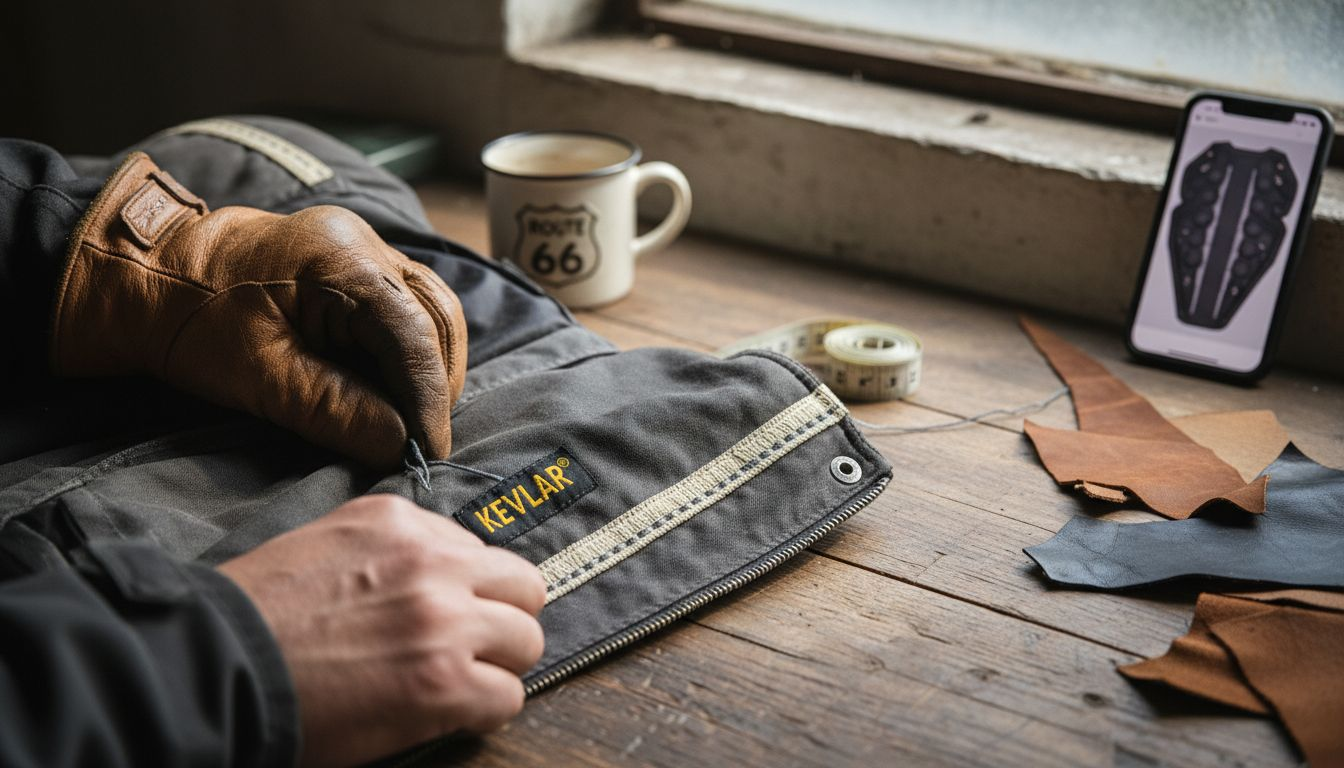
Beyond leather, modern jackets often incorporate specialized fabrics like Kevlar or treated textiles. These abrasion resistant materials are engineered to slow your slide and protect skin better than standard synthetics. Kevlar blended into textiles creates jackets that are lighter and more breathable than leather while still offering serious protection. If you ride in warmer climates, these materials might be worth considering alongside leather options.
Here’s how popular motorcycle jacket materials compare for protection and comfort:
| Material Type | Abrasion Resistance | Impact Protection Potential | Comfort in Hot Weather |
|---|---|---|---|
| Full Grain Leather | Outstanding (slows sliding on pavement) | Excellent with integrated armor | Warm, limited breathability |
| Kevlar-Enhanced Textile | Very Good (engineered for slides) | Good with armor inserts | More breathable than leather |
| Synthetic (Polyester/Nylon) | Moderate (treated versions only) | Varies with padding quality | Lightweight, very breathable |
| Split/Bonded Leather | Low (tears easily) | Often minimal, not reliable | Soft, less durable |
Now focus on impact zones. Your shoulders, elbows, forearms, back, and chest are vulnerable areas that need real protection. Look for jackets with removable or integrated armor in these spots. Impact foam or armor inserts should feel substantial and thick, not like thin padding you can easily compress with your fingers. Press firmly on the padding. Good armor resists your pressure and has some give, but not too much. According to protective equipment standards, properly designed armor must effectively cover impact zones to minimize injury risk during crashes.
Check the placement carefully. Elbow pads should sit directly over your elbow joint, not above or below it. The same goes for shoulder armor. Back protection is critical because your spine is what you’re protecting. Some jackets have integrated back panels that run down the length of your spine. Others have removable inserts. Both work, but verify the armor covers the full length of your back, not just the upper portion.
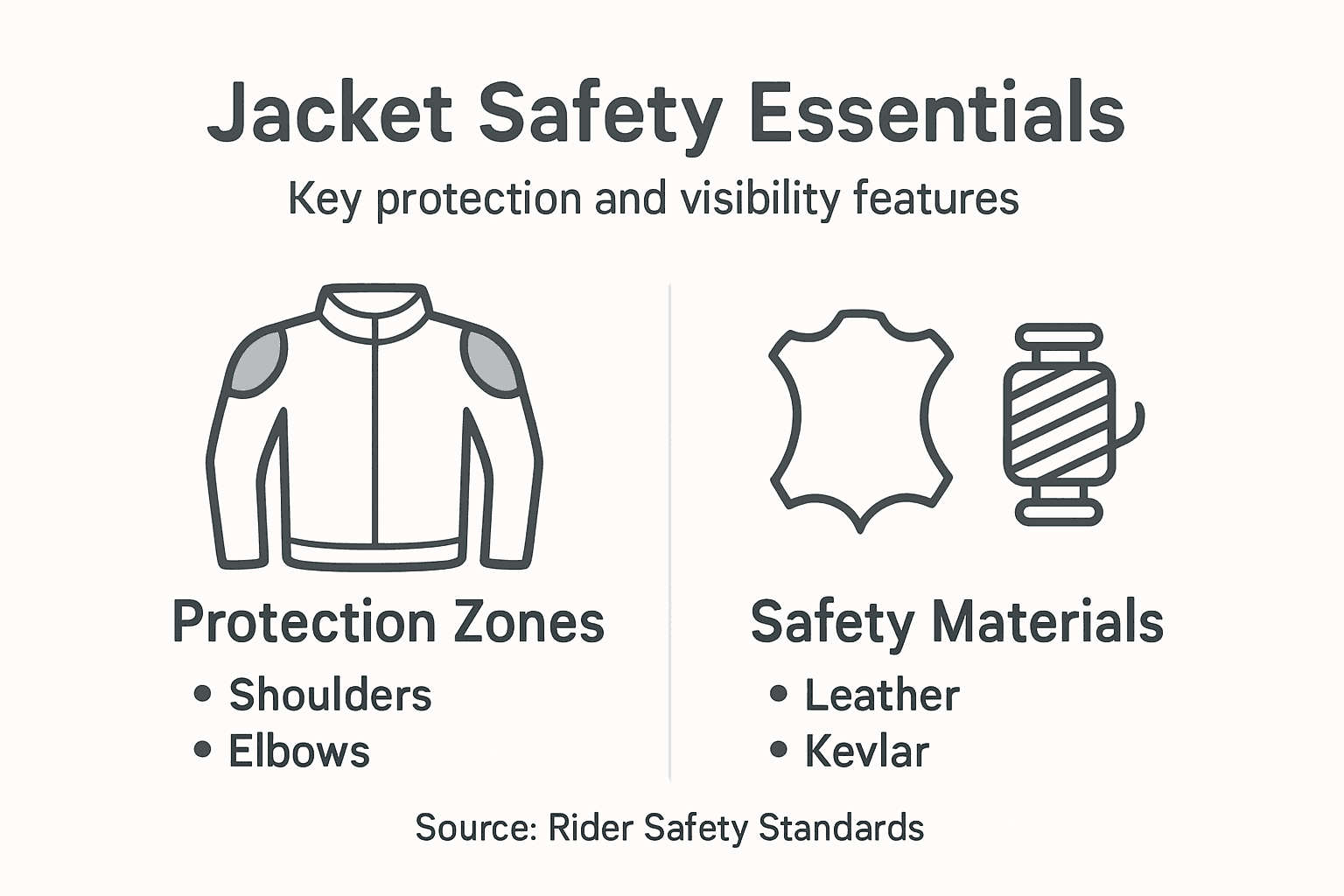
At Maker of Jacket, you can customize exactly where armor gets placed and what materials you want in your jacket. This customization means you get the protection configuration that matches your riding style and body needs, rather than settling for generic designs.
Pro tip: Feel the armor placement while wearing the jacket in your riding position to ensure padding sits correctly over joints and doesn’t shift or bunch when you move.
Step 3: Assess fit and adjust customization options for safety
A jacket that looks amazing but doesn’t fit right puts you at serious risk. This step shows you how to evaluate your jacket’s fit and use customization options to ensure maximum protection during every ride. Getting this right means your armor stays where it needs to be when you need it most.
Start with the basics. Your jacket should feel snug without restricting your breathing or movement. Put on the jacket and do some arm circles, reach across your body, and simulate gripping handlebars. You should feel the jacket hug you, not strangle you. Proper fit prevents armor from shifting during a crash, which is why snug fit matters so much. If you can grab more than an inch of fabric at your sides, the fit is too loose.
Pay attention to the waist and hem. When you sit on your bike in riding position, the jacket should stay put. Bend forward at the hips like you’re leaning into a turn. Does the jacket ride up and expose your lower back? That’s a problem. The hem should cover at least to your hip bones. Many quality jackets have adjustable waist straps that tighten through the sides or back. These straps are not just for looks. They pull the jacket closer to your body and prevent bunching.
Now adjust the sleeves and arm cuffs. When your arms are extended on the handlebars, your wrists should be completely covered. Cuffs should sit snugly around your wrists but not cut off circulation. Look for jackets with adjustable cuff straps or velcro closures that let you customize the fit around your forearms and wrists. These adjustments ensure your forearm armor stays in place when you slide.
Customization options at Maker of Jacket make this process even more powerful. You can specify exactly how tight you want the fit, where you want adjustable straps, and what size works best for your body. Rather than buying off the rack and hoping it fits, you get a jacket designed specifically for your proportions. Consider correctly fitting gear that covers and secures critical areas. When you customize, you eliminate gaps and ensure full protection.
Check ventilation zips if your jacket has them. These should open easily but stay closed when you’re riding. Test the opening mechanism several times. It should be smooth, not sticky or resistant.
Pro tip: Wear the jacket with the protective gear you actually plan to ride with underneath, then adjust straps and fit accordingly so everything sits correctly once you’re on the bike.
Step 4: Test visibility enhancements and reflective panels
Visibility is your first line of defense on the road. Other riders and drivers need to see you before they get close, and that’s where reflective panels and visibility enhancements come in. This step teaches you to evaluate and test these features so you know you’re truly noticeable in all lighting conditions.
Start by examining the reflective material itself. Quality retroreflective panels bounce light directly back toward its source, making them visible even in darkness when headlights hit them. Run your hand over the reflective areas. They should feel slightly textured or raised, not smooth like regular paint or fabric. The material matters tremendously. Look for panels that catch light vividly when you shine a flashlight on them from several angles. Poor reflective material looks dull or barely visible.
Test the coverage and placement. Reflective panels need to be visible from multiple directions because traffic approaches you from ahead, behind, and the sides. Check your shoulders, sides, back, and chest. Retroreflective panels significantly reduce injury risk by making you visible during low-light riding. The more surface area covered with reflective material, the better. Walk around a dark room or parking lot and have someone shine headlights at you from different angles. You should light up like a target from every direction.
Now evaluate the color and contrast. Bright, fluorescent colors work during daylight because they contrast sharply against normal backgrounds. Neon yellow, orange, and lime green are popular choices. These colors catch eyes because they’re simply not natural. The combination of bright color plus reflective panels gives you maximum protection around the clock. Some riders prefer black jackets for style, but adding reflective panels or bright accent colors dramatically improves visibility without sacrificing aesthetic appeal.
Understand visibility standards. ANSI visibility standards classify safety apparel by performance levels based on reflective material coverage and visibility range. Higher classes provide greater visibility distance. When shopping, ask whether jackets meet these standards. A jacket that follows visibility guidelines has been tested and proven to work.
At Maker of Jacket, you can customize visibility enhancements exactly how you want them. Choose reflective panel placement, add bright accent colors, or combine both for maximum safety and style. This customization means you get the visibility level that matches your riding conditions and personal preference.
Pro tip: Test your jacket’s visibility at night with a friend’s car headlights from multiple distances and angles to confirm reflective panels work as expected before hitting the road.
Step 5: Verify certifications and inspect quality standards
Certifications separate jackets that actually protect you from ones that merely look protective. This step teaches you to identify legitimate certifications and quality markers that prove your jacket meets real safety standards. Knowing what to look for gives you confidence that your gear will perform when it matters.
Start by understanding the major certifications. CE marking is a European standard widely recognized in the U.S. market and indicates the jacket has passed abrasion and impact protection testing. ANSI certifications cover American safety standards. When you see these marks, manufacturers have submitted their jackets to independent testing. Look for certification labels inside the jacket or on product documentation. Legitimate certifications come with specific test results showing abrasion resistance ratings and impact protection levels. If a jacket claims to be protective but lacks any certifications, that’s a red flag.
Examine the documentation carefully. Quality manufacturers provide detailed specifications about their materials, construction methods, and testing results. They should explain what armor they use, how many layers of leather they include, and which impact zones are protected. Recognized certifications ensure jackets meet abrasion and impact standards verified by independent bodies. Ask for this information before buying. Reputable companies answer these questions without hesitation.
Use this quick guide to key safety certifications for motorcycle jackets:
| Certification Standard | Focus Area | Indicates Approval by |
|---|---|---|
| CE Marking (EN 13595) | Abrasion & impact tests | European authorities |
| ANSI/ISEA 107 | High-visibility design | American National Standards |
| EN 1621 | Armor effectiveness | European test labs |
| OSHA PPE Guidelines | General gear fit | U.S. Dept. of Labor |
Inspect the construction quality up close. Quality jackets have straight, even stitching with no loose threads. Seams should be reinforced, especially in stress areas like shoulders and armpits. Run your fingers along every seam. They should feel solid and tight, not puckered or loose. The zippers should move smoothly without catching. Press on the armor inserts. They should feel substantial, not hollow or thin. Cheap jackets cut corners on internal construction where you can’t see it, but those shortcuts fail exactly when you need protection.
Check for comprehensive armor coverage. Jackets certified for safety have armor in specific impact zones backed by testing data. Look for documentation showing armor placement, thickness, and material specifications. Certified gear promotes adherence to safety standards that enhance rider protection. At Maker of Jacket, every customized jacket includes detailed specifications so you know exactly what protection you’re getting and where.
Pro tip: Request certification documentation and test reports before purchasing to verify that a jacket meets recognized safety standards and has been independently tested for protection.
Enhance Your Safety with Customizable Motorcycle Jackets from Maker of Jacket
Protecting your shoulders, elbows, and back with the right abrasion-resistant materials and properly placed armor is crucial for every rider’s safety. This guide highlights how important fit, reflective visibility, and certified impact protection are to keep you secure on the road. At Maker of Jacket, we understand that one size does not fit all when it comes to motorcycle safety gear. That is why our range of jackets offers customizable options that ensure your protective gear stays snug and covers critical impact zones without sacrificing comfort or style.

Ready to upgrade your riding safety with gear tailored specifically for you? Explore the full variety in Maker of Jacket’s collection or dive into our curated Mustang jacket collection to find durable leather and precision armor placement. With worldwide free shipping and detailed size guides, there has never been a better time to invest in your protection. Start customizing your jacket today at Maker of Jacket and ride with confidence every mile ahead.
Frequently Asked Questions
What are the essential safety features I should look for in a motorcycle jacket?
A quality motorcycle jacket should have thick, durable leather or high-quality synthetic materials, reinforced padding in impact zones (shoulders, elbows, and back), and proper coverage to protect you while riding. Examine the jacket’s construction and make sure the armor fits securely over these critical areas.
How do I ensure the motorcycle jacket fits properly for maximum safety?
To achieve a snug fit, try on the motorcycle jacket while sitting in a riding position, ensuring it covers your lower back and doesn’t ride up. Move your arms to check that the sleeves cover your wrists; a fit that allows for movement without excess fabric is key to keeping armor in place during a crash.
Why are visibility features important in a motorcycle jacket?
Visibility features like reflective strips and bright colors significantly enhance your safety by making you more noticeable to other drivers. Look for jackets that include ample reflective materials for improved visibility, especially during low-light conditions.
What types of materials provide the best abrasion resistance in motorcycle jackets?
Full grain leather offers outstanding abrasion resistance, making it the gold standard for motorcycle jackets. Additionally, jackets that incorporate materials like Kevlar blended fabrics can provide good protection while being lighter and more breathable in warm weather.
How can I verify that a motorcycle jacket meets safety standards?
Check for recognized certifications such as CE marking or ANSI standards on the jacket. Review the provided documentation to ensure it lists specific test results for abrasion and impact resistance, confirming that the jacket has been independently tested for safety.
What should I consider regarding the jacket’s armor placement?
Ensure that the armor is positioned correctly over your elbows, shoulders, and back, as these impact zones are most vulnerable during a crash. Adjustable armor or removable inserts can help you customize the fit so that the protection aligns with your body and riding posture.


