

Understanding the Pros and Cons of Leather Fashion


Leather has shaped everything from legendary fashion icons to the seats in classic cars, proving its place in culture for thousands of years. Most people assume it is just animal hide turned fancy, but that hardly scratches the surface. Actually, leather is the result of a multi-step process where animal skin is transformed into a tough, flexible textile and over 80 percent of leather worldwide uses chrome tanning methods to reach that point. The world behind this timeless material is full of surprises that might just challenge everything you thought you knew about leather.
Table of Contents
- What Is Leather And Its Common Types?
- Why Leather Matters In Fashion And Lifestyle
- The Durability And Maintenance Of Leather
- Environmental And Ethical Considerations Of Leather
- Alternatives To Leather: Comparing Benefits And Drawbacks
Quick Summary
| Takeaway | Explanation |
|---|---|
| Full Grain is the Best Quality | Full grain leather retains natural markings and offers exceptional durability, making it ideal for high-end products. |
| Proper Maintenance Extends Leather Lifespan | Regular cleaning and conditioning can enhance leather’s durability and preserve its aesthetic appeal over time. |
| Sustainability is Key in Leather Production | Modern leather manufacturing emphasizes ethical practices and minimizes environmental impacts through innovative processes. |
| Alternatives to Leather are Emerging | New materials like synthetic and plant-based leathers offer sustainable options, challenging traditional leather’s market position. |
| Leather’s Symbolism transcends Fashion | Beyond aesthetics, leather embodies cultural identity and personal expression, often symbolizing rebellion and individuality. |
What is Leather and Its Common Types?
Leather represents a remarkable material with a rich history spanning thousands of years, transforming animal hide into a versatile and durable textile through complex processing techniques. At its core, leather is a natural fabric created by tanning animal skin, most commonly sourced from cattle, sheep, goats, and occasionally more exotic animals.
The Origin and Basic Production of Leather
The leather production process begins with carefully selected animal hides that undergo extensive treatment. Material Science Research Center reveals that the transformation involves several critical stages: cleaning, removing hair, stabilizing proteins, and applying tanning chemicals that prevent decomposition. These steps convert raw animal skin into a flexible, long-lasting material suitable for fashion, furniture, and numerous other applications.
Common Types of Leather
Understanding leather requires recognizing its diverse variations, each with unique characteristics:
- Full Grain Leather: The highest quality leather that retains the entire natural grain, showcasing original skin markings and offering exceptional durability.
- Top Grain Leather: Slightly processed to remove imperfections, making it smoother and more uniform compared to full grain varieties.
- Genuine Leather: A lower-grade leather made from multiple layers of hide, often processed to create a more consistent appearance.
- Suede: Created from the underside of animal skin, featuring a soft, napped finish with a distinctive texture.
Leather types vary not just in appearance but in their structural integrity, performance, and potential applications.
To help you differentiate between the most common types of leather, the table below summarizes their key characteristics and uses.
| Leather Type | Description | Durability | Common Uses |
|---|---|---|---|
| Full Grain Leather | Retains full natural grain with visible markings, highest quality | Exceptional | High-end products, furniture |
| Top Grain Leather | Sanded to remove imperfections, smoother surface | High | Fashion, handbags, shoes |
| Genuine Leather | Made from lower layers, more heavily processed | Moderate | Budget products, accessories |
| Suede | Made from the underside, soft napped finish | Lower | Jackets, shoes, linings |
| Leather Industries Research Association notes that each type serves different purposes in fashion, automotive, and accessory industries. |
Processing and Quality Considerations
The quality of leather depends significantly on the tanning method, with two primary approaches dominating the industry: chrome tanning and vegetable tanning. Chrome tanning, which uses chromium sulfate, produces softer, more color-flexible leather ideal for clothing and accessories. Vegetable tanning, utilizing natural plant extracts, creates stiffer leather often preferred for belts, saddles, and high-end luggage.
Leather enthusiasts and professionals understand that selecting the right leather involves considering factors like intended use, desired aesthetic, durability requirements, and personal style preferences. Check out our guide on leather stitching techniques to further enhance your understanding of this remarkable material.
Why Leather Matters in Fashion and Lifestyle
Leather transcends mere fabric, representing a cultural symbol of sophistication, durability, and personal expression that has defined human style for centuries. Its profound impact extends far beyond aesthetic appeal, embedding itself deeply into social narratives of craftsmanship, identity, and technological innovation.
Cultural Symbolism and Personal Identity
Leather garments communicate more than fashion statements they represent powerful narratives of individual character and social positioning. Global Fashion Research Institute indicates that leather jackets, boots, and accessories have historically signaled rebellion, independence, and a distinct counterculture aesthetic. From motorcycle riders to rock musicians, leather has symbolized nonconformity and personal strength.
Performance and Practical Advantages
Beyond symbolic meaning, leather offers remarkable functional benefits that distinguish it from synthetic materials:
- Unparalleled Durability: Leather withstands extreme conditions while maintaining structural integrity.
- Temperature Regulation: Natural breathability allows leather to adapt to different environmental conditions.
- Aesthetic Aging: Unlike synthetic materials, leather develops a unique patina that enhances its visual appeal over time.
- Versatility: Suitable for diverse applications ranging from high fashion to professional workwear.
Professional designers recognize leather as a premium material that combines performance with aesthetic elegance. Learn more about leather durability techniques, which further enhance its long-term value and appeal.
Sustainability and Ethical Considerations
Modern leather production increasingly emphasizes sustainable and ethical practices. Environmental Textile Research reveals that responsible leather manufacturing can transform what was historically a waste product into a valuable, recyclable material. Innovative tanning processes now minimize environmental impact, while ethical sourcing ensures animal welfare standards are maintained.
Contemporary consumers increasingly demand transparency in leather production, driving industry innovations towards more environmentally conscious and socially responsible manufacturing methods. The evolution of leather represents not just a fashion choice, but a complex intersection of cultural expression, technological innovation, and environmental stewardship.
The Durability and Maintenance of Leather
Leather represents a remarkable material that not only withstands time but can actually improve with proper care, transforming from a simple fabric into a lasting companion that tells a personal story through its unique wear patterns and aging process. Understanding leather maintenance is crucial for preserving its inherent beauty and extending its functional lifespan.
Understanding Leather’s Natural Resilience
Material Science Research Institute reveals that leather’s durability stems from its complex protein structure, which provides natural resistance to wear, tear, and environmental stressors. Unlike synthetic materials that deteriorate quickly, high-quality leather develops a distinctive patina that enhances its aesthetic appeal while maintaining structural integrity.
Critical Maintenance Strategies
Maintaining leather requires a nuanced approach that respects its organic composition. Essential maintenance techniques include:
- Regular Cleaning: Gentle removal of surface dust and dirt using specialized leather cleaners
- Conditioning: Applying quality leather conditioners to prevent drying and cracking
- Proper Storage: Keeping leather items away from direct sunlight and extreme temperature variations
- Immediate Stain Treatment: Addressing spills and marks promptly to prevent permanent damage
Professional leather enthusiasts understand that maintenance is an investment in longevity. Learn more about advanced leather care techniques, which can significantly extend your leather items’ useful life.
Environmental and Wear Considerations
Leather Preservation Research Center demonstrates that different leather types require unique maintenance approaches. Full grain leather, for instance, tolerates more rigorous use compared to delicate suede, which demands more careful handling. Factors like humidity, temperature, frequency of use, and exposure to potential damaging elements all play critical roles in determining a leather item’s long-term durability.
Ultimately, leather maintenance transcends simple upkeep it represents a commitment to preserving a material that connects us to centuries of craftsmanship, personal style, and cultural expression. By understanding and implementing proper care techniques, leather owners can transform their items from mere accessories into enduring, meaningful possessions that age gracefully and tell a unique story.
Environmental and Ethical Considerations of Leather
The leather industry represents a complex landscape of environmental challenges and ethical dilemmas, balancing traditional manufacturing practices with growing demands for sustainable and responsible production methods. Understanding these considerations requires a nuanced exploration of the intricate relationships between animal agriculture, manufacturing processes, and environmental impact.
Environmental Impact Dimensions
Global Sustainability Research Center reveals that leather production involves significant ecological considerations. The process encompasses complex environmental challenges, including substantial water consumption, chemical usage in tanning processes, and greenhouse gas emissions associated with cattle farming. These factors contribute to a substantial carbon footprint that extends far beyond simple material production.
Ethical Production Challenges
Ethical leather production involves addressing multiple interconnected concerns:
- Animal Welfare: Ensuring humane treatment of animals throughout their lifecycle
- Worker Safety: Protecting employees from hazardous chemical exposures in tanning facilities
- Transparent Sourcing: Implementing rigorous tracking of hide origins and manufacturing processes
- Waste Reduction: Minimizing environmental contamination from chemical treatments
Explore sustainable leather manufacturing techniques, which represent innovative approaches to addressing these complex challenges.
Emerging Sustainable Solutions
Environmental Technology Institute highlights promising developments in sustainable leather production. Innovative approaches include developing alternative tanning methods that reduce chemical usage, implementing water recycling technologies, and exploring bio-based leather alternatives derived from agricultural waste and mushroom mycelium.
Contemporary consumers increasingly demand transparency and responsible production, pushing the leather industry towards more sustainable practices. The future of leather production lies in balancing traditional craftsmanship with environmental stewardship, recognizing that ethical considerations are not just moral imperatives but essential business strategies for long-term sustainability.
Alternatives to Leather: Comparing Benefits and Drawbacks
As environmental consciousness grows, the fashion industry increasingly explores innovative alternatives to traditional leather, seeking materials that balance aesthetic appeal, durability, and ecological responsibility. These emerging alternatives represent a complex ecosystem of technological innovation and sustainable design, challenging conventional perceptions of material performance and environmental impact.
Emerging Synthetic and Plant-Based Alternatives
Material Innovation Research Center highlights several groundbreaking leather alternatives that are transforming the fashion landscape. These materials range from synthetic microfibers to plant-based compositions, each offering unique characteristics that challenge traditional leather’s dominance.
The following table compares traditional leather with emerging alternatives in terms of key performance and environmental aspects.
| Material Type | Durability | Animal Friendly | Environmental Impact | Typical Cost |
|---|---|---|---|---|
| Traditional Leather | High | No | Significant (tanning, cattle) | High |
| Synthetic Leather (PU) | Moderate | Yes | High (petroleum-based) | Low |
| Plant-Based Leather | Emerging | Yes | Lower (biodegradable) | Higher |
| Synthetic alternatives like polyurethane (PU) and recycled plastic derivatives provide cost-effective and animal-friendly options, while plant-based materials derived from pineapple, cork, and mushroom mycelium represent cutting-edge sustainable technologies. |
Comparative Performance Characteristics
Each leather alternative presents distinct advantages and limitations
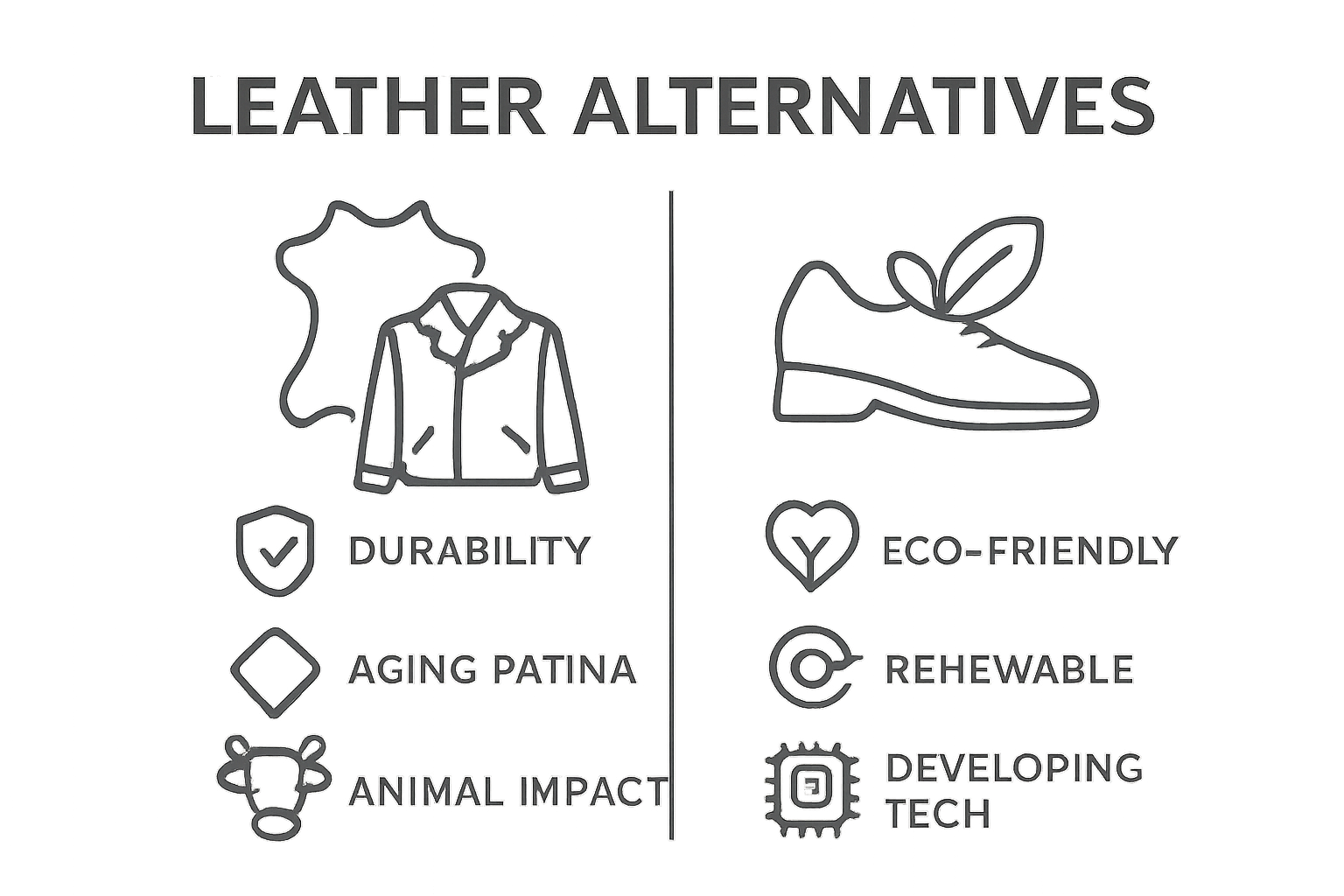 :
:
- Synthetic Leather (PU/PVC)
- Lower production costs
- Animal-friendly manufacturing
- Limited durability compared to genuine leather
- Higher environmental impact from petroleum-based production
- Plant-Based Alternatives
- Biodegradable composition
- Reduced carbon footprint
- Emerging technology with improving performance
- Currently higher production costs
Explore sustainable material innovations, which are reshaping the future of fashion materials.
Future Technological Developments
Sustainable Materials Institute predicts remarkable advancements in alternative leather technologies. Researchers are developing sophisticated bio-based materials using fungal mycelia, agricultural waste, and advanced polymer sciences. These innovations promise materials that not only mimic leather’s aesthetic and functional properties but potentially surpass traditional leather in performance, sustainability, and environmental compatibility.
The ongoing evolution of leather alternatives represents more than a trend it signifies a fundamental reimagining of material science, environmental responsibility, and ethical manufacturing. As technology progresses, consumers can anticipate increasingly sophisticated, sustainable options that challenge our traditional understanding of what constitutes high-performance fashion materials.
Discover Leather Advantages With Customized Confidence
Struggling to balance the timeless style of leather with concerns about durability, ethical sourcing, or finding the right fit for your lifestyle? If you enjoyed learning about leather’s pros and cons, it is time to experience high-quality fashion that meets your standards. Choose from exclusive styles and discover real value in our expertly crafted Maker of Jacket’s collection, where every piece is made with premium materials and attention to detail.
Transform insight into action. Visit Maker of Jacket now to explore options that address your desire for authenticity, ethical production, and longevity. Want something even more personal? Request a custom jacket to truly reflect your style and values. Do not miss your chance to redefine your wardrobe with a piece built just for you.
Frequently Asked Questions
What are the main types of leather used in fashion?
The most common types of leather used in fashion include full grain leather, top grain leather, genuine leather, and suede. Each type varies in quality, texture, and durability, catering to different styles and uses.
How does leather compare to synthetic alternatives in terms of durability?
Leather is generally more durable than synthetic alternatives, as it can withstand wear and tear while developing a unique patina over time. Synthetic leathers, while often cost-effective, typically have a shorter lifespan and may not offer the same aesthetic appeal as genuine leather.
What are some tips for maintaining leather fashion items?
To maintain leather items, regularly clean them with specialized leather cleaners, apply quality conditioners to prevent drying and cracking, store them away from direct sunlight, and address spills promptly to avoid permanent damage.
Are there ethical concerns associated with leather fashion?
Yes, ethical concerns include animal welfare, environmental impact due to tanning processes, and worker safety in leather manufacturing. Consumers are increasingly interested in sustainable practices that address these issues, such as ethical sourcing and eco-friendly production methods.


