

Types of Motorcycle Jackets Explained: Choosing Your Ideal Fit

Finding a jacket that checks all the boxes for an American rider is not always easy. With more than 80 percent of motorcycle injuries involving some form of upper body impact, urban enthusiasts know that true style means nothing without real protection. Customizable leather jackets have become the go-to solution for riders who demand both a sharp look and serious safety, giving each American motorcyclist a personalized edge on every street adventure.
Table of Contents
- Defining Motorcycle Jackets And Their Purpose
- Leather Vs. Textile Jackets: Key Differences
- Popular Styles: Cruiser, Sport, Touring, Adventure
- Essential Safety Features And Protection Options
- Customization, Fit, And Comfort Considerations
Key Takeaways
| Point | Details |
|---|---|
| Motorcycle Jackets are Essential Safety Gear | Modern motorcycle jackets are critical for protection against road rash and impact injuries, incorporating advanced armor technologies. |
| Leather vs. Textile Choices | Riders must choose between leather jackets for durability and classic style or textile jackets for lighter weight and weather performance. |
| Jacket Styles Match Riding Needs | Different jacket styles cater to various riding disciplines, ensuring protection and comfort tailored to specific environments. |
| Customization and Fit are Crucial | A properly fitted jacket keeps armor in place and allows for mobility, enhancing both safety and rider comfort. |
Defining Motorcycle Jackets and Their Purpose
Motorcycle jackets represent far more than a fashion statement – they are critical pieces of safety equipment designed to protect riders during potential accidents. Motorcycle armor technologies have evolved significantly, transforming these garments from simple leather coverings into sophisticated protective systems.
At their core, motorcycle jackets serve a fundamental purpose: safeguarding riders from road rash, impact injuries, and abrasion risks. Modern jackets incorporate advanced protective elements like shoulder and elbow armor, strategically placed padding, and materials engineered to resist tearing during slide incidents. The Motorcycle Safety Foundation emphasizes that these jackets are not optional accessories, but essential safety gear for responsible riding.
Key protective features in contemporary motorcycle jackets typically include:
- Impact-absorbing armor at critical contact points
- Reinforced material construction
- Abrasion-resistant outer layers
- Adjustable fit mechanisms
- Ventilation systems for rider comfort
- Optional back and chest protector compatibility
Performance motorcycle jackets blend cutting-edge safety engineering with rider mobility, ensuring protection doesn’t come at the expense of comfort or movement. Advanced materials like Kevlar, ballistic nylon, and viscoelastic compounds allow manufacturers to create lightweight yet incredibly strong protective garments.
Pro tip: Always try on motorcycle jackets while in a riding position to ensure proper armor placement and mobility before purchasing.
Leather vs. Textile Jackets: Key Differences
Motorcycle riders face a critical choice between leather and textile jackets, each offering distinct advantages and performance characteristics. Leather materials have unique properties that have made them a traditional favorite among motorcycle enthusiasts, providing exceptional durability and natural protection.
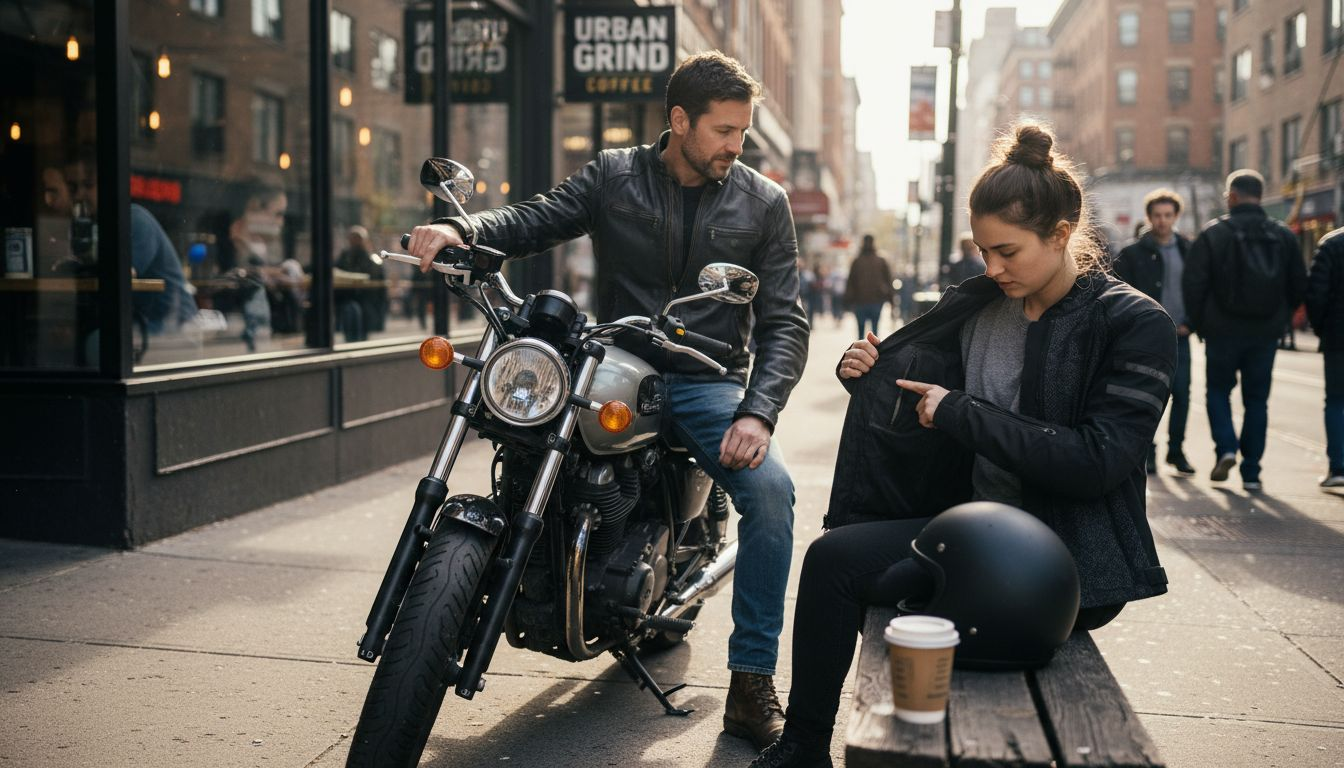
Traditionally, leather jackets have been the gold standard for motorcycle protection. Their inherent strength comes from animal hide’s natural composition, offering superior abrasion resistance and impact protection. Leather jackets typically provide a more classic aesthetic and mold to the rider’s body over time, creating a personalized fit. In contrast, textile jackets emerge as a modern alternative with advanced technological features that address specific riding challenges.
Key differences between leather and textile jackets include:
- Abrasion Resistance
- Leather: Naturally high resistance
- Textile: Varies based on synthetic material composition
- Weather Performance
- Leather: Limited water resistance
- Textile: Often includes waterproof membranes
- Breathability
- Leather: Limited air circulation
- Textile: Enhanced ventilation options
- Weight
- Leather: Heavier
- Textile: Generally lighter
- Maintenance
- Leather: Requires specialized care
- Textile: Easier to clean and maintain
Modern textile jackets leverage advanced synthetic materials to provide comprehensive protection while offering superior adaptability. Synthetic fibers and innovative manufacturing techniques now enable textile jackets to compete directly with leather in terms of safety and performance, giving riders more sophisticated choices than ever before.
Here’s a side-by-side overview of leather and textile motorcycle jacket performance across key riding scenarios:
| Situation | Leather Jacket Advantage | Textile Jacket Advantage |
|---|---|---|
| Long-distance touring | Superior wind protection | Enhanced water resistance |
| Urban commuting | Durable style, reliable fit | Lightweight for easy movement |
| Wet or rainy weather | Naturally water-repellent with treatment | Built-in waterproof membranes |
| Hot climates | Insulating against road heat | High breathability, vents |
| Cold climates | Retains warmth effectively | Accommodates thermal liners |
Pro tip: Consider your primary riding environment and climate when selecting between leather and textile jackets to ensure optimal comfort and protection.
Popular Styles: Cruiser, Sport, Touring, Adventure
Motorcycle jackets are not one-size-fits-all solutions, but carefully engineered garments designed to match specific riding styles and motorcycle types. Motorcycle jacket styles reflect the diverse needs of riders across different riding disciplines, from relaxed cruising to high-intensity sport riding.
Cruiser jackets epitomize classic motorcycle culture, typically featuring generous leather construction with a relaxed fit that emphasizes style and comfort. These jackets often incorporate traditional design elements like wide lapels, multiple pockets, and a timeless aesthetic that resonates with riders seeking a classic look. In contrast, sport touring jackets blend performance features to create versatile gear that adapts to multiple riding conditions.
Detailed breakdown of motorcycle jacket styles:
Cruiser Jackets
- Classic leather design
- Relaxed, comfortable fit
- Emphasis on style and moderate protection
- Often feature vintage-inspired details
Sport Jackets
- Aerodynamic cut
- Lightweight materials
- Aggressive padding
- Designed for high-speed performance
- Maximum mobility and impact protection
Touring Jackets
- Enhanced weatherproofing
- Multiple storage compartments
- Comprehensive protection
- Comfort-focused design for long-distance rides
- Integrated wind and water resistance
Adventure Jackets
- Versatile protection for mixed terrain
- Modular design with removable liners
- Balance between ventilation and protection
- Adaptable to on-road and off-road conditions
Each jacket style represents a specialized approach to rider protection, reflecting the unique demands of different motorcycle disciplines. Modern manufacturing techniques have enabled designers to create jackets that not only provide superior safety but also cater to the specific aesthetic and functional requirements of various riding communities.
The following table summarizes how popular motorcycle jacket styles match various rider priorities:
| Jacket Style | Best For | Typical Material | Core Focus |
|---|---|---|---|
| Cruiser | Casual, stylish riding | Premium leather | Comfort & aesthetics |
| Sport | High-speed, agility | Lightweight synthetics | Performance & safety |
| Touring | Long journeys, weather | Textile/leather blends | Endurance & storage |
| Adventure | Versatile, mixed terrain | Modular synthetic panels | Adaptability & support |
Pro tip: Select a jacket that matches your primary riding style, considering both protection levels and comfort for your specific motorcycle type.
Essential Safety Features and Protection Options
Motorcycle safety goes far beyond stylish design, with critical protective technologies forming the core of modern riding gear. Jackets are no longer simple fabric coverings, but sophisticated protective systems engineered to minimize injury risks during potential accidents.
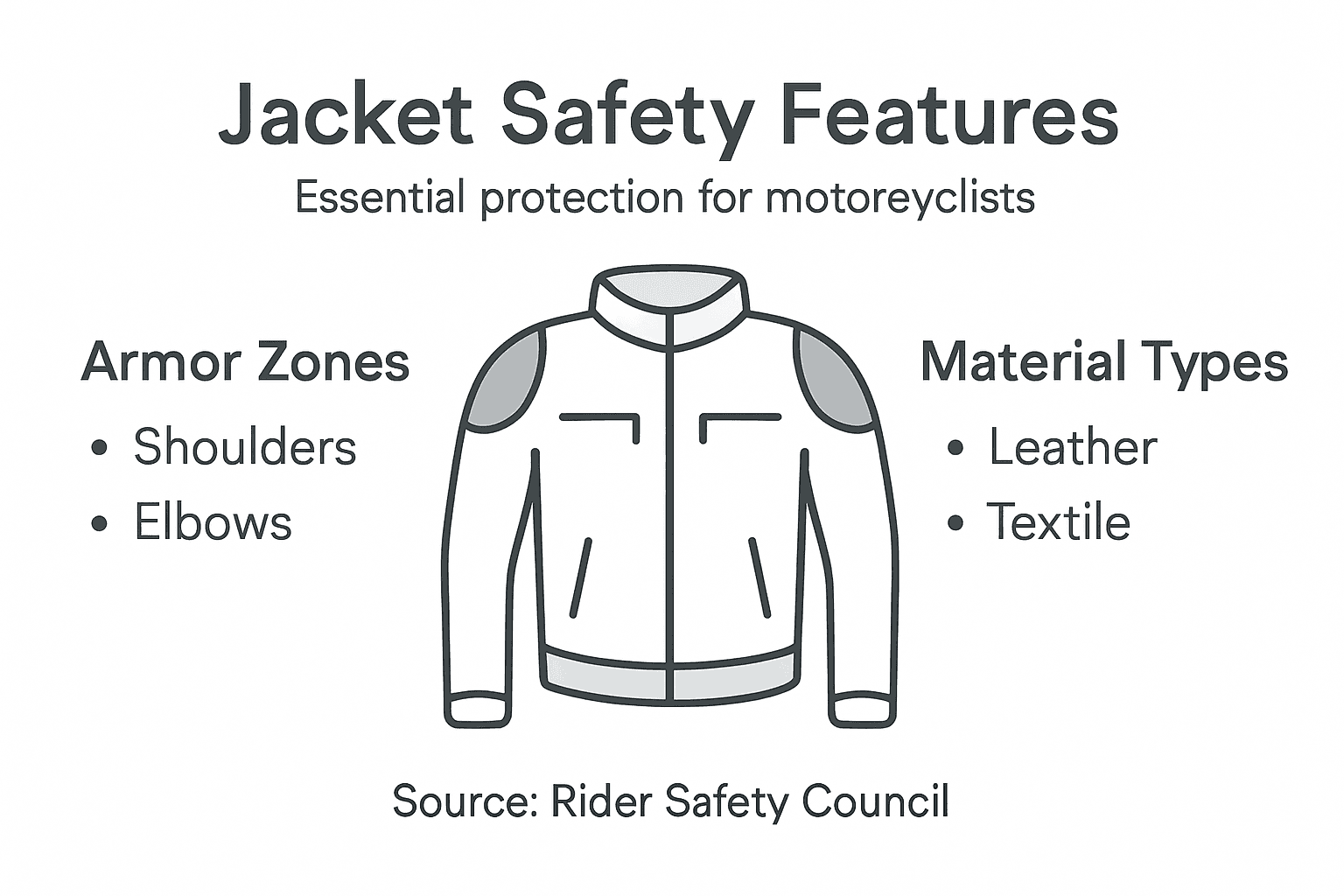
Armor Placement represents the most crucial safety consideration for motorcycle jackets. Strategic padding protects vulnerable body zones like shoulders, elbows, spine, and chest. Motorcycle safety research demonstrates that properly positioned armor can significantly reduce impact-related injuries, making it a non-negotiable feature for serious riders.
Key safety features to evaluate in motorcycle jackets include:
Impact Protection
- CE-rated armor panels
- Reinforced padding at critical contact points
- Hard plastic or viscoelastic compound inserts
- Removable and adjustable protection zones
Abrasion Resistance
- High-tensile synthetic materials
- Leather with minimum 1.2mm thickness
- Kevlar-reinforced fabric panels
- Double-layered protection zones
Visibility Enhancements
- Reflective strips and panels
- High-contrast color options
- Daytime and nighttime visibility elements
- Strategic luminescent design features
Modern motorcycle jackets integrate advanced materials like viscoelastic compounds that actually harden upon impact, providing dynamic protection that adapts to different crash scenarios. These intelligent design features transform jackets from passive garments into active safety systems that work continuously to protect the rider.
Pro tip: Always verify that jacket armor covers key impact zones and remains securely positioned when trying on a new motorcycle jacket.
Customization, Fit, and Comfort Considerations
Choosing the right motorcycle jacket goes far beyond aesthetic preferences, requiring careful consideration of rider-specific fit requirements. The perfect jacket acts as a second skin, providing protection without compromising mobility or comfort.
Jacket Fit Fundamentals are critical for both safety and performance. Motorcycle safety experts recommend a jacket that fits snugly enough to keep protective armor in place while allowing full range of motion. This delicate balance ensures that critical impact zones remain properly positioned during potential accidents.
Key customization and fit considerations include:
Sizing Strategies
- Measure chest, shoulders, and arm length precisely
- Allow room for layering in colder weather
- Consider body type and riding posture
- Test mobility with riding-specific movements
Adjustability Features
- Elastic waist and arm straps
- Adjustable armor placement
- Removable thermal liners
- Ventilation zippers for temperature control
Comfort Optimization
- Breathable inner materials
- Moisture-wicking fabric technology
- Ergonomic seam placement
- Lightweight design for extended wear
Modern motorcycle jackets incorporate advanced design principles that transform fit from a static concept to a dynamic experience. Innovative materials and construction techniques now allow for jackets that adapt to a rider’s body, providing personalized comfort and protection across various riding conditions.
Pro tip: Always perform a “riding position” test when trying on a jacket, mimicking your motorcycle’s ergonomics to ensure genuine comfort and unrestricted movement.
Find Your Perfect Motorcycle Jacket Fit Today
Choosing the right motorcycle jacket can feel overwhelming given the variety of styles, materials, and safety features outlined in the article. Whether you prioritize impact protection, comfort, or weather adaptability, finding a jacket that fits your unique riding style and needs is essential. Many riders struggle with decisions like leather versus textile or the best style for touring versus sport riding. These challenges demand a reliable source offering both expertise and customization.
At Maker of Jacket, we understand the importance of a jacket that combines protection and personal style. Explore our extensive Maker of Jacket’s collection Archives – Maker of Jacket where you can discover premium leather and textile motorcycle jackets tailored to fit your riding posture, climate needs, and safety preferences. Every jacket is designed to accommodate key safety features such as CE-rated armor and abrasion-resistant materials while ensuring comfort for long rides.

Start your journey now with confidence by visiting Maker of Jacket. Take advantage of our customizable options and world-class craftsmanship to create the motorcycle jacket that perfectly fits your lifestyle and safety requirements. Don’t wait to secure your ideal gear because true protection begins with the right fit.
Frequently Asked Questions
What are the main purposes of motorcycle jackets?
Motorcycle jackets are primarily designed to protect riders from road rash, impact injuries, and abrasion risks during potential accidents. They incorporate advanced armor technologies to ensure rider safety.
How do leather and textile motorcycle jackets differ in performance?
Leather jackets offer superior abrasion resistance and natural weather protection, while textile jackets often feature waterproof membranes, better ventilation, and are generally lighter, making them suitable for diverse riding conditions.
What should I look for in the safety features of a motorcycle jacket?
Key safety features to evaluate include CE-rated armor panels, reinforced padding at critical contact points, abrasion-resistant materials, and visibility enhancements such as reflective strips and high-contrast colors.
How important is the fit of a motorcycle jacket for safety?
The fit of a motorcycle jacket is crucial for safety. A properly fitting jacket ensures that protective armor remains in place during a ride while allowing for a full range of motion. Adjustability features can enhance comfort and effectiveness.


