

Which Leather Jacket Materials are Best for Durability

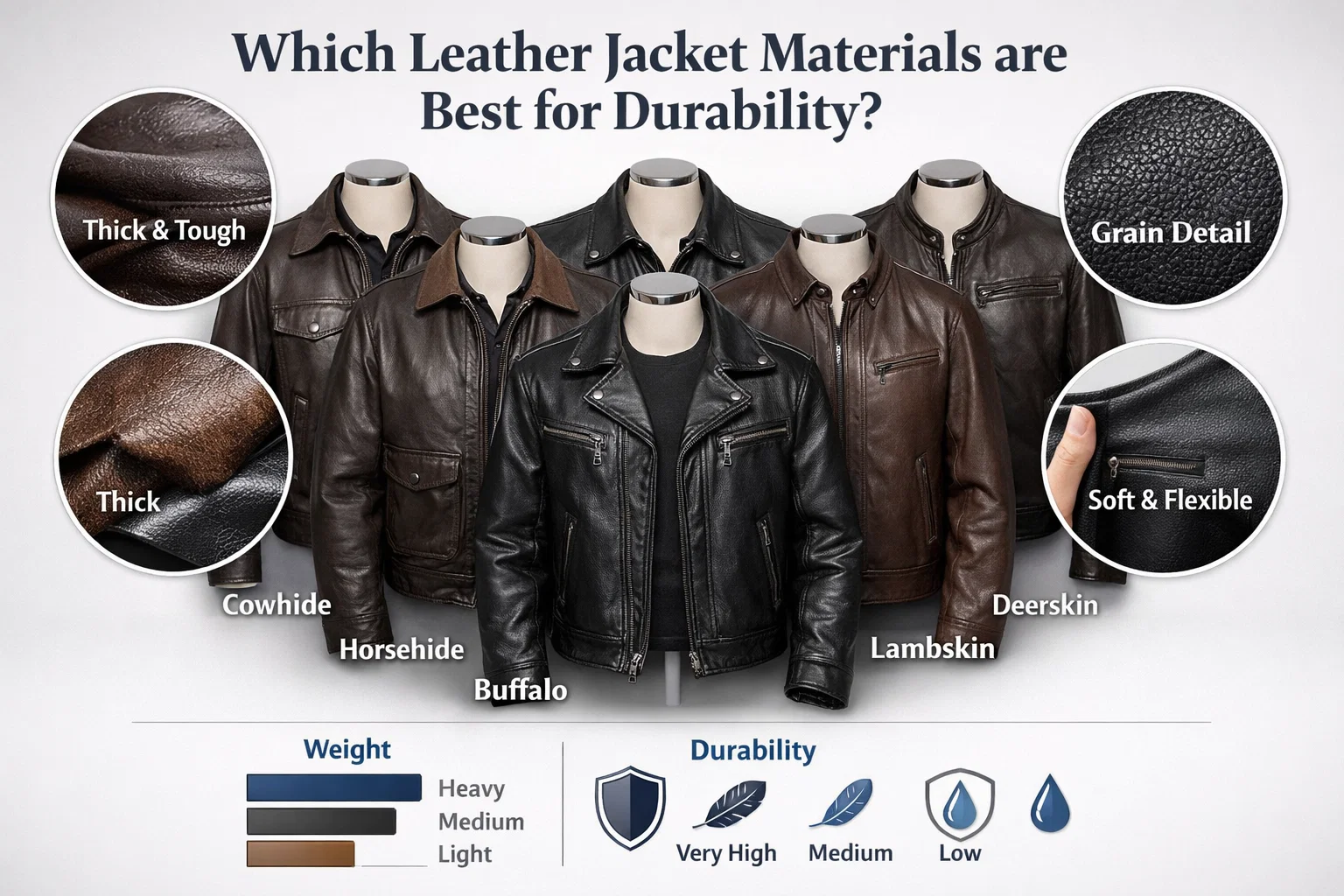
When you invest in a leather jacket, you expect years of wear, not surface cracks or sagging panels after one season. Leather material controls how your jacket reacts to friction, weather, body movement, and time. Some leathers gain character as years pass. Others break down fast, no matter how careful you stay. If durability matters to you, material choice decides everything before style or color even enters the picture.
What Makes Leather Durable in a Jacket?
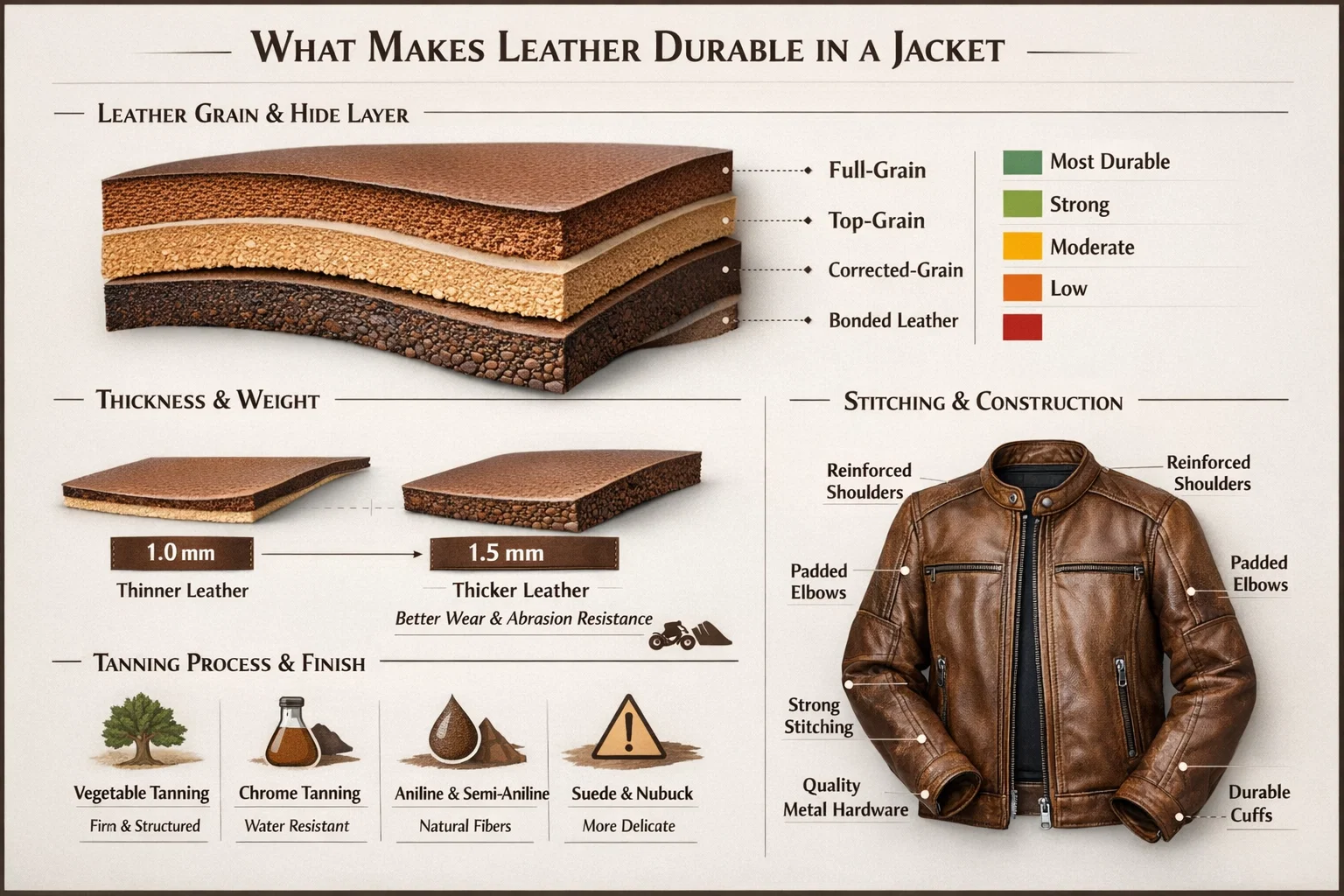
Leather Grain and Hide Layer
Leather durability starts at the hide level. Full-grain leather uses the strongest outer layer of the hide and keeps natural fibers intact. Top-grain leather removes surface flaws, which slightly reduces strength but keeps good longevity. Corrected-grain and bonded leather rely on altered or shredded layers, which lowers resistance and lifespan.
Thickness and Weight of Leather
Durable jackets usually fall between 1.0 mm and 1.5 mm in thickness. Thicker leather resists tearing and abrasion better, especially in high-impact use such as riding or outdoor wear. Lightweight leather suits fashion jackets but sacrifices long-term strength.
Tanning Process and Finish
Vegetable-tanned leather stays firm and ages with structure. Chrome-tanned leather offers flexibility and water resistance. Aniline and semi-aniline finishes preserve natural fibers, while heavy coatings trade breathability for surface protection. Suede and nubuck look refined but require caution.
Stitching, Reinforcements, and Construction
Strong leather fails early if stitching stays weak. Durable jackets use tight stitching, reinforced seams, and stress protection at shoulders, elbows, and cuffs. Hardware quality also matters more than most buyers realize.
Best Leather Jacket Materials for Durability
Cowhide Leather
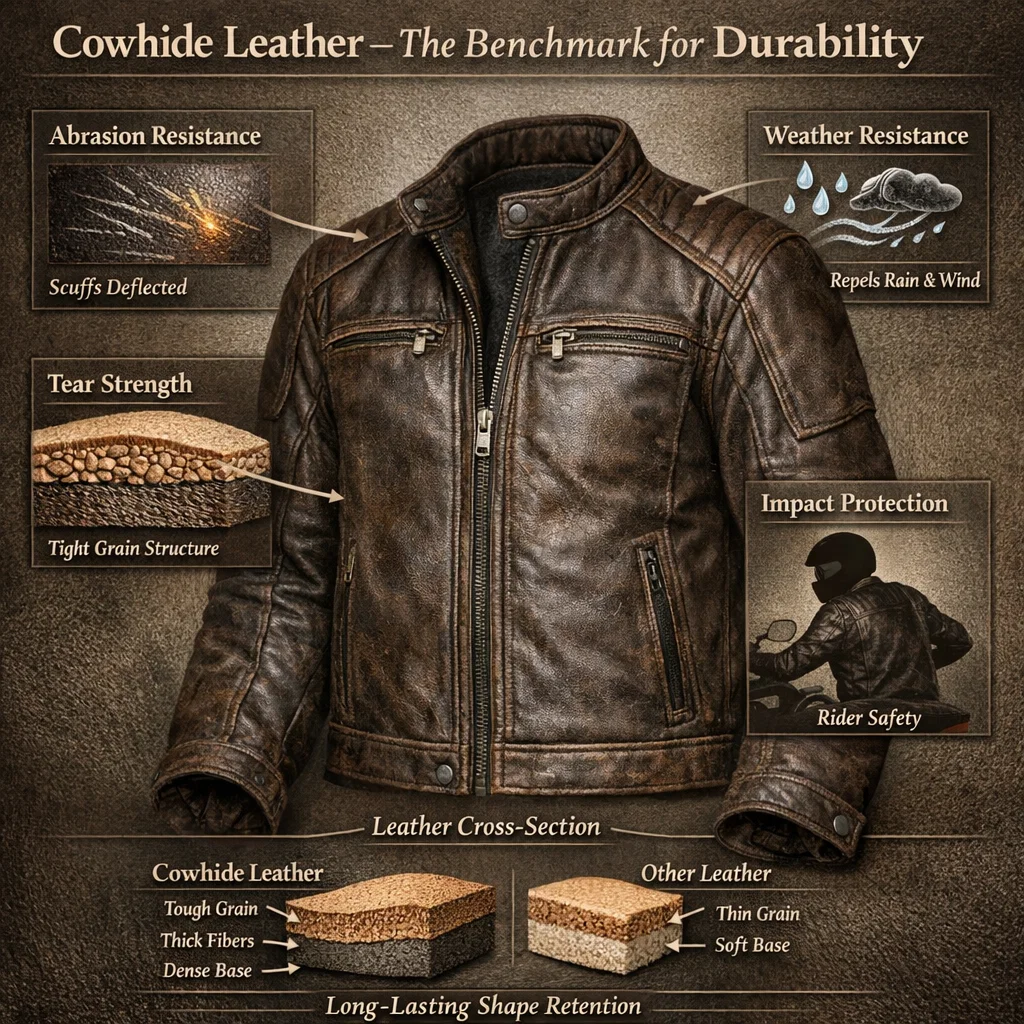
Cowhide stands as the benchmark for durability. Its thick fibers resist abrasion, tearing, and weather exposure. You see cowhide in motorcycle gear for a reason. It handles impact better than most hides and keeps its structure for decades. For a deeper breakdown, you can review the cowhide leather guide.
Horsehide Leather
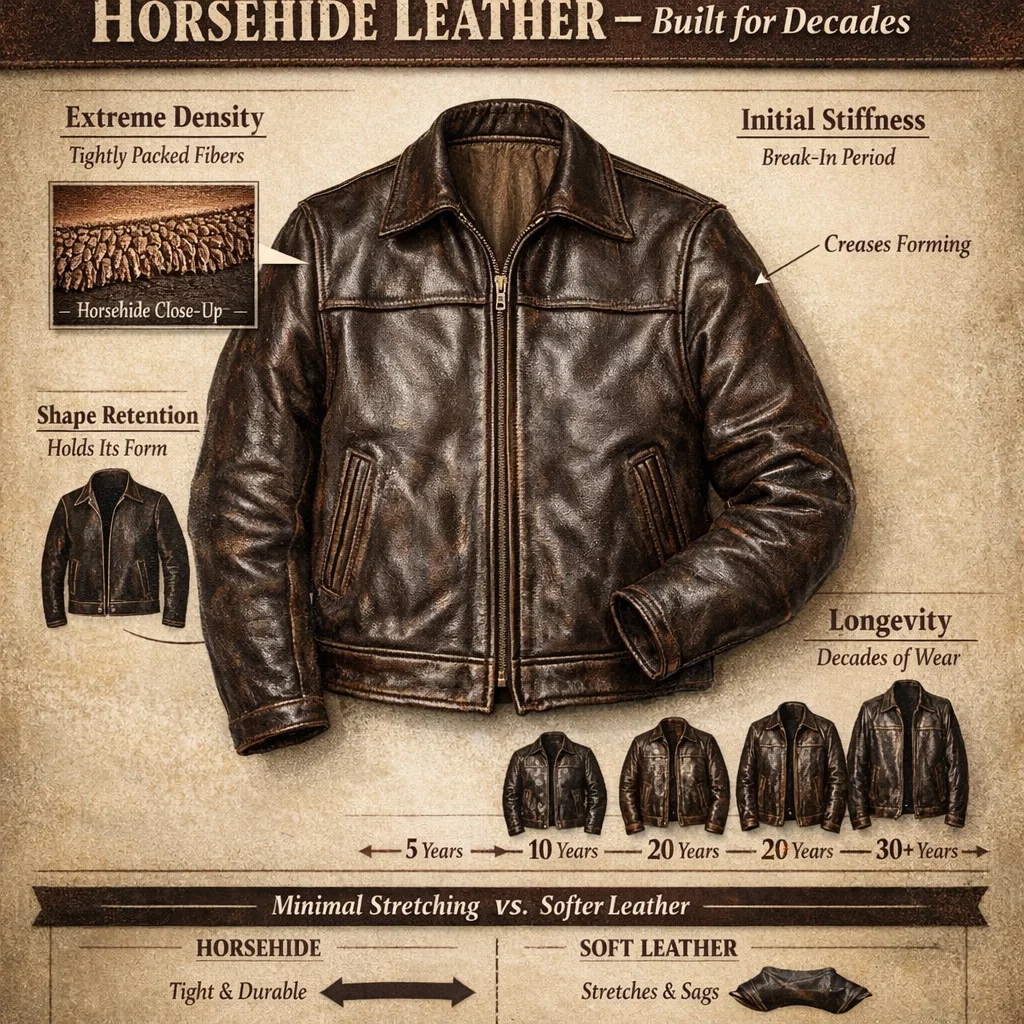
Horsehide offers extreme density and stiffness. It feels rigid at first, but rewards patience with unmatched longevity. Vintage jackets often rely on horsehide because it resists stretching and keeps its shape for decades.
Buffalo Leather
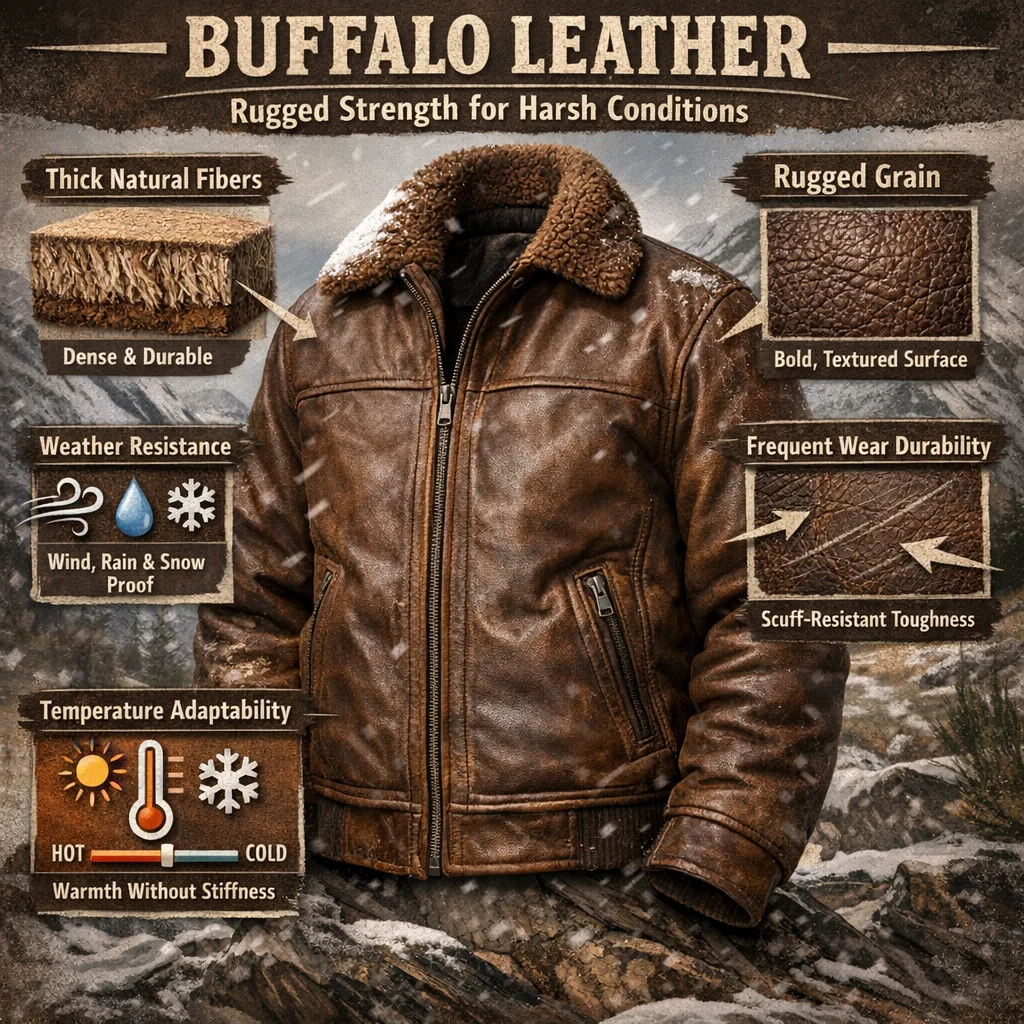
Buffalo leather carries thicker natural fibers and a rugged grain. It suits heavy jackets that face harsh weather and frequent wear. Its temperature adaptability adds comfort without sacrificing strength.
Goatskin Leather
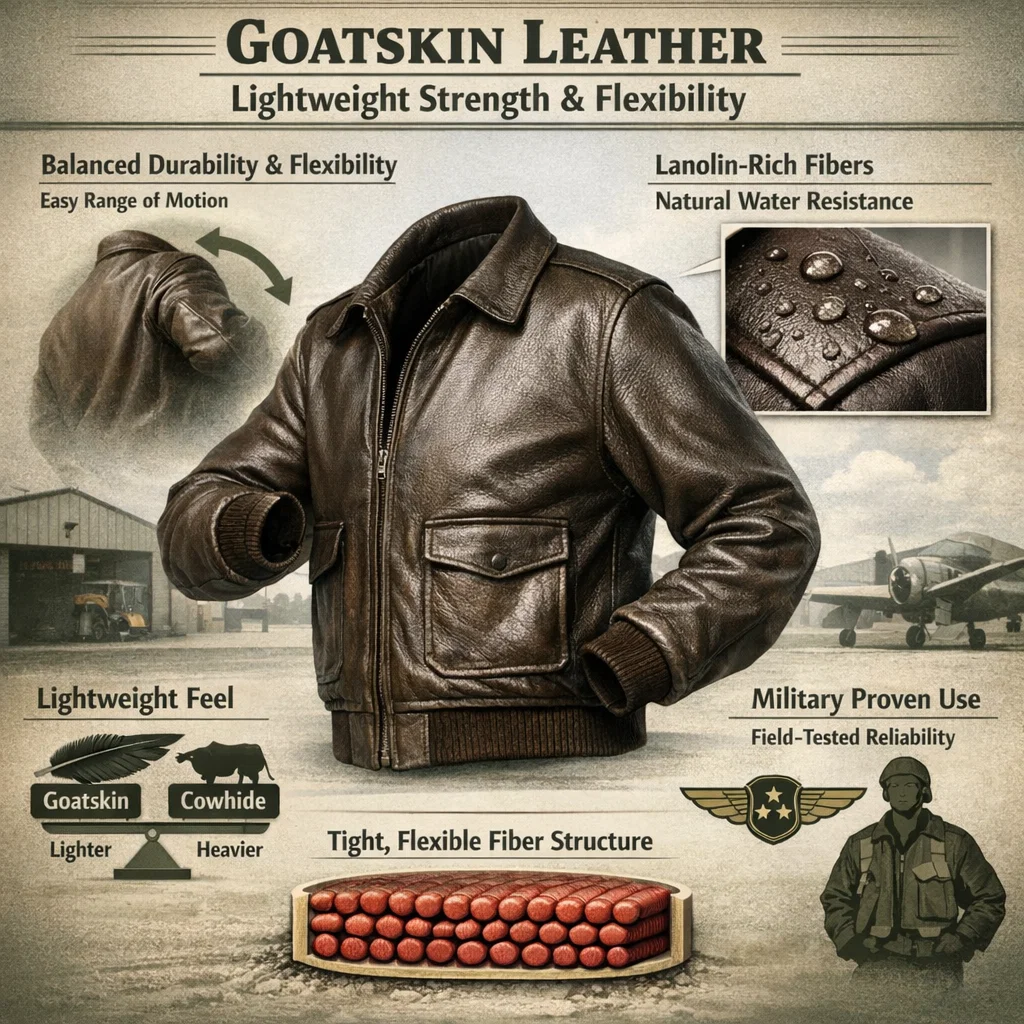
Goatskin balances durability and flexibility better than many hides. It resists water naturally due to lanolin content and stays lighter than cowhide. Many military jackets rely on goatskin for this reason.
Deerskin Leather
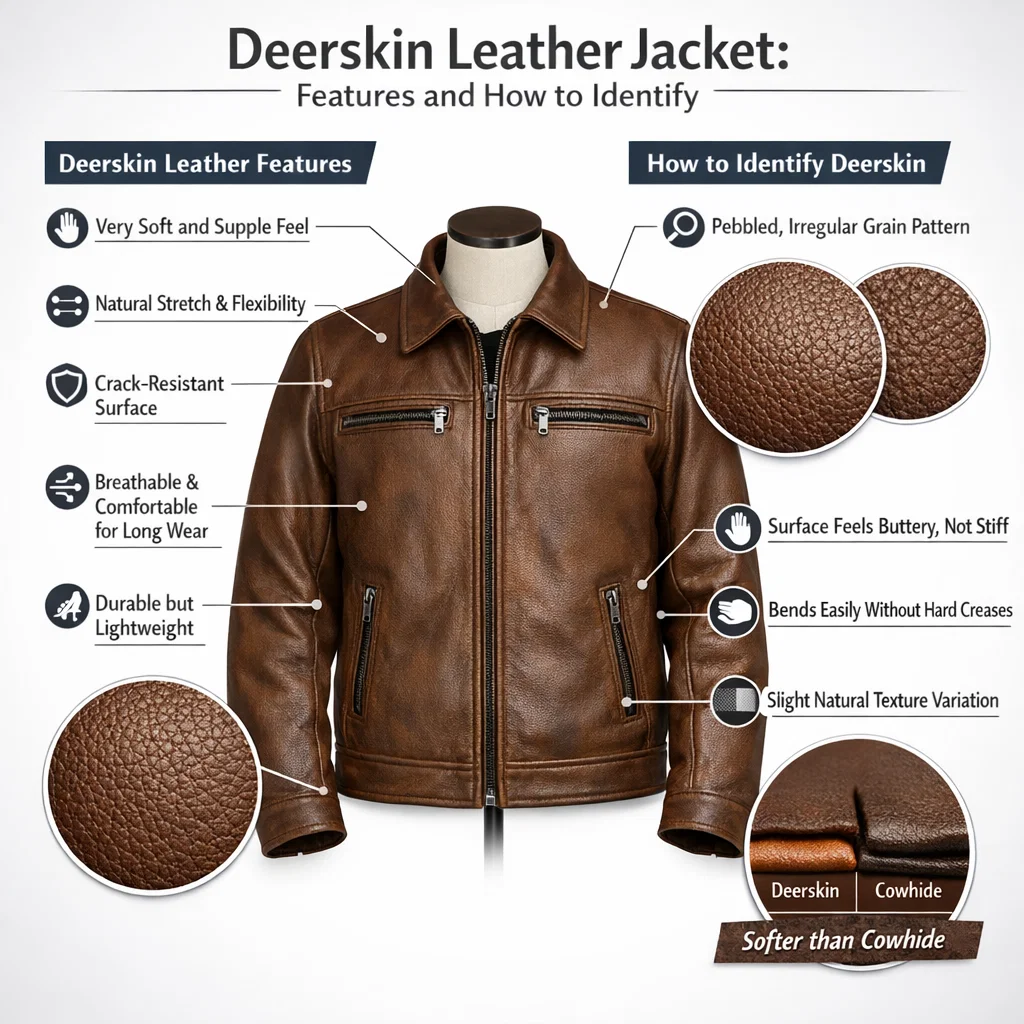
Deerskin stays soft while offering impressive durability. Its stretch prevents cracking, and its breathability keeps comfort high. It is suitable for long-term casual wear rather than high-impact use.
Sheepskin and Lambskin Leather
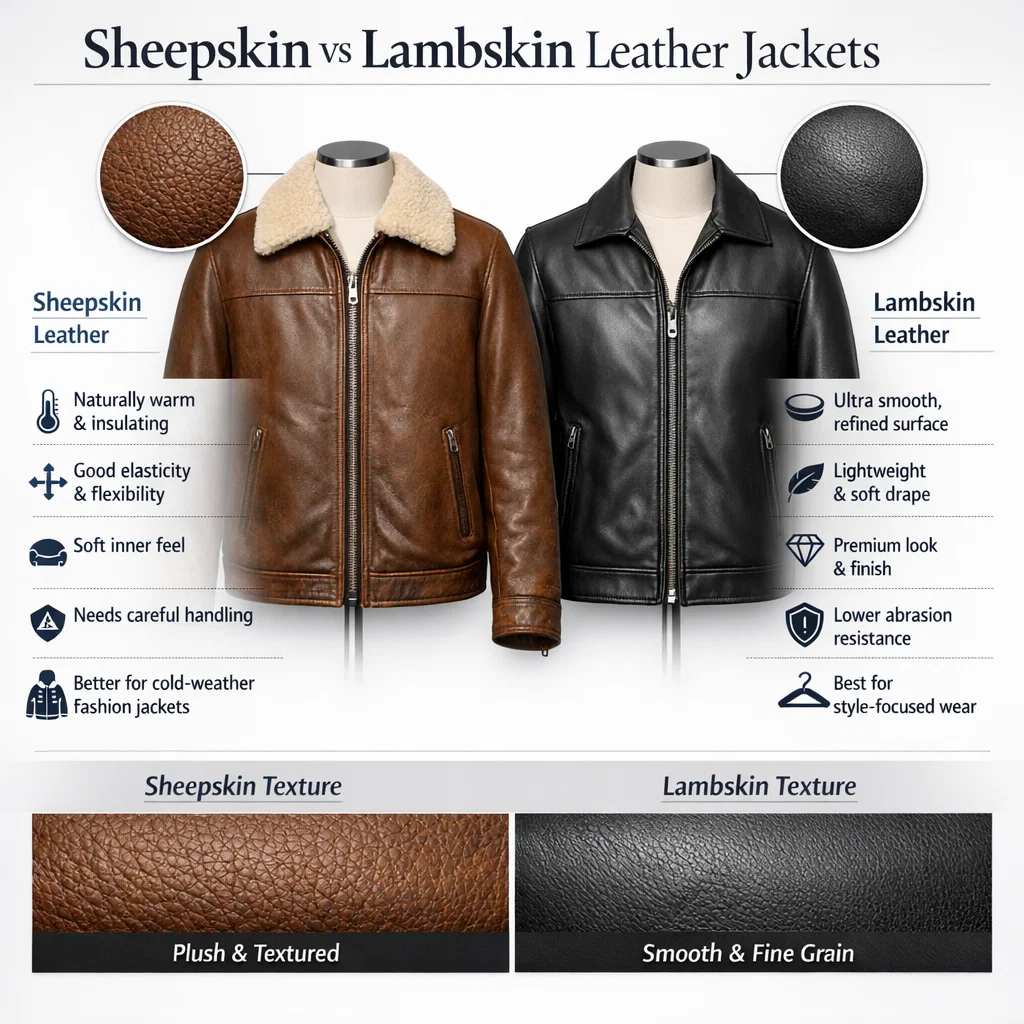
Sheepskin offers elasticity and warmth but needs careful handling. Lambskin feels smooth and refined but lacks abrasion resistance. These leathers suit style-focused jackets rather than daily rugged use.
Kangaroo Leather
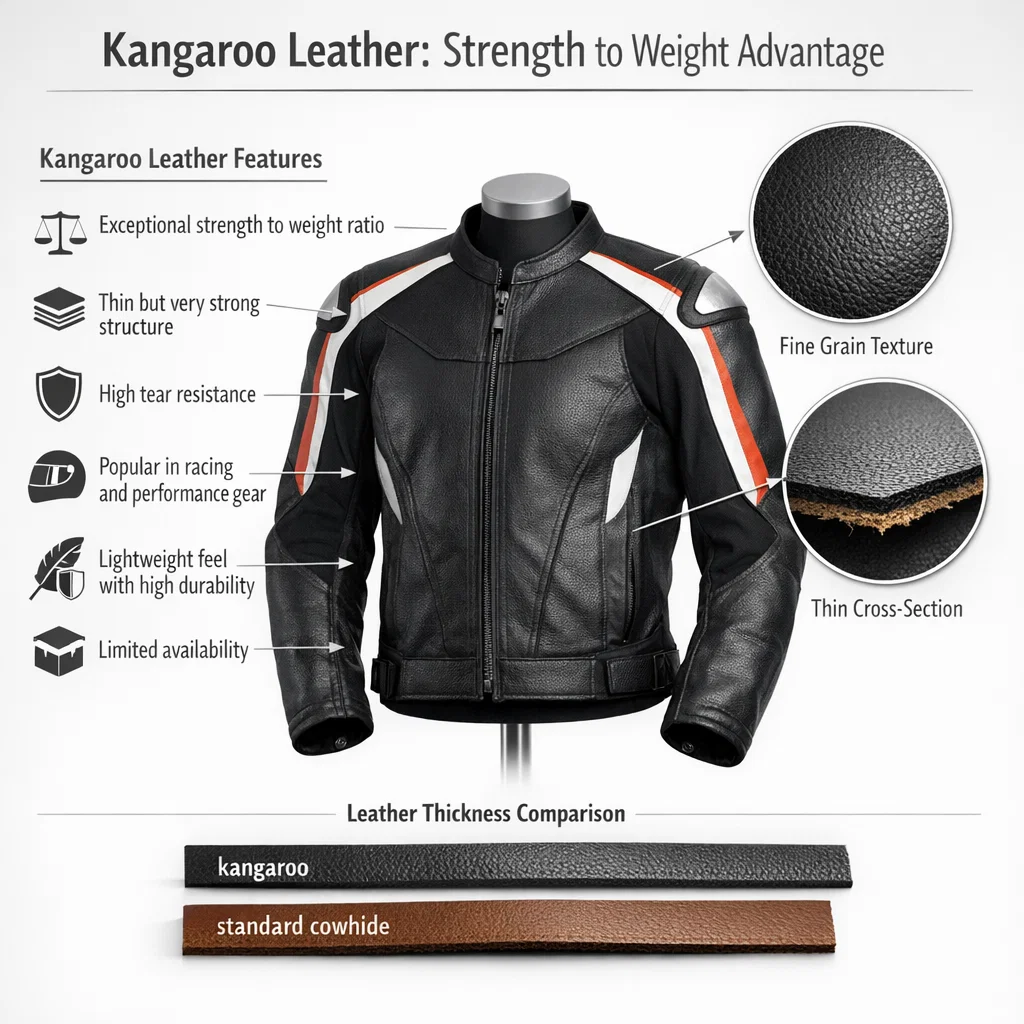
Kangaroo leather offers an exceptional strength-to-weight ratio. It stays thin yet strong, which explains its growing use in racing gear. Availability remains limited, but durability stays impressive.
Faux Leather / PU / Synthetic Leather
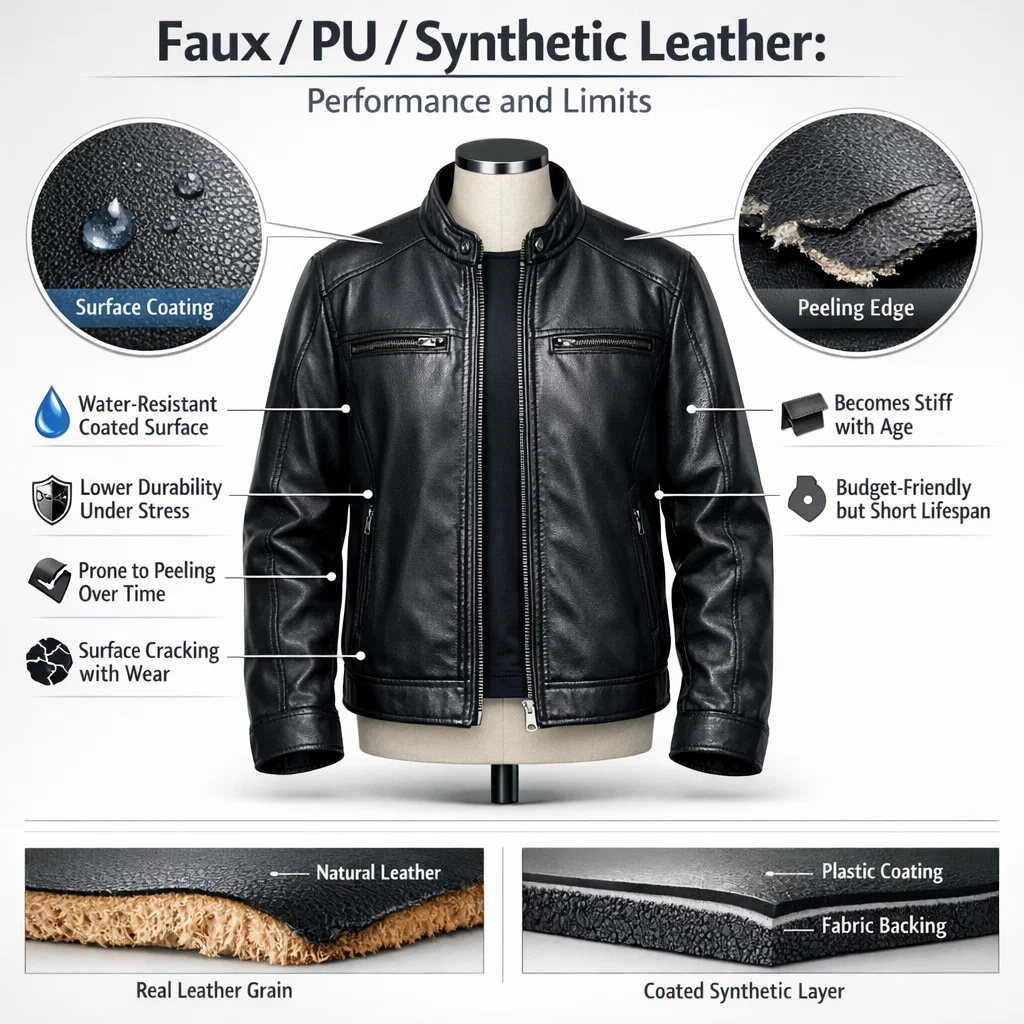
Synthetic leather resists water but fails under stress. Peeling, cracking, and stiffness appear fast. If longevity matters, faux leather does not qualify as a durable option.
Best Leather Types by Jacket Use
Best Leather for Biker and Motorcycle Jackets
Cowhide, buffalo, and horsehide dominate this category due to abrasion resistance. Man biker leather jackets rely on these hides for rider safety and longevity.
Best Leather for Bomber and Racer Jackets
Goatskin and cowhide suit bomber jackets, while racer jackets often rely on cowhide or kangaroo leather for streamlined durability.
Best Leather for Cold Weather and Duster Jackets
Sheepskin and lambskin insulate well in cold climates but require careful use to maintain surface integrity.
Leather Grades and Durability Explained Clearly
Here is a quick overview of leather types in terms of durability.
- Full-grain leather lasts the longest due to intact fibers.
- Top-grain follows closely with better flexibility.
- Genuine leather labels often mislead buyers, as they include lower hide layers with shorter lifespans.
- Bonded leather performs the worst in durability tests.
Does Leather Improve With Age?
High-quality leather tightens at the fiber level as it ages. This process forms a patina, strengthens structure, and improves visual depth. Poor-quality leather cracks instead of aging.
How Proper Care Extends Leather Jacket Life
Durable leather still needs care. Conditioning prevents dryness and surface cracks. Use trusted leather conditioners occasionally to maintain flexibility. Avoid soaking, prolonged sunlight, and rough storage.
For textured finishes like suede, review different types of suede leathers before purchase.
Leather Durability Comparison
| Leather Type | Durability Level | Weight | Best Use |
| Cowhide | Very High | Heavy | Motorcycle, bomber |
| Horsehide | Very High | Heavy | Heritage, biker |
| Buffalo | High | Heavy | Rugged outerwear |
| Goatskin | Medium-High | Medium | Daily wear |
| Deerskin | Medium | Medium | Casual jackets |
| Lambskin | Low | Light | Fashion jackets |
| Faux Leather | Very Low | Light | Budget use |
How to Pick and Order Your Custom Leather Jacket
Picking the right leather is half the battle. The other half? Actually getting the jacket made without the hassle.
Maker Of Jacket handles that part cleanly. Choose your material: cowhide, sheepskin, woolen, cotton, photo-print, or faux leather, select your size using their detailed size charts and sizing guide, and place your custom leather jacket order directly. No back-and-forth, no complicated booking. The whole process takes minutes.
Sizes run from 2XL to 16XL, and worldwide delivery comes included. No extra fees, no surprises.
Why Maker of Jacket Hits Different
Most jacket brands give you a catalog. Pick one, pay extra for changes, wait weeks. Maker of Jacket works the other way around. Every jacket starts from scratch, built around your measurements, not a factory template.
- Full customization at no added cost
- Premium materials, not filler options
- Affordable pricing without cutting corners on quality
- One simple step from selection to order
No upsells buried in the process, no compromises on material just to keep costs low. You get what you actually want, at a price that makes sense.
Conclusion
If durability ranks first on your list, full-grain cowhide remains the safest choice. Horsehide and buffalo leather follow closely for heavy-duty use. Goatskin offers a smart balance when comfort matters. Soft fashion leathers look refined but demand restraint. Choose wisely, and your jacket stays part of your life for decades, not trends.
Frequently Asked Questions
Do custom leather jackets feel more comfortable than ready-made ones?
Custom jackets fit your body measurements exactly, which reduces stress points and improves comfort. A better fit also helps leather wear evenly, which supports durability over time.
Which type of leather lasts the longest in a jacket?
Full-grain cowhide and horsehide last the longest due to dense fibers and minimal processing. With proper care, these leathers remain wearable for decades.
Is cowhide better than goatskin for durability?
Cowhide resists abrasion better than goatskin. Goatskin stays lighter and more flexible, but cowhide suits high-impact and long-term use more effectively.
How does leather grade affect jacket durability?
Higher grades, like full-grain, retain natural fibers, which increases strength. Lower grades rely on altered layers that break down faster.
Are soft leathers like lambskin less durable?
Yes. Lambskin feels smooth but tears and scuffs more easily. It suits occasional wear rather than daily use.
Does leather get better with age?
High-quality leather improves with age through patina and fiber tightening. Low-grade leather degrades instead of improving.


