

Master the Motorcycle Jacket Fitting Workflow for Perfect Fit

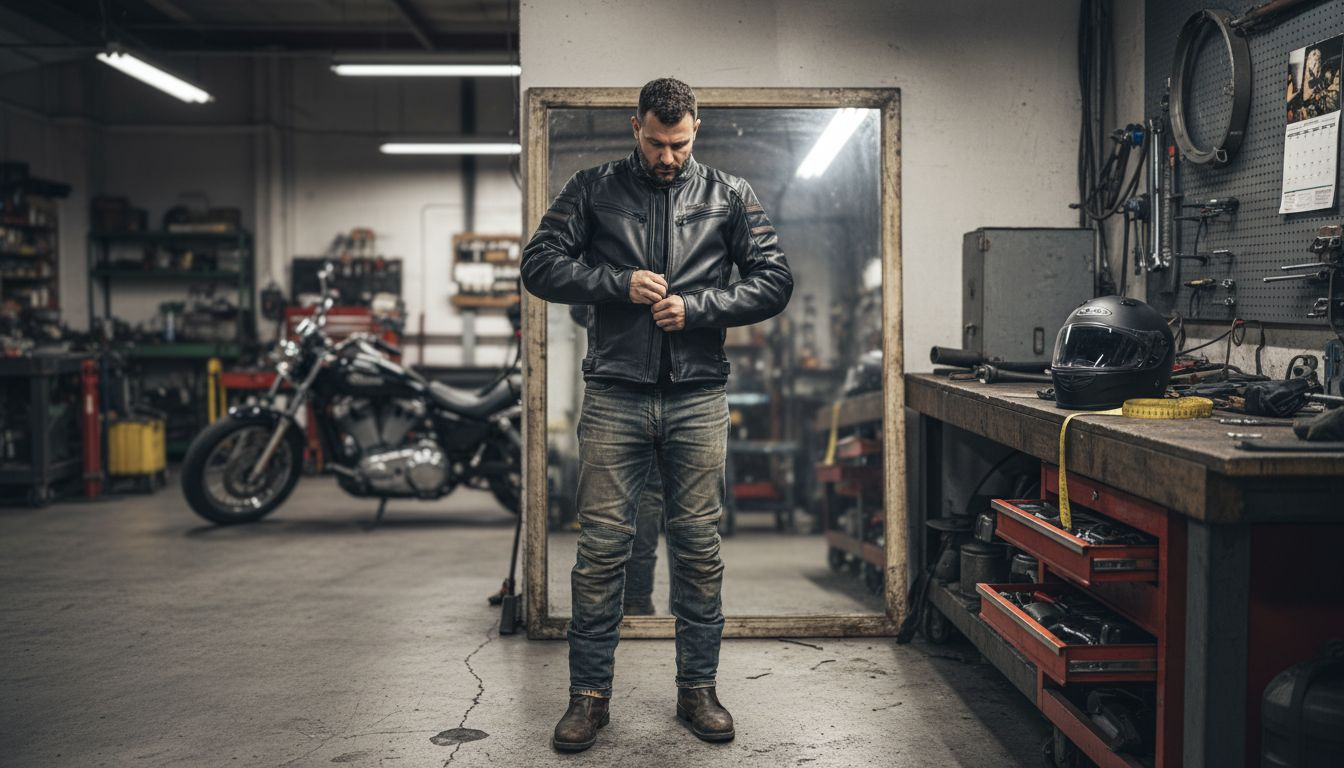
Every ride should feel like your jacket was crafted just for you, not pulled from a generic rack. For motorcycle enthusiasts and style-conscious Americans, the difference between a great day on the road and endless discomfort often comes down to accurate body measurement and custom fit. When your jacket fits perfectly, it delivers both standout looks and the confidence that protection stays put, whether you are navigating city traffic or stretching out on open highways. This guide breaks down the steps that turn your leather jacket into a true extension of your personality and riding needs.
Table of Contents
- Step 1: Assess Your Body Measurements Accurately
- Step 2: Select The Right Jacket Style And Features
- Step 3: Apply Essential Custom Fit Adjustments
- Step 4: Check Fit And Comfort On And Off The Bike
- Step 5: Confirm Protective Gear Positioning And Mobility
Quick Summary
| Key Point | Explanation |
|---|---|
| 1. Accurate Measurements are Crucial | Taking precise body measurements is essential for a custom-fit motorcycle jacket, ensuring comfort and safety while riding. |
| 2. Choose the Right Style for Riding | Select a jacket style based on your primary riding situations to enhance comfort and performance during rides. |
| 3. Custom Adjustments Enhance Fit | Regular sizing often requires adjustments to fit your specific measurements, significantly improving comfort and mobility. |
| 4. Test Fit Off and On the Bike | Evaluate the jacket while standing and sitting on your motorcycle to identify any fit issues and ensure proper movement. |
| 5. Armor Must Stay in Place | Ensure protective gear remains correctly positioned during riding; this is vital for effective accident protection and mobility. |
Step 1: Assess Your Body Measurements Accurately
Getting accurate body measurements is the foundation of a perfect fitting motorcycle jacket. You cannot achieve the ideal fit without knowing your actual dimensions, and this step determines everything that follows. Rather than guessing or relying on off-the-rack sizing, you will take precise measurements that become your custom blueprint for the jacket that fits your body exactly as it should.
Start by gathering what you need: a soft measuring tape, a mirror, and ideally a friend to help. Wear fitted clothing or just underwear so the tape lies flat against your skin without bunching or fabric interference. Stand barefoot on a level floor in a relaxed, natural posture. Do not puff out your chest or suck in your stomach. This is about capturing your real body, not your aspirational measurements. Measure your chest at the fullest part by wrapping the tape around your bust with your arms at your sides. Next, measure your waist at its natural indent, typically just above your hip bone. For motorcycle jackets, you also need shoulder width measured from the outer edge of one shoulder bone to the other. Measure your sleeve length from the center back of your neck down your shoulder and along your arm to your wrist with your arm slightly bent. Sleeve length matters tremendously for jacket proportions and comfort. Take each measurement twice to verify accuracy. If your two measurements differ, take a third. Consistent methodology and calibrated equipment significantly reduce errors and ensure reliable data for garment fitting. Additionally, record your height and weight because measuring physical dimensions of the human body ensures proper fit and protection in protective apparel like motorcycle jackets. Write everything down immediately. Do not rely on memory. Numbers fade fast.
Once you have your measurements, compare them against a comprehensive size guide to determine your baseline size. Understanding where you fall helps identify whether you need standard sizing or custom adjustments. Many riders discover they sit between standard sizes or need lengthening in specific areas. That knowledge shapes your next decisions about customization and fit refinement.
Pro tip: Measure yourself in the morning when your body has not been compressed by clothing or swelling, and do this when you are relaxed rather than after a workout when your muscles are temporarily pumped.
Step 2: Select the Right Jacket Style and Features
Choosing the right jacket style transforms your riding experience from uncomfortable to confident. Your jacket must match how you actually ride, not how you imagine yourself riding. A sport jacket built for track days feels completely different from a touring jacket designed for long highway miles, and selecting the wrong one leads to frustration every time you throw a leg over your bike.
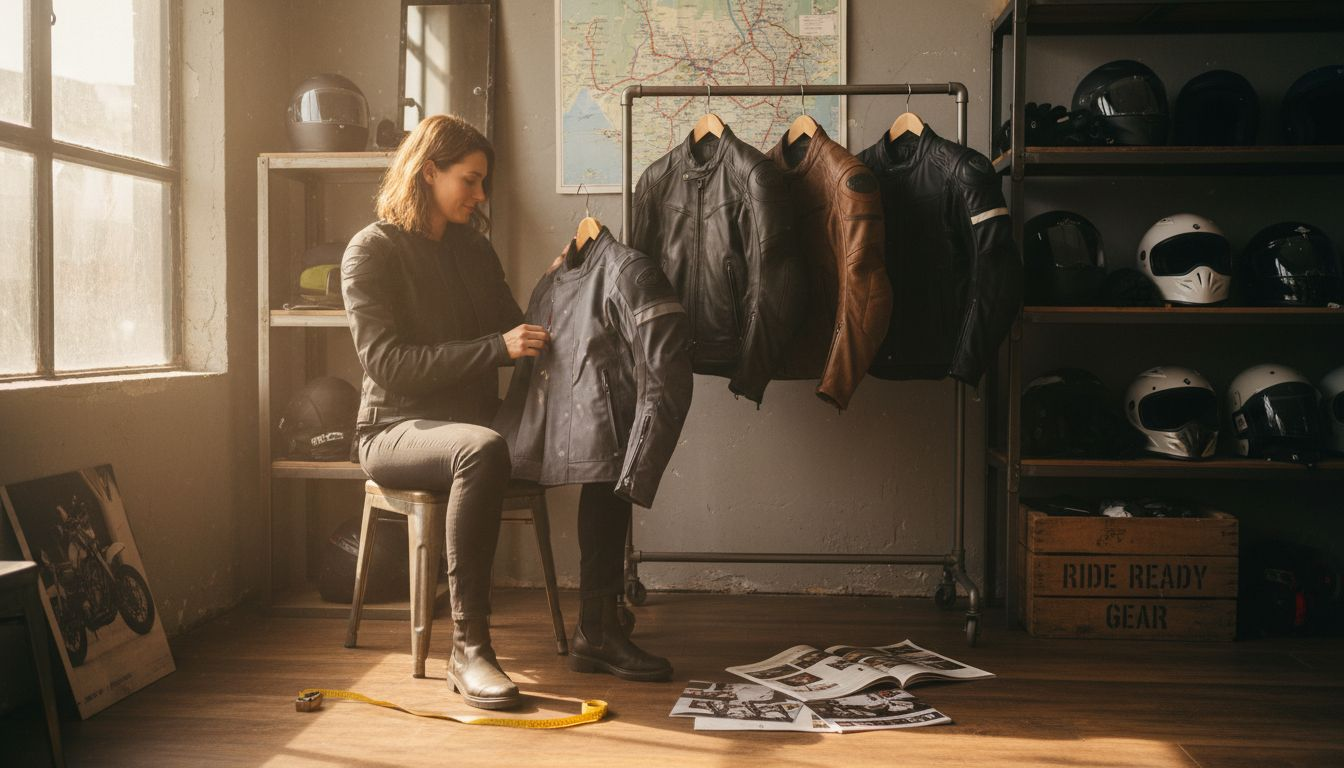
Start by honestly assessing your primary riding situation. Are you commuting through city streets, covering hundreds of miles on highways, carving canyon roads, or cruising around town on weekends? Each riding style demands different features. A commuter needs quick ventilation and weather protection for unpredictable conditions. A sport rider prioritizes mobility and armor placement for aggressive body positioning. A cruiser enthusiast wants classic styling with comfort for relaxed riding. Once you identify your primary use, the jacket type becomes clear. Next, evaluate the specific features that matter for your climate and safety priorities. Abrasion resistance, armor placement, ventilation, waterproofing, and reflective elements all play critical roles in how a jacket performs. A jacket built for warm weather riding with maximum airflow becomes dangerously inadequate in cold rain. Conversely, a heavily insulated winter jacket restricts movement on hot summer days. Consider whether you need removable liners for seasonal transitions, or if a single-purpose jacket fits your riding patterns better.
Material selection directly impacts jacket performance, so understanding leather quality and characteristics helps you choose appropriately. Full-grain leather offers maximum abrasion protection but requires maintenance. Split leather costs less but wears faster. Synthetic materials provide decent protection with easier care. Think about your actual lifestyle too. A jacket that demands constant conditioning might stay pristine in your closet while you wear something lower maintenance. Balance your protective needs against realistic maintenance habits. The right features also depend on your body type and riding position. Taller riders need longer sleeves and back panels. Riders with larger shoulders need consideration for armor compatibility. Customization options matter tremendously here because off-the-rack jackets rarely fit perfectly, and that mismatch undermines both safety and comfort.
Here’s a comparison of motorcycle jacket materials and how they impact riding experience:
| Material Type | Protection Level | Maintenance Needs | Typical Use Case |
|---|---|---|---|
| Full-grain leather | Maximum abrasion resistance | Regular conditioning needed | High-speed, sport riding |
| Split leather | Moderate resistance | Occasional care required | Casual or urban riding |
| Synthetic fabrics | Acceptable protection | Low maintenance | Year-round commuting |
Pro tip: Try jackets while wearing the exact gear you normally wear under them, then sit in your riding position to verify mobility before committing to a purchase.
Step 3: Apply Essential Custom Fit Adjustments
Custom fit adjustments transform a good jacket into one that feels like it was made specifically for your body. This is where your measurements become actionable, turning numbers into tangible comfort and safety improvements. Most riders discover that standard sizing leaves gaps or creates bunching in areas that directly affect how the jacket performs when you’re actually riding.
Start by identifying the specific areas where your jacket needs adjustment. Common trouble spots include sleeve length that extends past your wrist or stops short of your hand, shoulder seams that sit too far forward or back, and excess fabric around the waist or chest. Put on the jacket and simulate your riding position. Bend forward at the hips like you’re gripping the handlebars, rotate your shoulders, and reach your arms forward as if accelerating. Notice where fabric pulls, bunches, or creates uncomfortable pressure points. These problem areas become your adjustment priorities. Custom fit adjustments involve altering patterns or seams to match your exact body measurements, using techniques like folding or spreading fabric in specific areas to add or remove fullness, and adjusting dart and seam lines to contour your body properly. Sleeve length modifications are straightforward and commonly needed. Shoulder width adjustments require more precision but dramatically improve how the jacket sits on your frame. Waist suppression or expansion addresses how the jacket hugs your torso without restricting movement. Side seam adjustments can eliminate excess fabric that creates bulges under your arms.
Understand that fit refers to how well an item interfaces with your body shape without causing discomfort or affecting performance, making proper adjustments critical for motorcycle safety gear. A jacket that pulls across your shoulders or gaps at the waist compromises both protection and comfort. Work with a tailor experienced in leather garments if you’re making structural changes, as leather requires different techniques than standard fabrics. For jackets you plan to customize, communicate these adjustment needs clearly when ordering. Many custom jacket makers include specific adjustments in their initial design rather than retrofitting after production. This approach costs less and produces superior results because the jacket is engineered from the start to match your unique proportions.
Summary of key custom fit adjustments and their benefits:
| Adjustment Area | Common Problem | Result of Proper Adjustment |
|---|---|---|
| Sleeve Length | Too short or too long | Ensures comfort and wrist protection |
| Shoulder Width | Seams misaligned | Improves mobility and fit |
| Waist Fit | Excess or tight fabric | Better torso coverage and movement |
| Side Seams | Bulges under arms | Reduces discomfort and bulk |
Pro tip: Request a fitting jacket or sample before committing to major adjustments, allowing you to verify all measurements translate correctly to your actual body in your real riding position.
Step 4: Check Fit and Comfort on and off the Bike
A jacket that feels great standing in your living room might betray you once you’re twisted into riding position on your motorcycle. This step separates jackets that merely look good from ones that actually work when you need them. You must evaluate your jacket in both everyday scenarios and aggressive riding positions to catch fit problems before they become dangerous.
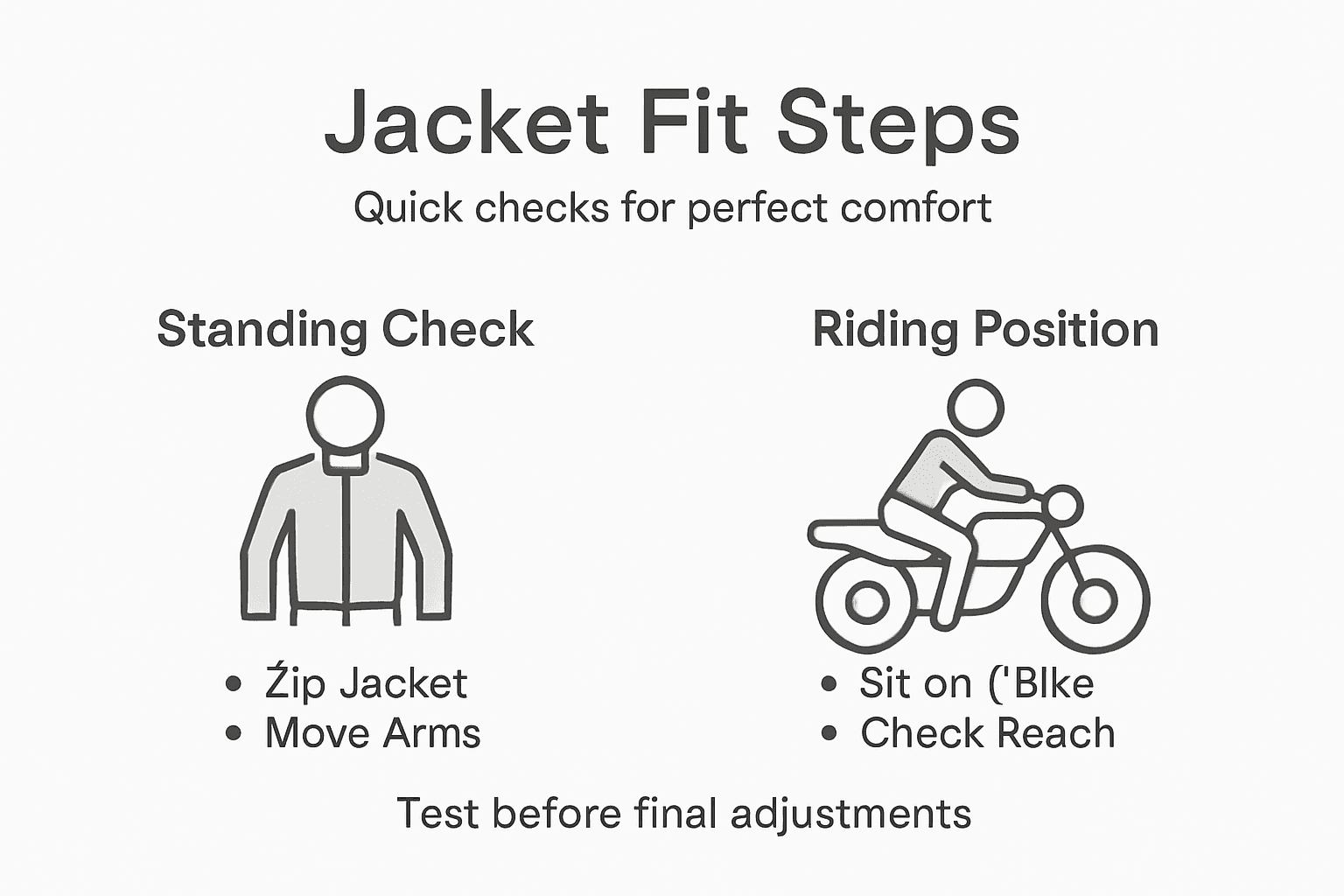
Start with the standing assessment. Put on your jacket with all the gear you normally wear underneath, including your riding gloves and any padding or base layers. Raise your arms straight overhead and move them in circles. Reach forward as if holding handlebars. Rotate your torso left and right. Your jacket should allow unrestricted movement without fabric pulling or bunching. Check that the hem hits at your hip without riding up when your arms are extended. Verify that sleeves end just above your wrist bone so your gloves can overlap properly without creating gaps. Look for pressure points where seams dig into your shoulders or underarms. The collar should sit comfortably against your neck without choking when you look down. Next comes the critical motorcycle test. Sit on your bike in your normal riding posture. This position changes everything. Your torso compresses forward, your shoulders round, and your arms reach differently than when standing. Fit and comfort evaluations for motorcycle gear include checking the jacket while seated on your motorcycle as well as standing. Notice how the jacket behaves in this compressed position. Does the back pull up, exposing skin at your waist? Do the sleeves creep up your forearms? Does your chest feel restricted when you lean hard into the tank? These seated issues are real problems that will plague you during every ride. Reach forward and grip the handlebars naturally. The jacket should move with your body, not against it.
Beyond movement, assess how the jacket manages your body’s thermal environment. Thermal comfort and physical fit standards measure clothing insulation, moisture transfer, and air permeability to evaluate overall garment performance. If your jacket feels too warm while standing still, it will become unbearable at highway speeds where wind noise masks your discomfort until fatigue sets in. Conversely, jackets that feel perfect in a climate-controlled store may chill you dangerously on a cool evening ride. Wear the jacket for at least thirty minutes in your actual riding environment if possible. Pay attention to how it breathes, where sweat accumulates, and whether ventilation openings align properly with your body. This real-world evaluation reveals comfort levels that standing room tests never capture.
Pro tip: Take a short test ride wearing your jacket before finalizing the fit, noticing specifically how the jacket moves relative to your body at different speeds and lean angles.
Step 5: Confirm Protective Gear Positioning and Mobility
Protective armor only works when it stays positioned exactly where it needs to be during the moments that matter most. A jacket with armor that shifts during hard braking or a crash leaves critical areas unprotected, defeating the entire purpose of wearing protective gear. This step ensures your armor remains locked in place while your body maintains full control of your motorcycle.
Begin by locating all protective elements in your jacket. Most modern jackets include armor at the shoulders, elbows, and sometimes the back. Run your fingers across these areas and feel where each piece sits. Put on the jacket and stand in your normal posture, then note where the armor aligns with your actual joints. Bend your elbows and rotate your shoulders. The armor should move with your body, not against it. Now sit on your motorcycle in your riding position and repeat these motions. This is where problems emerge. Your torso compresses forward, changing where armor naturally settles on your body. Jackets should fit so that protective armor stays correctly positioned over joints and high-impact areas during riding postures, which means you must verify this positioning specifically in your riding stance, not just standing upright. Reach forward and grip your handlebars. Does the shoulder armor stay centered, or does it slide toward your neck or back? Can you feel your elbows properly covered when you bend your arms? Armor drift is a silent killer because you only discover the problem after an accident.
Next, test your full range of motion on the bike. Shift your weight from side to side as if cornering hard. Lean deep into turns if you can safely do so while stationary. Perform emergency braking practice, compressing your body forward aggressively. Riders must confirm that gear like jackets, gloves, and boots do not restrict movement or impair reaction times, and proper fitting gear positions armor effectively while allowing freedom for maneuvers. If any movement causes you to grab or adjust your jacket, you have a problem that will worsen at speed and under stress. Your hands should reach every control without restriction. Your shoulders should rotate fully for looking over your shoulder during lane changes. Your torso should compress and extend without the jacket binding. Pay special attention to armpit and underarm areas where restrictive seams or armor placement can limit your ability to turn the handlebars or maintain grip strength. A fatigued or restricted arm becomes a dangerous arm on a long ride. Finally, have someone watch you from the side while you perform these movements. They can spot armor shifting or fabric bunching that you cannot see from your perspective. This outside observation catches problems your own body position obscures.
Pro tip: Do a deliberate crash simulation where you fall forward onto the jacket as if impacting the handlebars, then check if armor repositioned and if it would have protected the intended areas.
Achieve Your Perfect Motorcycle Jacket Fit with Maker of Jacket
Mastering the motorcycle jacket fitting workflow demands precise measurements, thoughtful style choices, and essential custom fit adjustments to ensure unmatched comfort and protection on every ride. If you are tired of jackets that restrict movement or fail to align with your riding posture and body shape you need gear tailored for you. At Maker of Jacket we understand how critical it is to have a jacket that fits flawlessly through every twist and turn.
Experience the confidence of wearing a custom motorcycle jacket crafted using your exact measurements and preferences. Our extensive Maker of Jacket’s collection Archives – Maker of Jacket offers a wide variety of styles ready for customization. Whether you want premium leather, perfect sleeve length, or armor positioned just right we bring your ideal jacket to life. Every piece balances style and protection so you can focus on riding.

Discover the difference a bespoke jacket makes today. Don’t compromise on safety or comfort. Visit Maker of Jacket now and take the first step toward your perfect fit. Explore our Mustang jacket collection Archives – Maker of Jacket for unique designs and start customizing your ultimate motorcycle gear right away.
Frequently Asked Questions
How do I accurately assess my body measurements for a motorcycle jacket?
To assess your body measurements accurately, use a soft measuring tape to measure your chest, waist, shoulder width, and sleeve length while standing in a relaxed posture. Take each measurement twice to ensure accuracy and write them down immediately for reference.
What should I consider when selecting the right motorcycle jacket style?
When selecting a motorcycle jacket style, consider your primary riding situation, such as commuting, touring, or sport riding. Assess essential features like ventilation, abrasion resistance, and material type to ensure the jacket meets your comfort and safety needs.
How can I apply custom fit adjustments to my motorcycle jacket?
To apply custom fit adjustments, identify specific areas like sleeve length, shoulder width, and waist fit that require modification. Work with a tailor experienced in leather to alter the jacket according to your precise measurements for enhanced comfort and performance.
How do I check the fit and comfort of my motorcycle jacket on and off the bike?
To check the fit and comfort, first assess the jacket while standing and moving your arms, then sit on your motorcycle in your riding position. Look for tightness, bunching, or discomforts in key areas, and make sure your jacket allows for full range of motion without restricting your movements.
How do I confirm the positioning and mobility of protective armor in my jacket?
To confirm armor positioning, wear the jacket and simulate your riding posture while paying attention to how the armor aligns with your joints. Ensure the armor stays in place while you move and perform necessary riding motions, adjusting if it shifts and doesn’t cover critical areas properly.


