

How fit enhances jacket comfort for style and wearability


Most people believe a jacket’s style determines its comfort. They browse collections, admire designs, and choose based on aesthetics alone. Yet the real secret to all-day wearability lies not in the cut or color, but in how precisely the garment fits your unique body. Whether you’re selecting a fashion statement piece or a protective motorcycle jacket, proper fit transforms ordinary comfort into exceptional performance. This guide reveals how fit mechanics, from shoulder alignment to thermal management, create the foundation for jackets that feel as good as they look.
Table of Contents
- Key takeaways
- Why fit determines jacket comfort
- The critical role of shoulder fit and alignment
- Customizing fit for diverse body types
- Fit’s influence on comfort beyond size: thermal and physiological effects
- Discover your perfect fit with our customizable jackets
- Frequently asked questions about fit and jacket comfort
Key Takeaways
| Point | Details |
|---|---|
| Fit drives comfort | Precise fit distributes fabric tension, improves ease allowance, and reduces pressure points during movement. |
| Shoulder alignment matters | When the shoulder seam aligns with your natural shoulder, sleeves drape properly and the back follows your spine for balanced wear. |
| Signs of poor fit | Horizontal back wrinkles indicate insufficient length and vertical creases near buttons show excess fabric that causes friction and movement restriction. |
| 3D fit mapping benefits | Modern virtual fitting maps adjustments to reduce stress and improve balance across different body types. |
Why fit determines jacket comfort
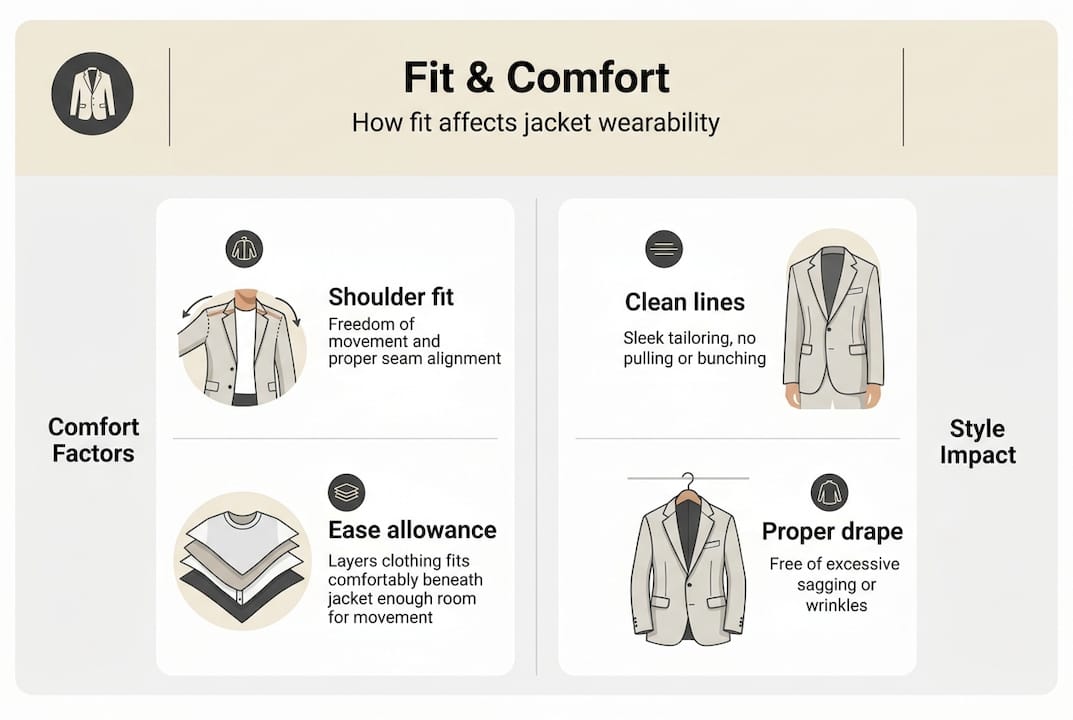
Fit serves as the technical foundation for every comfortable jacket you’ll ever wear. When a jacket addresses your specific body proportions, drop measurements, and natural posture, it distributes fabric tension evenly across your frame. Systematic fit adjustments improve ease allowance and eliminate the drag lines that create pressure points during movement. Think of fit as the invisible architecture supporting your comfort throughout the day.
Your body presents unique challenges that standard sizing can’t address. One shoulder might sit higher than the other, or your torso length might fall between conventional size categories. These variations create gaps, pulls, and bunching in poorly fitted jackets. Modern virtual 3D fitting technology now quantifies these comfort improvements by mapping exactly where adjustments reduce stress and improve balance. The data confirms what experienced wearers already know: precise fit matters more than premium materials.
Poor fit reveals itself through telltale signs. Horizontal wrinkles across the back indicate insufficient length. Vertical creases near buttons show excess fabric fighting against your natural shape. These aren’t just aesthetic problems. Each distortion point creates friction, restricts movement, or allows uncomfortable air infiltration. Understanding why jacket fit matters helps you identify these issues before they compromise your comfort.
Proper fit also enhances your jacket’s visual impact. A well-fitted garment follows your body’s natural lines, creating a clean silhouette that elevates any style. The fabric drapes smoothly rather than pulling or sagging. This synergy between comfort and appearance explains why custom tailoring remains the gold standard. When fit solves the technical challenges of covering a human body, both wearability and style improve simultaneously.
Consider how you move throughout your day. Reaching, bending, sitting, and standing all test your jacket’s fit. Adequate ease allowance in the chest and shoulders prevents binding during these motions. Proper length ensures coverage without excess fabric bunching at your waist. Each adjustment contributes to a wearing experience where you forget about the garment entirely.
Pro Tip: Test jacket fit by crossing your arms and reaching forward. The fabric should move with you without pulling across the back or restricting your range of motion.
“The difference between a jacket that fits and one that doesn’t is the difference between forgetting you’re wearing it and being constantly aware of every movement.”
The critical role of shoulder fit and alignment
Your shoulders carry the entire weight and structure of any jacket. When the shoulder seam aligns precisely with your natural shoulder bone endpoint, the garment hangs in perfect balance. This single measurement influences everything below it: how sleeves drape, how the chest panel sits, and how the back follows your spine. Miss this alignment by even half an inch, and cascading fit problems emerge throughout the jacket.
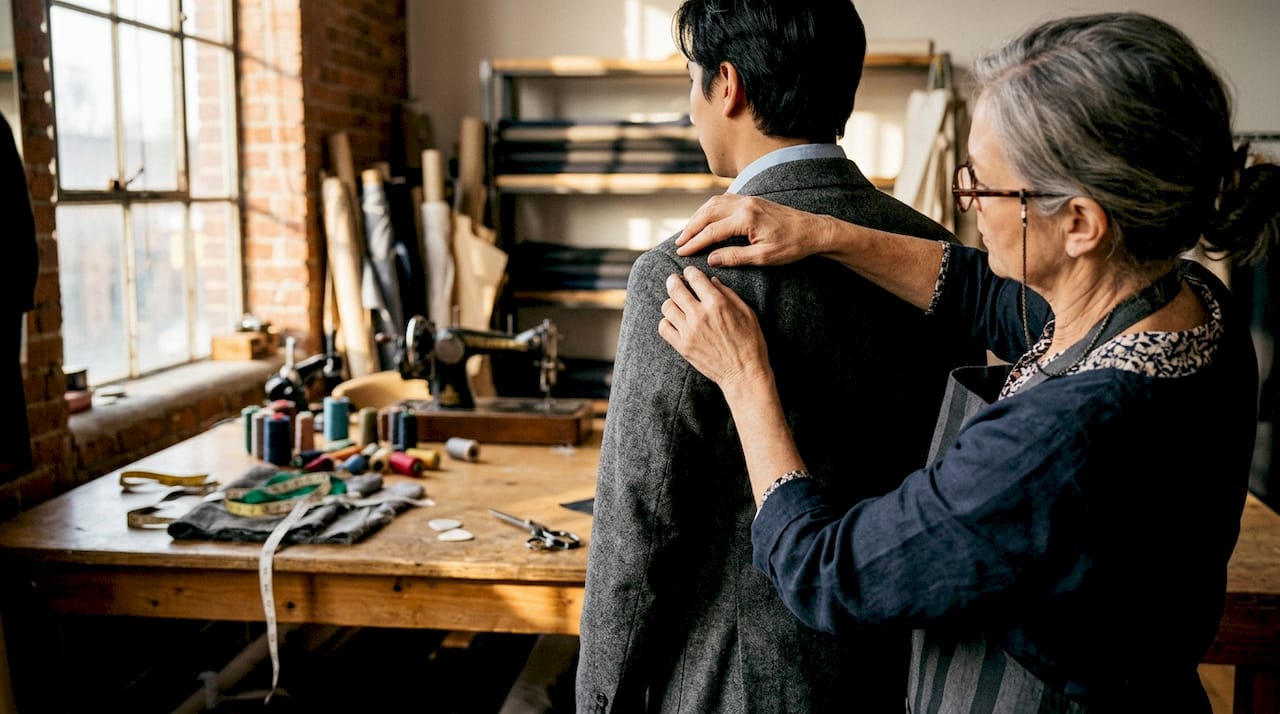
Improper shoulder fit creates concentrated stress points that accelerate wear and generate persistent discomfort. Too narrow, and the seam digs into your shoulder muscle, restricting arm movement and causing the dreaded button X-pull across your chest. Too wide, and the shoulder extends past your natural frame, creating excess fabric that bunches and shifts with every motion. Both scenarios compromise the jacket’s structural integrity and your physical comfort.
The shoulder area also determines sleeve behavior. When shoulders fit correctly, sleeves hang straight from the shoulder point without twisting around your arm. This proper hang prevents fabric from binding when you bend your elbows or raise your arms. For motorcycle jackets, this becomes a safety consideration as well as a comfort issue. Restricted shoulder movement can delay reactions in critical moments.
Shoulder length coverage matters equally. The seam should extend far enough to cover your shoulder blade’s outer edge, providing adequate protection and structure. Insufficient coverage leaves gaps that expose you to wind and weather. Excessive coverage creates visual bulk and physical weight that pulls the jacket off balance. Finding this sweet spot requires precise measurement and often custom adjustment.
Proper shoulder fit extends your jacket’s lifespan significantly. When weight distributes correctly across the shoulder line, seams experience less stress during normal wear. Fabric doesn’t stretch or distort from fighting against your body’s natural structure. This durability factor makes investing in proper fit a practical financial decision beyond the immediate comfort benefits.
Pro Tip: Check shoulder fit by standing naturally and having someone observe from behind. The shoulder seam should form a clean line at your shoulder’s natural edge without dipping onto your arm or riding up onto your neck.
For those experiencing shoulder issues, learning to fix jacket shoulder wrinkles provides practical solutions. Common problems like fabric pooling or diagonal stress lines often trace back to shoulder fit mismatches. Addressing these issues through alterations or custom sizing transforms uncomfortable jackets into reliable favorites.
Customizing fit for diverse body types
Standard sizing assumes average proportions that rarely match real human bodies. Your shoulders might be broader than your waist suggests, or your torso might be longer than typical for your chest measurement. These variations aren’t flaws; they’re normal human diversity. Personalized pattern modifications address these differences by adjusting waist length, shoulder slope, and other critical dimensions to match your specific measurements.
Without customization, non-standard bodies face predictable fit problems. Gaping occurs when fabric hangs loose where it should follow your contours. Wrinkling appears when excess material bunches because the pattern doesn’t account for your proportions. These issues don’t just look awkward; they create comfort problems. Loose fabric catches on objects, while tight areas restrict movement and create pressure points.
| Feature | Standard Pattern | Customized Pattern |
|---|---|---|
| Waist length | Fixed based on size category | Adjusted to individual torso length |
| Shoulder slope | Average 20-degree angle | Modified for individual shoulder angle |
| Armhole depth | Standardized by chest size | Optimized for arm position and movement |
| Dart placement | Generic positioning | Positioned to follow body contours |
Pattern modifications work by altering the fundamental template before cutting fabric. A skilled tailor analyzes your body’s unique characteristics and adjusts the pattern accordingly. Lengthening the waist section accommodates a longer torso. Changing shoulder slope angles prevents the collar from pulling away from your neck or fabric from bunching at the shoulder seam. These adjustments happen before construction begins, ensuring every piece fits together around your specific shape.
Darts and armhole corrections particularly enhance comfort and movement. Darts remove excess fabric in strategic locations, creating shape that follows your body rather than hanging loose. Armhole adjustments ensure your arms can move freely without the entire jacket shifting on your torso. For motorcycle jackets, this freedom of movement becomes essential for safe riding posture and control.
Customization also supports personal style expression. When a jacket fits your body perfectly, you can choose bolder designs or unique details without worrying about fit issues overwhelming the aesthetic. The garment becomes a true extension of your personal style rather than a compromise between what fits and what you actually want. Understanding the jacket fitting workflow helps you communicate your needs effectively during the customization process.
The investment in custom fitting pays dividends in both comfort and longevity. A jacket built for your body experiences less stress during wear, extending its functional life. You’ll actually wear it regularly rather than leaving it in the closet because it never felt quite right. Learning how to customize jackets for your unique needs opens possibilities beyond standard retail offerings.
Fit’s influence on comfort beyond size: thermal and physiological effects
Fit affects more than just how fabric sits on your frame. The space between your skin and the jacket’s inner surface creates an air layer that dramatically influences thermal comfort. Research shows air gaps of 10-15mm provide optimal insulation by trapping warm air while preventing excessive heat buildup. Too tight, and you lose this insulating layer while restricting blood flow. Too loose, and convection currents carry away body heat faster than you can generate it.
This thermal dynamic changes based on activity level and environment. Standing still in cold weather benefits from slightly looser fit that maximizes trapped air insulation. Active movement generates body heat that needs escape routes, requiring closer fit with strategic ventilation. Motorcycle riding presents unique challenges: wind pressure at speed requires closer fit to prevent billowing, while the physical exertion of controlling the bike generates heat that needs management.
| Air Gap Size | Thermal Effect | Comfort Impact |
|---|---|---|
| Less than 5mm | Minimal insulation, restricted circulation | Uncomfortable, cold in winter, restricted movement |
| 10-15mm | Optimal insulation, good air circulation | Maximum comfort across temperature ranges |
| More than 20mm | Excessive air movement, poor insulation | Cold spots, fabric shifting, reduced efficiency |
Modern adaptive systems take fit-influenced comfort to new levels. Fuzzy inference systems analyze physiological data like skin temperature and humidity to dynamically adjust jacket properties. These smart systems compensate for fit variations by modifying breathability and thermal retention in real time. While high-tech, they prove the fundamental principle: fit directly impacts your body’s thermal regulation and overall comfort.
Proper fit balances competing demands. Enough ease for movement and air circulation, but not so much that fabric shifts and creates uncomfortable bunching. Close enough to maintain thermal efficiency, but not so tight that you feel constricted. This balance point varies by jacket purpose. Fashion jackets prioritize aesthetic drape with moderate ease. Motorcycle jackets need closer fit for aerodynamics and armor positioning.
Understanding the jacket fit and comfort relationship helps you evaluate whether a garment will work for your specific use case. Consider these factors when assessing fit:
- Measure the gap between fabric and body at chest, waist, and shoulders
- Test range of motion in typical positions for your intended use
- Evaluate how fabric moves during activity versus static standing
- Consider layering needs for different seasons and conditions
- Assess ventilation placement relative to your body’s heat zones
Pro Tip: Wear your jacket for 15 minutes of normal activity before finalizing a purchase. Static fitting room tests miss comfort issues that emerge during real-world movement and temperature changes.
The physiological effects extend beyond temperature. Proper fit reduces fatigue by distributing weight evenly and avoiding pressure points that restrict circulation. Blood flow to your arms and shoulders remains unimpeded, preventing the numbness and discomfort that tight garments cause. Your body expends less energy compensating for poor fit, leaving you feeling fresher at day’s end.
Discover your perfect fit with our customizable jackets
Now that you understand how fit transforms jacket comfort and wearability, it’s time to experience the difference firsthand. Maker of Jacket specializes in creating customizable jackets that address your unique proportions, style preferences, and comfort requirements. Our process goes beyond standard sizing to deliver garments built specifically for your body.

Every body deserves a jacket that fits perfectly. Our customization approach starts with your measurements and preferences, then applies the fit principles covered in this guide. Whether you need shoulder adjustments for better alignment, waist modifications for your torso length, or thermal considerations for your riding style, we build each jacket to your specifications. The result is a garment you’ll reach for constantly because it simply feels right.
Ready to order your custom jacket online? Our streamlined process makes it simple. Follow our customization journey to see how we translate your vision into reality. For detailed guidance, explore our step-by-step bespoke jacket design resource. Invest in comfort that lasts, style that fits, and quality that shows in every detail.
Frequently asked questions about fit and jacket comfort
How do I know if a jacket fits properly in the shoulders?
Stand naturally and check that the shoulder seam ends precisely where your shoulder bone meets your arm. The seam shouldn’t extend onto your upper arm or sit on top of your shoulder. When you raise your arms, the jacket should move with you without the shoulders riding up toward your ears.
Why is ease allowance important for jacket comfort?
Ease allowance provides the extra fabric needed for movement without creating a baggy appearance. It allows you to reach, bend, and sit comfortably while maintaining the jacket’s intended silhouette. Too little ease restricts motion, while too much creates unflattering bulk and reduces thermal efficiency.
Can custom jackets solve fit problems that ready-to-wear can’t?
Absolutely. Custom jackets address non-standard proportions through pattern modifications that ready-to-wear sizing can’t accommodate. If you have a long torso, broad shoulders with a narrow waist, or uneven shoulder heights, customization eliminates the gaping, pulling, and wrinkling that standard sizes create. Learn more about jacket personalization to understand your options.
How does fit impact motorcycle jacket safety and comfort?
Proper fit keeps protective armor positioned correctly over impact zones during a crash. Loose jackets allow armor to shift away from shoulders, elbows, and back, reducing protection. Close fit also prevents fabric from billowing at speed, reducing wind resistance and fatigue. The balance between protection and mobility depends on precise fit.
What is the role of air gaps in jacket thermal comfort?
Air gaps between your skin and the jacket fabric create insulating layers that trap body heat. Optimal gaps of 10-15mm provide warmth without overheating, while allowing enough air circulation to prevent moisture buildup. Fit determines these gap sizes: too tight eliminates insulation, too loose allows excessive air movement that cools you down.


