

What Is Jacket Lining? Comfort, Durability, and Style


Finding a leather jacket that matches your style is only half the story if you care about how it feels and lasts. The hidden layer inside—known as jacket lining—plays a leading role in comfort, warmth, and durability. For fashion-forward Americans who demand more than just looks, understanding the inner fabric layer means every customized detail counts, making your next leather jacket a personal investment in everyday satisfaction.
Table of Contents
- What Is Jacket Lining and Why It Matters
- Types of Jacket Lining Materials Explained
- Key Functions: Comfort, Insulation, and Style
- Choosing the Right Lining for Your Needs
- Common Mistakes When Selecting Linings
Key Takeaways
| Point | Details |
|---|---|
| Importance of Lining | Jacket lining plays a crucial role in comfort, warmth, and longevity. High-quality linings enhance the wearing experience significantly. |
| Material Choices Matter | The choice of lining material affects your jacket’s performance. Different materials provide various benefits, like breathability and insulation. |
| Climate Consideration | When selecting a lining, consider your local climate and how often you’ll wear the jacket. This impacts comfort and functionality over time. |
| Avoid Common Mistakes | Choosing linings that are too heavy or mismatched with garment purpose can compromise wearability. Test samples before making a final decision. |
What Is Jacket Lining and Why It Matters
Jacket lining is the inner fabric layer that sits inside your jacket, hidden from view but crucial to how your jacket performs. Think of it as the jacket’s best friend—it protects the outer material, keeps you comfortable, and makes wearing your jacket a pleasure instead of a chore.
At its core, a lining is an inner layer of fabric) inserted to provide a smooth inside finish and conceal construction details like seams and padding. But that’s just the beginning of what lining does for you.
Why Lining Actually Matters
You might think lining is just aesthetic, but it serves real, practical purposes:
- Reduces wear and tear on outer fabrics by minimizing friction
- Adds warmth to jackets, especially in cold-weather designs
- Enables smooth movement when you put on or take off your jacket
- Extends your jacket’s lifespan significantly
- Creates luxury feel when outer fabric feels rough against skin
- Preserves shape and prevents stretching over time
Quality lining is what separates a jacket that feels great at month one from one that still feels great at year three.
When you slip on a well-lined jacket, you notice the difference immediately. Your movement feels fluid. Your arms don’t stick to the lining. The jacket drapes properly instead of bunching up awkwardly around your torso.
For fashion-conscious customizers, choosing the perfect lining for your jacket makes the difference between a basic jacket and one you’ll reach for constantly. The lining you select impacts comfort daily and durability yearly.
Lining materials vary widely—polyester, silk, cotton blends, and nylon all offer different benefits. Some linings breathe better. Others provide more insulation. Better linings cost more upfront but save you money because your jacket lasts longer.
Think about your jacket like your phone: you wouldn’t cheap out on screen protection, right? Lining is your jacket’s protection. Your body experiences lining constantly—more than the outer fabric, actually.
Pro tip: When customizing a jacket, prioritize lining quality over flashy exterior details; you’ll feel the difference every time you wear it, and it determines how long your investment lasts.
Types of Jacket Lining Materials Explained
Not all linings are created equal. The material you choose determines how your jacket feels, breathes, and performs over time. Your lining choice impacts everything from comfort on day one to durability five years down the road.
The Most Common Lining Materials
When you’re customizing a jacket, understanding what’s inside matters as much as what’s outside. Here are the primary options you’ll encounter:
Polyester is the workhorse of jacket linings. It’s affordable, durable, and easy to care for. Polyester doesn’t wrinkle easily and resists moisture reasonably well. Most production jackets use polyester because it balances cost and performance without sacrificing quality.

Silk and silk blends feel luxurious against your skin. Silk, polyester charmeuse, and silk crepe de chine offer that premium glide when you put on your jacket. Your arm movement feels effortless. The downside? Silk requires more careful cleaning and costs significantly more upfront.
Cotton blends work beautifully for casual jackets. Smooth cotton blends are excellent for casual wear because they breathe well and feel comfortable against bare skin. They’re softer than polyester but less slippery. Cotton doesn’t have the luxury feel of silk, but it’s practical for everyday jackets.
Bemberg rayon offers a middle ground. It feels smooth and silky but costs less than genuine silk. Rayon provides excellent comfort without the premium price tag.
Fake fur transforms jackets into winter statements. It adds genuine warmth and that cozy feeling you crave when temperatures drop. The tradeoff is bulk—your jacket needs looser styling to accommodate the thicker lining.
Here’s how the main jacket lining materials stack up for different needs:
| Lining Material | Best For | Comfort Level | Care Difficulty |
|---|---|---|---|
| Polyester | Everyday jackets | Smooth, moderate | Low, machine wash |
| Silk/Silk Blend | Special occasions | Very soft, luxurious | High, dry clean |
| Cotton Blend | Casual wear | Soft, breathable | Moderate, easy |
| Bemberg Rayon | Versatile jackets | Silky, breathable | Moderate, gentle |
| Fake Fur | Winter outerwear | Warm, plush | Moderate, spot clean |
Specialty Lining Options
Beyond standard linings, you have specialized choices:
- Interlining adds an extra layer between outer fabric and main lining for structure
- Partial or half linings cover only specific areas, reducing weight and cost
- Removable linings like zip-in or snap-out options offer year-round versatility
The best lining material matches your lifestyle—luxury linings for statement pieces you wear carefully, durable synthetics for everyday rotation.
When selecting a lining for a custom jacket, consider your climate and wear frequency. Breathable linings matter if you live somewhere warm. Insulating linings make sense for cold-weather gear. Daily-wear jackets benefit from low-maintenance polyester, while special occasion pieces justify premium silk.
Pro tip: Request a sample of lining material before finalizing your custom order—what feels right to you in person matters more than what looks right online.
Key Functions: Comfort, Insulation, and Style
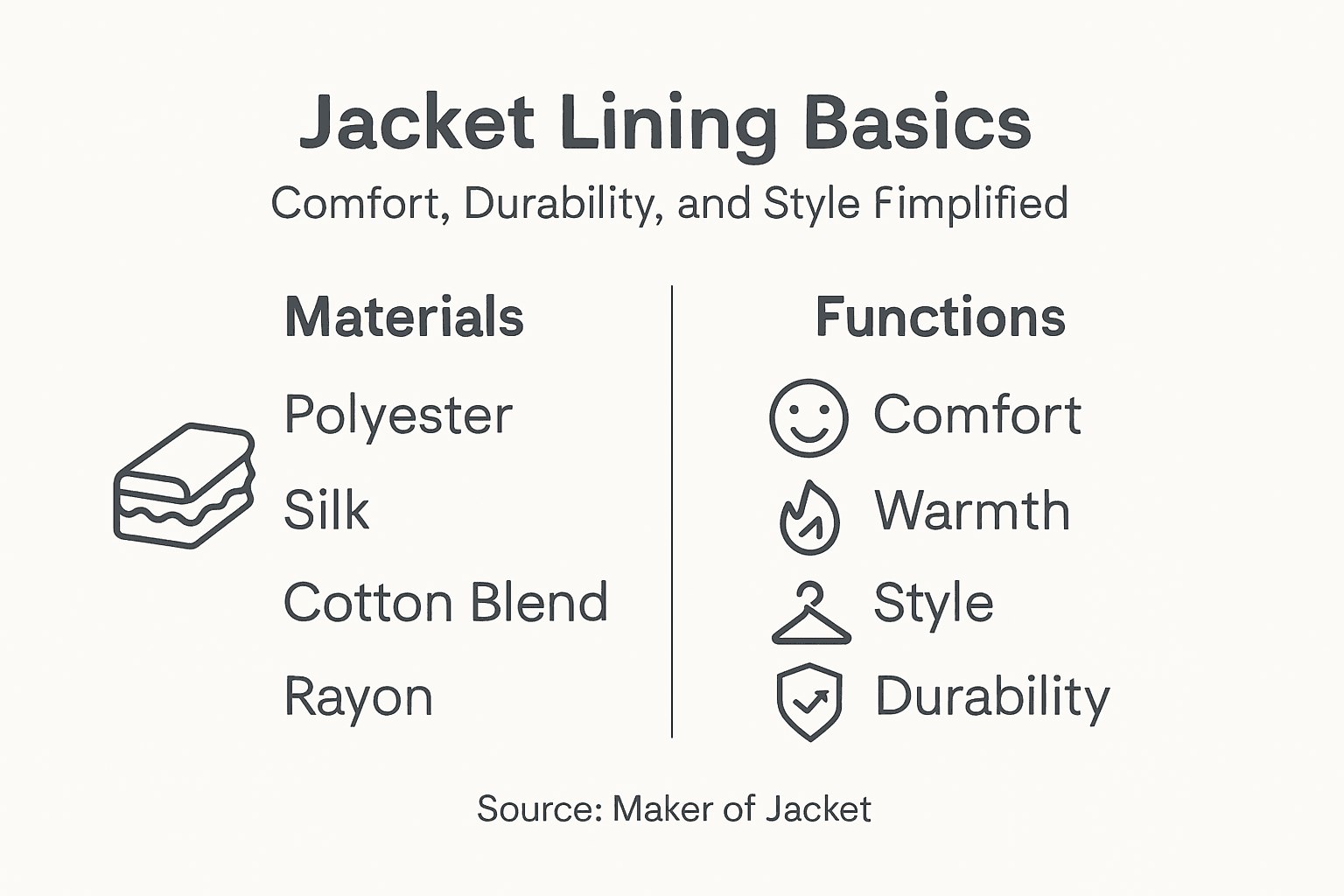
Jacket lining isn’t just hidden infrastructure—it’s the difference between a jacket you tolerate and one you love wearing. The lining serves three critical functions that directly impact your daily experience: comfort, insulation, and visual style.
Comfort First
Comfort happens at the point of contact. Your skin touches the lining far more than the outer fabric, especially when you’re moving. A rough outer material against bare skin feels terrible after an hour, but quality lining solves this instantly.
Smooth linings let your jacket slide on effortlessly. Your arm doesn’t catch or stick. Movement feels natural instead of restricted. This matters when you’re reaching, driving, or just living life in your jacket.
When the outer fabric is rough—like raw leather or textured wool—lining becomes your comfort barrier. Linings add comfort especially if the outer fabric is rough, creating a pleasant wearing experience instead of an irritating one.
Insulation and Warmth
Lining adds genuine warmth. Clothing insulation works by trapping air, and your lining is part of that layering system. The air pockets in lining fabric act as a thermal barrier, keeping cold air away from your body.
This is especially important in layered outfits. When you wear a jacket over sweaters or thermal shirts, the lining prevents your outer layer from compressing your insulation. Everything works together.
Key insulation benefits:
- Traps warm air between body and outer fabric
- Maintains body temperature by reducing heat loss
- Manages moisture to keep skin dry and comfortable
- Works with interlining for enhanced cold-weather performance
Better lining equals better temperature control—your body stays warmer without bulkier jackets or excessive layering.
Style and Visual Appeal
Lining is your secret statement. While everyone sees your jacket’s exterior, you know what’s inside. Many customizers choose contrasting or patterned linings that peek out when you move.
Some people select coordinated linings that match the outer fabric for seamless aesthetics. Others go bold with contrasting colors or patterns that surprise people when you unbutton your jacket. This is where personality shows.
Lining also helps your jacket maintain its shape over years of wear. Structured linings prevent stretching and sagging, keeping your jacket looking fresh longer.
Pro tip: When customizing your jacket, choose a lining color or pattern you genuinely love—you’ll see it every time you wear the jacket, so make it personal.
Choosing the Right Lining for Your Needs
There’s no one-size-fits-all lining choice. The right lining depends on how you’ll wear your jacket, where you live, and what matters most to you. A biker jacket needs something different than a summer blazer.
Start by asking yourself three questions: What’s my climate? How often will I wear this? Do I prioritize warmth, comfort, or both?
Match Lining to Your Climate
If you live somewhere cold, insulation matters. When warmth is a priority, insulating interlinings add extra thermal protection) between the garment and lining layers. This creates a genuine heat barrier without adding bulk to your jacket.
For mild climates, lightweight linings work perfectly. Silk or polyester charmeuse feel luxurious without overheating you. Cotton blends breathe well for layered spring and fall wear.
Your environment should drive your choice:
- Cold climates = insulating interlining or thicker linings
- Mild climates = breathable synthetic or cotton blends
- Variable weather = removable or adaptable linings
- Warm climates = lightweight, moisture-wicking materials
Consider Your Wear Pattern
The choice of lining depends on the garment use and fabric) you’re working with. A daily-wear leather jacket needs durable, low-maintenance polyester. A statement jacket you wear occasionally can justify premium silk.
If you wear your jacket constantly, prioritize durability and washability. Polyester withstands frequent cleaning. Silk requires careful handling but feels incredible against skin.
Lining Options for Different Needs
Choose traditional lining to completely conceal construction details and help a garment slide on smoothly. This works for most everyday jackets where you want professional finishing.
Partial linings reduce bulk where full lining isn’t necessary. Many leather jackets use half-linings that cover just the upper back and sleeves. This cuts weight and cost while maintaining functionality.
Removable linings offer flexibility. Snap-out or zip-in linings let you adapt one jacket to different seasons. Summer with no lining, winter with thermal backing.
Your ideal lining balances what you feel inside the jacket with what you need functionally.
When customizing at Maker of Jacket, discuss your specific needs with your designer. Tell them your climate, how often you’ll wear the piece, and whether you want visual style inside. They can recommend lining combinations that match your lifestyle perfectly.
Pro tip: Order your custom jacket with a removable or adaptable lining if you live somewhere with distinct seasons—you’ll extend your jacket’s versatility and usefulness throughout the year.
Common Mistakes When Selecting Linings
People make predictable lining mistakes that compromise their jackets. Most errors happen because folks overlook how lining impacts everyday wear. The good news? These mistakes are completely avoidable with the right knowledge.
Weight and Bulk Problems
The most common mistake is choosing lining that’s too heavy. Choosing fabric that is too heavy or bulky interferes with the hang and movement of the garment. Your jacket feels stiff instead of fluid. Arm movement becomes restricted. The whole thing bunches awkwardly.
Thick linings make sense for winter coats but not for lightweight leather jackets or bombers. Match lining weight to your outer fabric. Delicate fabrics need delicate linings. Heavy fabrics can handle thicker linings without losing shape.
Common weight mistakes:
Compare common jacket lining mistakes and their effects:
| Mistake Type | What Happens | Impact on Wear |
|---|---|---|
| Too heavy lining | Restricts movement | Feels stiff, bulky |
| Too rough lining | Creates friction | Hard to put on |
| Mismatched function | Shortens lifespan | Premature wear |
| Poor construction | Limits flexibility | Uncomfortable fit |
- Choosing winter-grade lining for spring jackets
- Using stiff interfacing when you need softness
- Adding bulk without considering the jacket’s purpose
- Ignoring how lining affects overall garment drape
Slipperiness and Movement Issues
Using fabrics that do not slide easily causes discomfort and restricts movement. You want your arm to glide smoothly into the jacket sleeve, not catch or stick.
This is why smooth synthetic linings like polyester charmeuse work so well. They slide easily. Your body doesn’t fight the fabric. Conversely, rough or nubby linings create friction that’s genuinely annoying during normal wear.
Static is another hidden issue. Some synthetic linings cling to your clothing underneath, creating an uncomfortable, clingy feeling. Test samples when possible—this matters daily.
Functionality Mismatches
A lining that looks great but doesn’t match your jacket’s purpose creates problems. You can’t use silk lining in a leather motorcycle jacket you’ll wear constantly. Silk requires careful handling. A daily-rider needs durable polyester.
Similarly, not matching the functionality of the lining to the garment’s purpose can reduce comfort. A summer jacket doesn’t need thermal insulation. A winter jacket needs it. This seems obvious, but many customizers choose beautiful linings without considering how they’ll actually wear the jacket.
Construction Details Matter
Small construction mistakes compound over time. The center back pleat in coat linings must be cut with proper ease, or movement becomes restricted. Inadequate ease anywhere limits how freely you can move.
The right lining feels invisible—you notice how great the jacket wears, not how uncomfortable the lining is.
When customizing your jacket, discuss wear patterns with your designer. How often will you wear it? What climate? Do you prioritize durability or luxury feel? Your answers drive every lining decision.
Pro tip: Always request lining samples or swatches before committing to a custom order—feel how the fabric moves against your skin and test how it interacts with fabrics you typically layer underneath.
Elevate Your Jacket Experience with Expertly Crafted Linings
Understanding how jacket lining impacts comfort, durability, and style is vital when choosing your next favorite jacket. At Maker of Jacket, we recognize that the right lining transforms a jacket from ordinary to extraordinary by enhancing smooth movement, adding warmth, and preserving the jacket’s shape over time. If you have struggled with bulky or rough linings that limit your comfort or wearability, our customizable jackets offer tailored solutions designed to meet your climate and lifestyle needs.
Discover jackets where every detail counts, including premium lining options that balance luxury and practicality. Whether you want a sleek polyester lining for daily wear or a plush fake fur lining for winter warmth, our collection caters to your unique preferences. Visit Maker of Jacket to explore our extensive range of styles including biker, bomber, varsity, and fashion jackets all customizable to your comfort and style priorities. Don’t wait to experience the perfect blend of function and fashion—customize your ideal jacket today and enjoy worldwide free shipping.
Start your journey to unmatched comfort now at Maker of Jacket and see why quality lining makes all the difference in how a jacket feels and wears.
Frequently Asked Questions
What is jacket lining and why is it important?
Jacket lining is the inner fabric layer inside a jacket that provides comfort, reduces wear and tear on outer fabrics, adds warmth, and enhances the overall durability and luxury feel of the jacket.
What are the main types of materials used for jacket linings?
Common lining materials include polyester, silk and silk blends, cotton blends, Bemberg rayon, and fake fur. Each material offers different benefits such as durability, comfort, and insulation.
How does lining affect the comfort of a jacket?
A quality lining enhances comfort by providing a smooth surface against the skin, allowing for easy movement. It acts as a barrier between rough outer fabrics and the skin, making the jacket more pleasant to wear.
What should I consider when choosing a lining for my jacket?
Consider factors like climate, frequency of wear, and your comfort priorities. For colder climates, select insulating linings, while lighter breathable materials are best for warmer conditions or frequent wear.


