

Why Jacket Materials Matter for Riders’ Safety

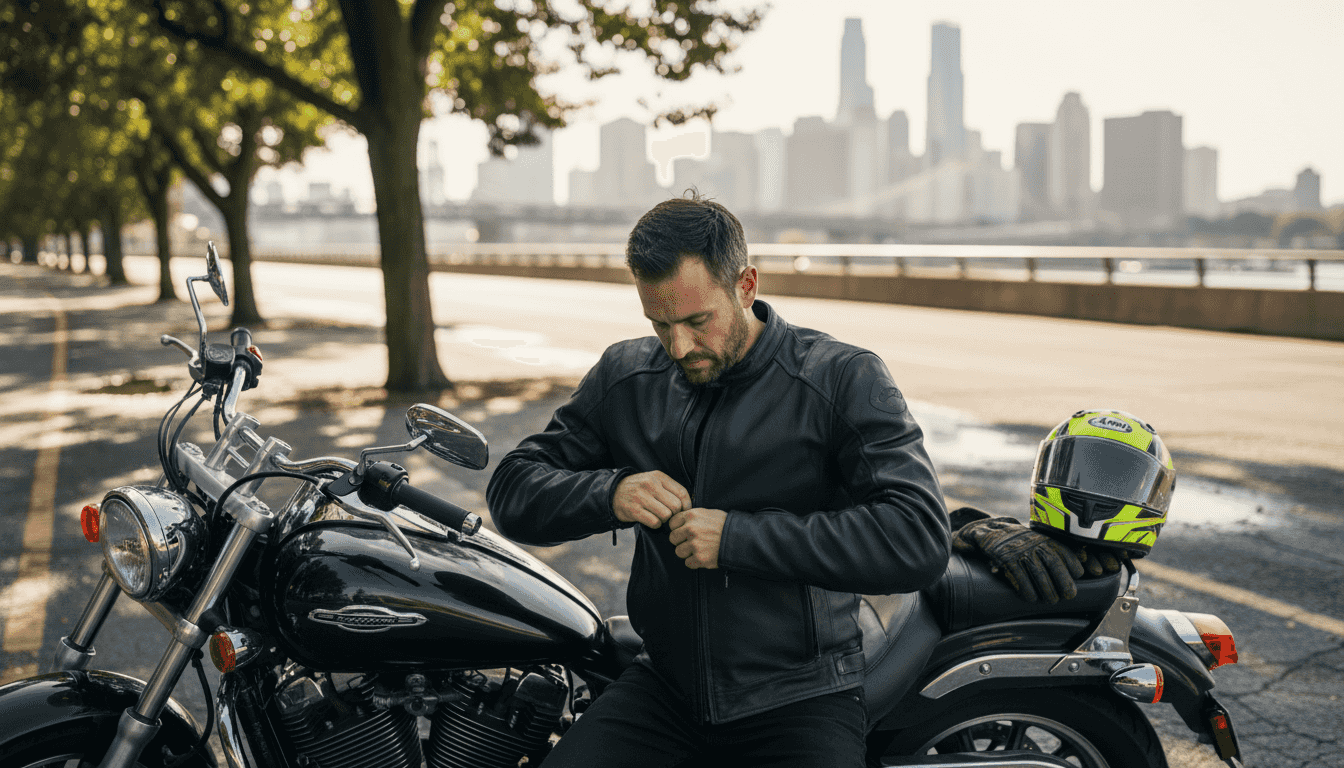
Every American rider knows that the jacket you choose is more than a statement—it is your strongest shield on unpredictable roads. The right material transforms a jacket into a line of defense, offering vital abrasion resistance and impact protection in moments when it matters most. For those who demand standout style without compromising safety, understanding the difference between premium leather and advanced textiles is essential. Jacket material shapes both your protection and your experience, blending bold design with smart engineering for every mile ahead.
Table of Contents
- What Jacket Material Means For Riders
- Key Types Of Motorcycle Jacket Materials
- Leather: The Classic Standard
- Synthetic Performance Fabrics
- Impact Armor Materials
- Hybrid Construction
- How Material Impacts Safety And Comfort
- Abrasion Resistance And Crash Protection
- Impact Armor Integration
- Breathability And Temperature Regulation
- Flexibility And Mobility
- Weather Protection
- Style, Customization, And Personalization Benefits
- Personal Identity And Expression
- Confidence And Compliance
- Functional Customization
- Visibility And Road Presence
- Long-Term Satisfaction
- Choosing And Caring For The Right Jacket
- Assessing Material Quality And Protection
- Getting The Fit Right
- Cleaning And Maintenance
- Inspecting For Damage
- Storage And Long-Term Care
Key Takeaways
| Point | Details |
|---|---|
| Jacket Material is Crucial for Safety | The material of your jacket greatly impacts your protection against abrasion and injury during a crash. Choosing high-quality leather or abrasion-resistant textiles enhances safety. |
| Comfort Affects Gear Usage | A comfortable jacket encourages consistent wear, which is essential for protection. Breathability and flexibility are key factors to consider for long rides. |
| Durability Equals Long-Term Investment | Premium materials, such as quality leather and well-engineered synthetics, maintain protective properties over time, making them a worthwhile investment. |
| Integration of Impact Armor is Essential | Effective jackets incorporate reliable armor materials to absorb shock during collisions, balancing the need for protection and mobility. |
What Jacket Material Means for Riders
Your jacket material is the first line of defense between your skin and pavement. When you crash, the quality of that material determines whether you walk away with minor scrapes or serious road rash.
Jacket material refers to the fabric or leather that forms the outer shell of your protective gear. The material affects your safety profile during falls by resisting abrasion and absorbing impact energy. Beyond protection, materials shape your comfort during long rides and weather exposure.
Protection Against Road Rash
Road rash isn’t just cosmetic damage. Asphalt removes skin in milliseconds at highway speeds, exposing tissue beneath. The right jacket material resists this abrasion long enough to save your skin.
Leather and abrasion-resistant textiles work differently but achieve the same goal:
- Leather provides natural grip on pavement, creating friction that slows tearing
- Technical textiles use synthetic fibers engineered to resist shredding
- Layered construction adds multiple barriers between you and the road
Thicker materials slow abrasion better, but durability depends on material quality, not just thickness. A quality material degrades predictably, while cheap material tears unpredictably.
The material between your skin and asphalt determines injury severity in a crash.
Comfort Across Riding Conditions
You won’t wear protective gear if it makes you miserable. Materials must breathe in summer heat, insulate in winter cold, and shed rain without weighing you down.
Different materials handle seasons differently:
- Leather develops supple texture with age but can crack in extreme cold
- Mesh textiles provide maximum airflow but offer minimal insulation
- How cowhide performs across seasons affects your riding frequency and comfort
Material comfort directly influences whether you consistently wear protective gear. A jacket that restricts movement or causes overheating gets left home on warm days. That’s when accidents happen.
Long-Term Durability
Investing in premium materials pays off over years of riding. Quality leather ages gracefully, developing character while maintaining strength. Poor materials degrade quickly, losing protective properties long before the jacket physically falls apart.
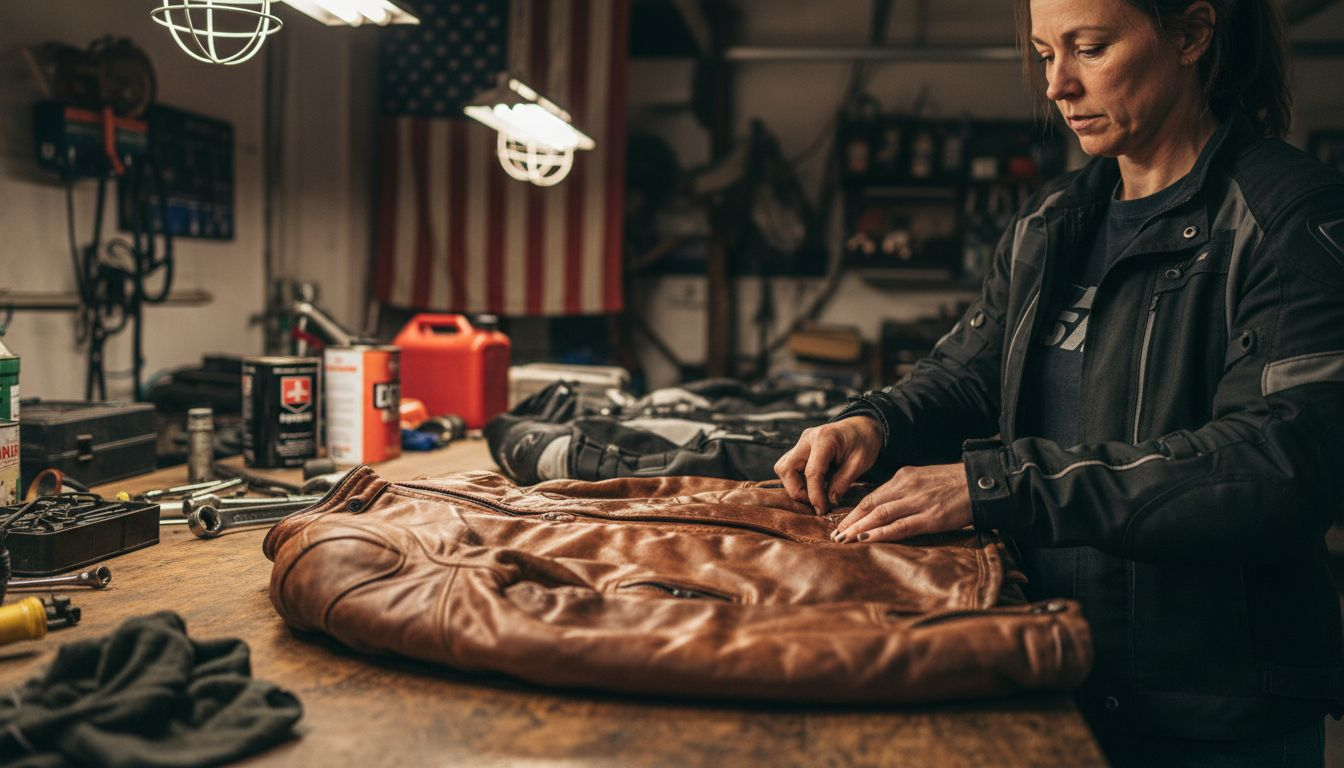
Material durability depends on fiber structure, treatment processes, and weight. Understanding why leather jackets last helps you choose gear that protects through thousands of miles.
Impact Absorption
Abrasion resistance only handles sliding. When your jacket hits something hard—another vehicle, guardrails, the ground itself—impact armor (usually foam or gel) absorbs the shock. The jacket material must be stiff enough to hold that armor in place without transferring force directly to your bones.
Some materials flex too much, allowing impact to pass through. Others are too rigid, restricting movement. The best materials balance protection with mobility.
Real-World Performance
Material performance matters most when riding defensively. You can’t avoid every accident, but selecting proper protective materials dramatically reduces injury severity when crashes happen.
Choosing between cowhide, kangaroo, and textile materials affects protection, comfort, and style. Each material handles crashes differently, suits different climates, and ages differently.
Your jacket material isn’t just fashion—it’s your survival layer.
Pro tip: Test jacket material by feeling the weight and flexibility in person. A quality material should feel dense but supple, not stiff or papery, indicating it will perform reliably in a crash while remaining comfortable for hours in the saddle.
Key Types of Motorcycle Jacket Materials
Not all jacket materials protect equally. Each type of material has strengths and weaknesses that directly impact your safety, comfort, and long-term riding satisfaction.
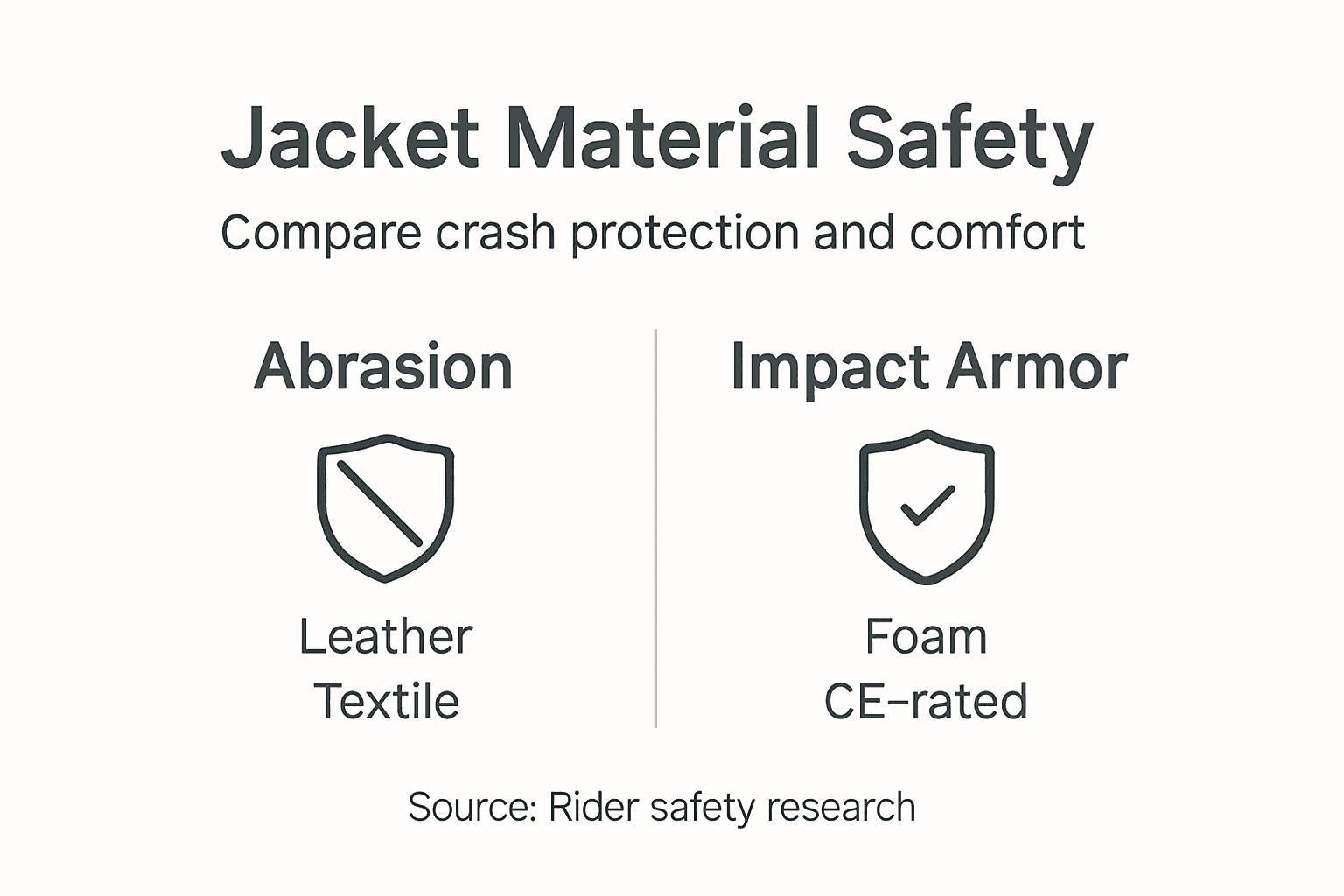
Understanding the core materials available helps you choose gear that matches your riding style and climate. The main contenders are leather, synthetic fabrics, and hybrid combinations that blend the best of both worlds.
Here’s a comparison of the most common motorcycle jacket materials:
| Material Type | Abrasion Resistance | Weather Adaptability | Maintenance Needs |
|---|---|---|---|
| Cowhide Leather | Excellent (thick, durable) | Fair (retains heat, can stiffen in cold) | Regular conditioning essential |
| Kangaroo Leather | Superior (high strength-to-weight) | Good (lightweight for warm climates) | Requires frequent care |
| Cordura Textile | Very good (tear-resistant weave) | Excellent (ventilates and sheds water) | Simple washing, minimal care |
| Kevlar Textile | Outstanding (resists multiple slides) | Good (handles heat, less insulation) | Machine wash, little upkeep |
Leather: The Classic Standard
Leather has protected riders for decades because it works. When leather hits pavement, friction slows the tearing process, buying your skin critical milliseconds.
Cowhide dominates the market because it balances cost and performance:
- Heavy weight means excellent abrasion resistance
- Develops supple texture with age and conditioning
- Naturally water-resistant without treatment
- Heavier than alternatives, affecting summer comfort
Kangaroo leather offers a premium option for riders prioritizing protection:
- Lighter weight than cowhide despite superior abrasion resistance
- More expensive, limiting availability
- Ideal for warm climates where jacket weight matters
Leather requires maintenance—regular conditioning prevents cracking and maintains flexibility. Neglected leather hardens and loses protective properties.
Leather works through friction; it grips the pavement instead of sliding smoothly.
Synthetic Performance Fabrics
Synthetic materials engineered specifically for motorcycle protection offer modern alternatives to leather. Materials like Cordura and Kevlar combine durability with lighter weight and sometimes better weather resistance.
Cordura polyester dominates synthetic jackets:
- Lightweight and packable for travel
- Exceptional resistance to tearing and puncture
- Often more affordable than premium leather
- Better ventilation than leather in summer heat
Kevlar aramid fibers provide military-grade protection:
- Extremely high abrasion resistance
- Premium pricing limits everyday use
- Maintains protective properties through repeated crashes
- Durable through thousands of miles
Synthetics don’t age like leather; they maintain consistent properties across years. That reliability appeals to riders who want predictable protection without maintenance.
Impact Armor Materials
Your jacket’s outer material handles sliding, but impact armor absorbs shock from hard collisions. Modern armor uses sophisticated materials to redirect force away from bones.
Common armor materials include:
- Foam padding: Lightweight, compressible, absorbs energy through density
- Memory foam: Conforms to your body, distributing impact across wider areas
- Silicone gels: Absorb shock while remaining flexible for comfortable wear
- Hard plastic shells: Deflect sharp impacts on shoulders and elbows
- Viscoelastic compounds: Balance rigidity with comfort through temperature-responsive properties
Quality armor stays in place during crashes without shifting. Poor armor either restricts movement or migrates during impact, reducing protection exactly when you need it.
The table below summarizes impact armor materials and their typical benefits:
| Armor Material | Shock Absorption | Flexibility | Longevity |
|---|---|---|---|
| Foam Padding | Compresses to absorb impact | Moderate | Loses shape over time |
| Memory Foam | Disperses energy widely | High | Remains durable |
| Silicone Gel | Maximizes energy absorption | Very flexible | Maintains form |
| Hard Plastic | Deflects hard, sharp blows | Low | Resistant but rigid |
| Viscoelastic | Reacts to impact force | Flexible-warm | Withstands crashes |
Hybrid Construction
Many modern jackets combine materials strategically. Leather panels in high-impact zones pair with synthetic fabrics in ventilation areas, optimizing both protection and breathability.
Hybrid jackets offer practical balance: leather’s proven protection where crashes happen most, synthetics’ breathability where comfort matters.
Pro tip: Compare armor placement, not just outer material—premium jackets position armor over shoulders, elbows, and spine because these areas absorb force in typical crashes.
How Material Impacts Safety and Comfort
Your jacket material does double duty: it protects you in crashes and keeps you comfortable during long rides. These aren’t separate concerns—they work together to determine whether you’ll actually wear your gear.
A jacket that restricts movement or causes excessive heat gets left at home. That’s when real danger happens.
Abrasion Resistance and Crash Protection
Abrasion resistance directly impacts safety by determining how long your jacket holds together when sliding on asphalt. The material’s density and weave structure determine this resistance.
Leather and high-quality synthetics both resist abrasion, but differently:
- Leather grips pavement, creating friction that slows tearing
- Cordura textiles resist puncture and shredding through tight weaves
- Kevlar fibers maintain integrity through repeated impacts
- Cheap materials tear predictably, offering minimal protection
Thicker materials generally outlast thin ones, but quality matters more than thickness alone. A premium cowhide jacket outperforms a thick budget synthetic.
Material thickness alone doesn’t guarantee protection—weave quality and fiber structure determine real safety.
Impact Armor Integration
Your outer material slides on pavement, but integrated armor absorbs the shock when you hit something hard. The jacket material must hold armor in place without compromising comfort or mobility.
Armor materials work inside your jacket’s structure:
- Foam padding absorbs energy through compression
- Memory foam distributes impact across wider body areas
- Silicone gels flex while absorbing shock
- Hard plastic shells deflect sharp impacts
Poor jackets use loose armor that shifts during crashes. Premium jackets anchor armor securely while maintaining flexibility for riding.
Breathability and Temperature Regulation
Material breathability determines whether you overheat on summer rides or freeze in winter cold. Thermal regulation and moisture management directly affect rider focus and decision-making.
Different materials handle temperature differently:
- Leather insulates naturally but retains heat in summer
- Mesh textiles maximize airflow for hot-weather riding
- Removable liners adapt jackets across seasons
- Hybrid construction balances protection with ventilation
Overheating degrades concentration and increases fatigue. A comfortable rider makes better safety decisions.
Flexibility and Mobility
Restricted movement compromises safety because you can’t react quickly or maintain proper riding position. Material stiffness affects how freely you move.
Premium materials remain supple after breaking in, while cheap materials stiffen or become too stretchy. You need material that:
- Allows full shoulder and arm rotation
- Maintains structural integrity without excessive flex
- Develops better feel with age
- Balances protection with mobility
Weather Protection
Wind, rain, and temperature exposure affect rider endurance. The jacket material must shed water without trapping moisture underneath, managing sweat and precipitation equally.
Material weather performance varies:
- Untreated leather absorbs water, becoming heavy
- Treated leather sheds water while remaining breathable
- Synthetic materials often include water-resistant coatings
- Removable liners handle temperature changes without changing jackets
Pro tip: Test how material feels when wet before buying—press damp fabric against your skin to see if moisture wicks away or gets trapped, simulating sweat during summer riding.
Style, Customization, and Personalization Benefits
Protection matters, but so does looking like yourself. A jacket that matches your identity gets worn consistently, which is the most important safety decision you can make.
Riders who love their gear actually wear it. That’s not vanity—that’s survival.
Personal Identity and Expression
Motorcycle jackets allow riders to express personal style and group affiliation through design choices. Your jacket communicates who you are to the road and to your riding community.
Customization options give you control over:
- Color choices that match your personality
- Patch placement for meaningful symbols or affiliations
- Logo and emblem positioning
- Hardware finishes and hardware types
- Liner colors and interior styling
A jacket that feels uniquely yours gets grabbed for every ride. A generic one sits in the closet on mild days.
Confidence and Compliance
Wearing gear you genuinely like increases compliance with safety practices. Personalized designs and functional customizations foster a safer riding culture by making protection feel like choice rather than obligation.
Riders report higher gear usage when jackets reflect their style:
- Confidence increases when appearance matches identity
- Consistent wear means constant protection
- Habit formation accelerates with gear you love
- Motivation sustains longer than discipline alone
You can’t protect yourself if your jacket stays home because it doesn’t feel like you.
The gear you’ll actually wear beats the gear that’s theoretically perfect.
Functional Customization
Personalization isn’t just visual. Functional customizations optimize your jacket for your specific riding needs and climate.
Common functional modifications include:
- Added armor in high-impact zones
- Enhanced ventilation for hot climates
- Removable liners for seasonal adaptation
- Adjustable fit through custom tailoring
- Pocket placement for your specific gear
A jacket customized to your body and your riding conditions works better than an off-the-rack generic option. Better fit means better protection and comfort.
Visibility and Road Presence
Colors and reflective customizations affect how other drivers see you. Strategic customization improves visibility without sacrificing style.
Visibility-enhancing options include:
- High-contrast color combinations
- Reflective piping or panels
- Bright accent colors
- Metallic or luminescent accents
Making yourself visible protects you before crashes happen. Customization that improves visibility serves safety and style simultaneously.
Long-Term Satisfaction
A jacket you customize becomes an investment you protect. You maintain it better, repair it when damaged, and keep it longer than standard gear.
Customized jackets often last years longer because riders actually care for them. That extended lifespan saves money and maintains protection through thousands of miles.
Your jacket becomes part of your identity, not just equipment.
Pro tip: Request customization samples before committing to your full jacket order—seeing actual color combinations and patch placements on leather or fabric samples prevents expensive mistakes and ensures your final jacket matches your vision perfectly.
Choosing and Caring for the Right Jacket
Finding the right jacket is half the battle. Keeping it in top condition is the other half. Both decisions directly affect how well your gear protects you when it matters most.
A damaged jacket protects worse than no jacket at all.
Assessing Material Quality and Protection
Start by evaluating what matters most for your riding style. Selecting the right motorcycle jacket involves assessing material quality, protection features like armor, fit, and suitability for typical riding conditions.
Key evaluation points include:
- Material thickness and weave density
- Armor coverage in critical areas
- Fit that prevents shifting during crashes
- Weather suitability for your climate
- Flexibility for comfortable riding
Don’t choose based on looks alone. A beautiful jacket that doesn’t fit or protect properly wastes money and leaves you vulnerable.
Getting the Fit Right
Proper fit prevents armor from shifting during impact. A jacket that moves independently from your body during a crash loses half its protection value.
Correct fit means:
- Shoulders align with your shoulder joints
- Sleeves reach your wrist bone without restricting movement
- Torso sits snug against your chest without restricting breathing
- Armor stays in place when you lean forward
Always try jackets on before buying. Online sizing guides help, but leather breaks in differently than synthetics. Get a real feel for how the material moves with your body.
A jacket that doesn’t move with you gets left home on comfortable days.
Cleaning and Maintenance
Proper care includes cleaning according to the material type, inspecting for wear or damage, and maintaining armor integrity. Different materials require different approaches.
Leather maintenance:
- Clean with leather-specific soap, not household cleaners
- Condition quarterly to prevent cracking
- Air dry away from direct heat
- Store in cool, dry spaces
Synthetic maintenance:
- Wash with mild detergent and water
- Air dry completely before storing
- Check seams for separation
- Inspect armor pockets for damage
Neglected jackets degrade rapidly. Regular maintenance extends life and maintains protection through thousands of miles.
Inspecting for Damage
Check your jacket regularly for damage that compromises safety. Small repairs now prevent major problems later.
Inspection checklist:
- Examine seams for fraying or separation
- Check leather for cracks or tears
- Verify armor hasn’t shifted or compressed
- Look for water damage or mold
- Test zippers and closures for function
Storage and Long-Term Care
How you store your jacket between rides affects its lifespan. Harsh elements degrade materials quickly.
Proper storage means:
- Hanging on a padded hanger to maintain shape
- Keeping away from direct sunlight
- Avoiding damp basements or humid closets
- Using breathable covers, not plastic
- Checking occasionally for mold or pest damage
Pro tip: Schedule annual maintenance inspections in spring before riding season—address small seam separations, reapply leather conditioner, and verify armor positioning before relying on your jacket for protection.
Elevate Your Safety and Style with the Right Jacket Material
Every rider knows that jacket material is crucial for protection against road rash and impact. If comfort, durability, and abrasion resistance matter to you as much as they do in this article, then choosing a jacket made from premium leather or advanced textiles is essential. At Maker of Jacket, we understand the challenge of finding gear that balances safety with personal style and season adaptability.
Discover our extensive collection of customizable motorcycle jackets designed to meet your protection needs while expressing your unique identity. Whether you prefer the classic strength of cowhide leather or the lightweight performance of technical textiles, our bespoke tailoring and attention to quality give you confidence for every ride. Do not compromise your safety or comfort. Visit Maker of Jacket today to explore protective jackets that fit perfectly, offer premium armor integration, and are crafted to last through thousands of miles. Take control now and invest in gear that truly safeguards your passion on the road.
Frequently Asked Questions
What is the importance of jacket material for a rider’s safety?
The material of a motorcycle jacket is crucial as it serves as the first line of defense against abrasion during crashes. High-quality materials can significantly reduce the severity of injuries by resisting tearing and absorbing impact energy.
How do leather and synthetic fabrics differ in terms of protection?
Leather provides natural grip against pavement due to its thickness, slowing down tearing in case of a crash. Synthetic fabrics like Cordura and Kevlar are designed with specific weaves to enhance abrasion and tear resistance, often providing excellent durability under various conditions.
What factors should I consider when choosing a motorcycle jacket material?
Consider abrasion resistance, weather adaptability, long-term durability, and impact absorption when choosing a motorcycle jacket material. Each of these factors affects not only your safety but also your comfort and riding experience.
How does weather affect the performance of jacket materials?
Different materials react differently under various weather conditions. Leather retains heat and can crack in extreme cold, while synthetic fabrics often provide better ventilation and water resistance. Choosing the right material for your climate can enhance your riding comfort and safety.
Recommended
- Why Motorcycle Jackets Matter for Riders’ Safety – Maker of Jacket
- Motorcycle Jacket Safety Features Guide for Secure Riding – Maker of Jacket
- How to Choose Your Motorcycle Leather Jacket Material: Cow, Kangaroo, or Textile? – Maker of Jacket
- Why Wear Motorcycle Jackets: Style and Safety Benefits – Maker of Jacket


