

Jacket care basics explained: preserve style and durability


Many jacket owners believe that leather cleans itself or that any soap works fine for maintenance. These misconceptions lead to cracked, faded, or permanently damaged jackets that lose their style appeal and protective qualities. Understanding proper leather jacket care transforms how long your investment lasts and how good it looks. This guide walks you through essential maintenance practices, cleaning techniques, storage solutions, and customization tips tailored for fashion lovers and motorcycle enthusiasts who demand both style and durability from their jackets.
Table of Contents
- Key takeaways
- Understanding leather jacket materials and common maintenance challenges
- Step-by-step leather jacket cleaning and stain removal essentials
- Optimal jacket storage and ongoing care tips to preserve shape and style
- Customization and upgrade tips: enhancing jacket style and functionality
- Discover your perfect custom jacket
- FAQ
Key Takeaways
| Point | Details |
|---|---|
| Care extends lifespan | Proper cleaning, conditioning, and correct storage prevent cracking, fading, and damage that shorten a jacket’s life. |
| Leather needs special maintenance | Lambskin, cowhide, and suede each require different care to prevent stiffness, color loss, and water damage. |
| Customization boosts style and function | Customizing jackets with approved features can improve fit, function, and personal style. |
| Avoid common care mistakes | Avoid mistakes such as using household cleaners that strip oils, storing in plastic bags, and hanging on wire hangers. |
Understanding leather jacket materials and common maintenance challenges
The first step in proper jacket care starts with recognizing what you’re working with. Lambskin offers buttery softness and elegant drape, making it popular for fashion jackets but requiring gentle handling. Cowhide delivers rugged durability perfect for motorcycle riding, though it needs regular conditioning to prevent stiffness. Suede presents a completely different challenge with its napped texture that attracts dirt and water damage more readily than smooth leather.
Each material responds differently to environmental factors. Moisture exposure causes lambskin to spot and stiffen while making suede develop permanent water marks. Direct sunlight fades color and dries out natural oils in all leather types, leading to cracking. Temperature extremes create similar problems, with heat accelerating oil loss and cold making leather brittle. Understanding these vulnerabilities helps you prevent common damage before it occurs.
Motorcycle jackets add another layer of complexity with protective features built into their construction. Armor pockets, reinforced stitching, and abrasion-resistant panels require special attention during cleaning and storage. The combination of leather exterior and textile lining creates different care needs within a single garment. Zippers and hardware also demand maintenance to prevent corrosion and ensure smooth operation.
Common maintenance pitfalls include:
- Using household cleaners that strip protective oils
- Storing jackets in plastic bags that trap moisture
- Ignoring small stains until they set permanently
- Applying too much conditioner that clogs leather pores
- Hanging jackets on wire hangers that distort shoulders
Pro Tip: Check your jacket’s care label for specific manufacturer recommendations, as some treatments void warranties or damage specialty finishes.
Step-by-step leather jacket cleaning and stain removal essentials
Proper cleaning starts with preparation and the right products. Always test any cleaning solution on an inconspicuous area like the inside hem or under a collar. Wait 24 hours to ensure no discoloration or texture change occurs. This simple precaution prevents ruining visible areas of your jacket.
Effective cleaning preserves both appearance and structural integrity when done correctly. Follow this proven sequence:
- Remove surface dust with a soft, dry cloth or brush designed for leather
- Mix gentle leather cleaner with water according to product instructions
- Dampen a clean cloth with the solution, never soaking it
- Wipe leather in circular motions, working on small sections
- Remove soap residue with a separate damp cloth
- Allow jacket to air dry completely away from heat sources
- Apply leather conditioner once fully dry to restore moisture
Stain removal requires quick action and targeted approaches. Oil-based stains respond to cornstarch or talcum powder applied immediately to absorb the oil. Let the powder sit overnight, then brush it away gently. Ink stains need rubbing alcohol applied with a cotton swab, dabbing rather than rubbing to prevent spreading. Water spots often disappear when you dampen the entire panel evenly, allowing it to dry naturally.
For stubborn dirt or grime, create a paste from equal parts lemon juice and cream of tartar. Apply this mixture to the stain, let it sit for 30 minutes, then wipe clean with a damp cloth. This natural solution works particularly well on light-colored leather without harsh chemicals.
Drying technique matters as much as cleaning method. Never use hair dryers, radiators, or direct sunlight to speed drying. These heat sources cause leather to shrink, crack, or become misshapen. Instead, hang your jacket on a padded hanger in a room with good air circulation. Stuff sleeves loosely with acid-free tissue paper to help maintain shape during the drying process.
Pro Tip: Keep a dedicated leather cleaning kit with pH-balanced cleaner, soft cloths, and quality conditioner so you’re always prepared for immediate stain treatment.
Optimal jacket storage and ongoing care tips to preserve shape and style
How you store your jacket between wears dramatically impacts its longevity and appearance. Wire hangers create shoulder bumps and stress points that permanently distort jacket shape. Invest in wide, padded hangers that distribute weight evenly across the shoulder seam. The hanger width should match or slightly exceed your natural shoulder width for proper support.
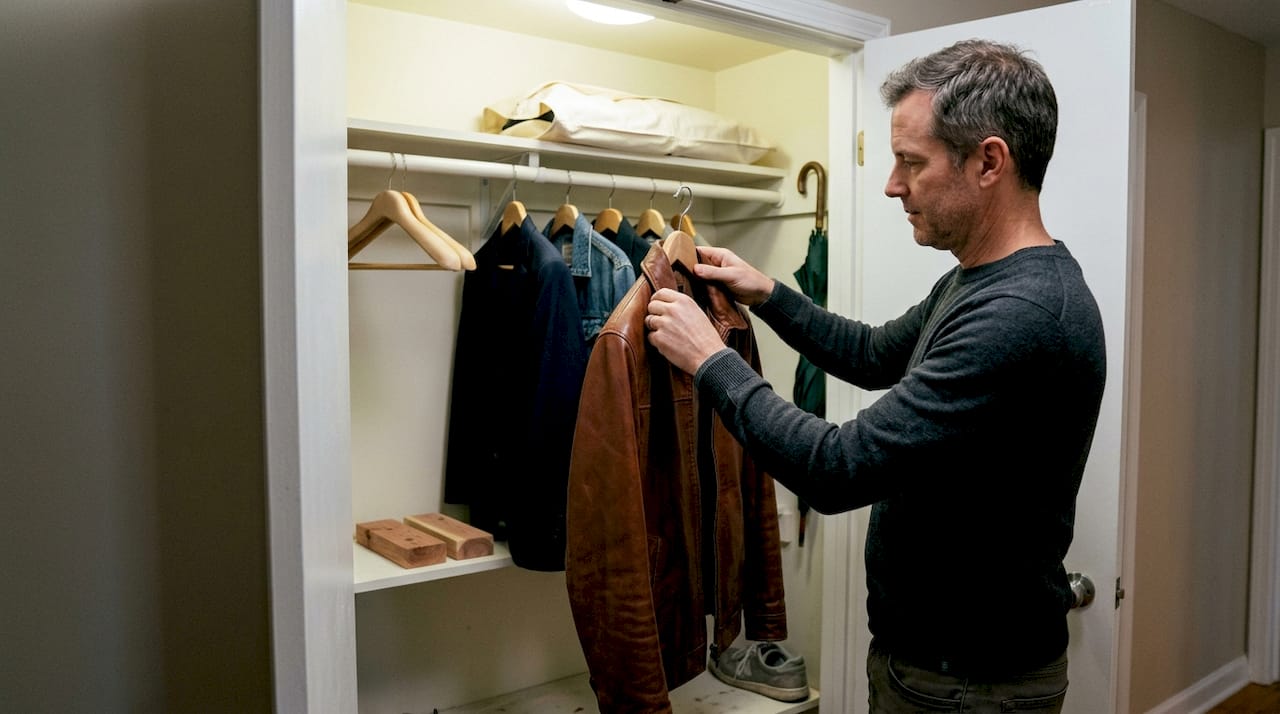
Breathable storage protects leather from moisture damage and mildew growth. Cotton garment bags allow air circulation while keeping dust away. Avoid plastic dry cleaning bags that trap humidity and create a breeding ground for mold. If you live in a particularly humid climate, add silica gel packets inside the garment bag to absorb excess moisture.
Location matters as much as storage method. Choose a cool, dry closet away from windows and heating vents. Direct sunlight fades color and dries out leather oils. Temperature fluctuations from heating systems accelerate aging. A consistent environment between 60-70°F with moderate humidity preserves leather best.
| Storage Method | Pros | Cons | Best For |
|---|---|---|---|
| Padded hanger in breathable bag | Maintains shape, allows airflow | Requires closet space | Long-term storage |
| Cedar closet | Natural moth repellent, moisture control | Can dry leather excessively | Seasonal rotation |
| Climate-controlled storage unit | Consistent temperature and humidity | Additional cost | Valuable collections |
| Flat storage in drawer | Saves hanging space | Risk of creasing | Lightweight fashion jackets |
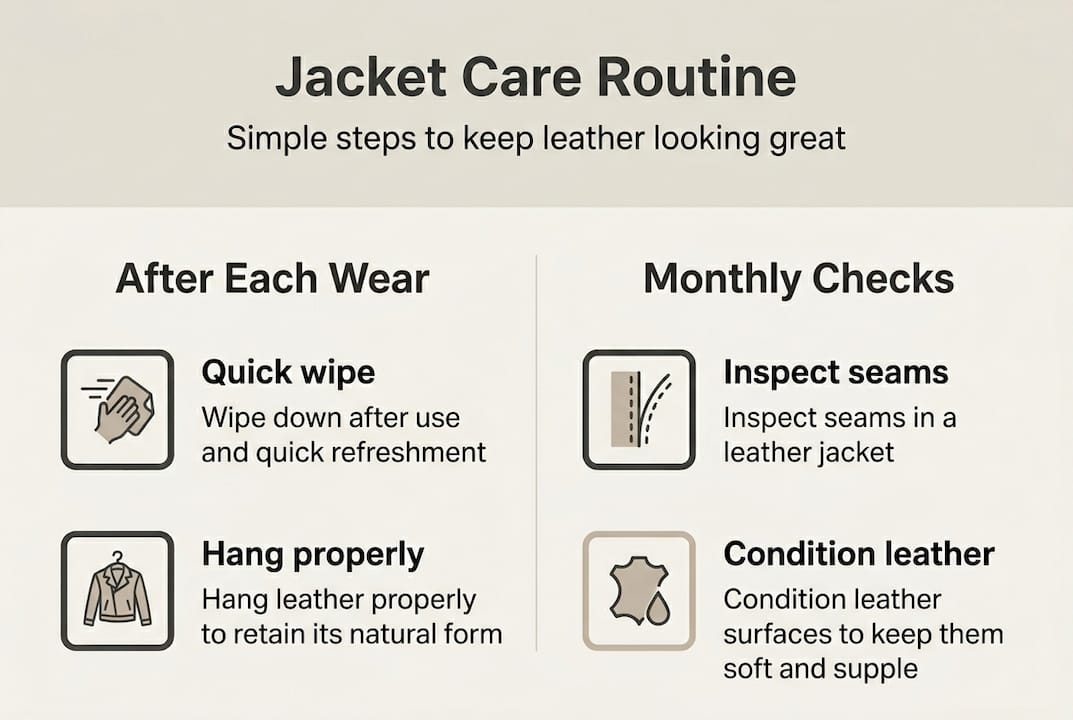
Regular maintenance between deep cleanings keeps jackets in top condition. Wipe down your jacket after each wear to remove body oils and environmental dirt before they set. Apply leather conditioner every three to six months depending on wear frequency and climate. Condition more often in dry environments or if you ride frequently.
Rotate your jacket collection to prevent overuse of any single piece. Leather needs rest time between wears to release absorbed moisture and regain its natural shape. If you wear leather jackets daily, maintain at least three in rotation. This practice extends the life of each jacket significantly.
Inspect jackets monthly for early signs of damage. Check seams for loose stitching, zippers for smooth operation, and leather for dry patches or small tears. Addressing minor issues immediately prevents them from becoming major repairs. A small loose stitch takes minutes to fix, while a blown seam requires professional restoration.
Pro Tip: Air out your jacket on a padded hanger for 24 hours after wearing before returning it to storage, allowing moisture from body heat to fully evaporate and preventing musty odors or mildew.
Customization and upgrade tips: enhancing jacket style and functionality
Customization transforms a standard jacket into a personal statement while potentially improving its protective qualities. Patches and embroidery add visual interest and can cover minor damage or worn areas. Choose placement carefully to avoid interfering with armor pockets or ventilation panels on motorcycle jackets. Iron-on patches work for textile areas but require sewing onto leather for secure attachment.
Lining upgrades offer both comfort and functional benefits. Thermal linings extend your jacket’s seasonal versatility, while moisture-wicking fabrics improve comfort during active riding. Quilted linings add subtle insulation without bulk. When selecting lining materials, ensure they’re compatible with your leather type and won’t cause color transfer or chemical reactions.
Protective padding customization matters most for motorcycle enthusiasts. CE-rated armor in shoulders, elbows, and back provides crucial impact protection. Ensure any added padding fits properly in existing pockets or have a professional tailor create secure attachment points. Improperly installed armor shifts during impact, reducing its effectiveness.
Hardware upgrades like zipper replacements or snap additions require professional installation to avoid damaging leather. YKK zippers offer superior durability compared to generic alternatives. Snaps provide quick ventilation access while maintaining a clean look. Consider adding D-rings for securing accessories or adjustable waist tabs for improved fit.
Customization choices should enhance rather than compromise your jacket’s integrity:
- Do research material compatibility before adding any elements
- Do use professional services for structural modifications
- Do consider how customizations affect cleaning and maintenance
- Do choose removable options when possible for versatility
- Don’t drill unnecessary holes that weaken leather structure
- Don’t use adhesives not specifically designed for leather
- Don’t add weight that stresses seams or distorts shape
- Don’t customize without considering resale value if applicable
Color customization through dyeing or painting requires expertise to achieve professional results. Leather dyes penetrate the material for permanent color change, while leather paints sit on the surface and may crack or peel with wear. Both options work best on vegetable-tanned leather rather than chrome-tanned varieties. Test any color product on a hidden area first.
Functional additions like reflective strips improve visibility for night riding without compromising style. Modern reflective materials come in subtle gray tones that blend during daylight but shine brightly in headlights. Strategic placement on shoulders, arms, and back maximizes visibility from all angles.
Pro Tip: Document your jacket’s original condition with photos before customization, and keep records of all modifications for insurance purposes and future maintenance reference.
Discover your perfect custom jacket
Now that you understand proper care techniques, you’re ready to invest in a jacket that reflects your style and meets your protection needs. Quality construction makes maintenance easier and ensures your jacket withstands years of wear. Custom jacket options let you specify leather type, lining preferences, protective features, and styling details from the start.
Explore the full customization journey to see how bespoke tailoring creates jackets that fit perfectly and require less alteration later. From selecting premium leather grades to choosing armor placement and hardware finishes, every detail contributes to a jacket you’ll maintain proudly for decades. Browse handmade leather jackets crafted with the durability and style that make proper care worthwhile.
FAQ
How often should I condition my leather jacket?
Condition your leather jacket every three to six months under normal use. Increase frequency to monthly if you ride regularly or live in dry climates where leather loses moisture faster. Signs your jacket needs conditioning include stiffness, dull appearance, or fine surface cracks beginning to form.
Can I machine wash my leather or motorcycle jacket?
Never machine wash leather jackets, as agitation and submersion damage the material and strip protective oils. Water temperature fluctuations cause shrinking and warping. Spot cleaning handles most maintenance needs, while professional leather cleaning services address deep soiling safely. Machine washing also damages armor pockets and protective padding in motorcycle jackets.
What’s the best way to store a leather jacket in humid climates?
Use breathable cotton garment bags rather than plastic in humid environments. Store jackets in the coolest, driest area of your home with good air circulation. Add silica gel packets or small dehumidifiers to your closet storage space to control moisture levels. Inspect stored jackets monthly for any signs of mildew and air them out regularly.
How do I remove odors from a leather jacket without washing it?
Hang your jacket outdoors in fresh air and indirect sunlight for several hours to naturally dissipate odors. Sprinkle baking soda inside and let it sit overnight to absorb smells, then vacuum it out thoroughly. For persistent odors, place the jacket in a sealed container with activated charcoal or coffee grounds for 48 hours. Avoid perfumes or sprays that can stain or damage leather.
Should I treat new leather jackets before first wear?
Apply a thin layer of leather conditioner to new jackets after purchase to add protective moisture. This initial treatment helps the leather resist stains and weather exposure from the start. Test any product on a hidden area first, even on new jackets, as some finishes react to certain conditioners. Allow the conditioner to absorb fully before wearing the jacket for the first time.


