

Leather vs faux leather: which jacket material suits you?


TL;DR:
- Genuine leather ages well, molds to the body, and offers high durability with proper care.
- Faux leather is more water-resistant, easier to maintain, but may crack and peel over time.
- Choice depends on use, budget, climate, ethics, and long-term style and durability preferences.
Most people assume that genuine leather is always the gold standard and that faux leather is a cheap imitation. That assumption is wrong more often than you’d think. The reality is that both materials have specific strengths, and the “right” choice depends entirely on how you plan to wear the jacket, what you value, and what you’re willing to spend. Whether you’re shopping for a biker jacket, a fashion piece, or serious motorcycle gear, this guide breaks down the real tradeoffs so you can stop guessing and start choosing with confidence.
Table of Contents
- Understanding leather and faux leather
- Leather vs faux leather: Performance and feel
- Cost, ethical, and environmental considerations
- How to choose the right material for your jacket
- Our take: The biggest myths about leather and faux leather
- Ready to find your perfect jacket material?
- Frequently asked questions
Key Takeaways
| Point | Details |
|---|---|
| Material choice matters | Understand how leather and faux leather differ in durability, maintenance, and comfort before choosing your jacket. |
| Purpose guides decision | The ideal material changes depending on whether the jacket is for fashion or riding safety. |
| Weigh ethics and value | Environmental impact and ethical sourcing are just as important as price or look for many buyers. |
| Care maximizes lifespan | Proper maintenance will keep both leather and faux leather jackets looking great for years. |
Understanding leather and faux leather
Before comparing the two, it helps to know exactly what you’re dealing with. Genuine leather explained starts with animal hides, most commonly cowhide, lambskin, or pigskin, that are tanned and treated to create a flexible, durable material. The process is labor-intensive, which is part of why genuine leather carries a higher price tag.
Faux leather takes a completely different path. As noted in the faux leather overview, leather is made from animal hides, while faux leather is typically crafted from plastics or plant-based synthetics. The most common types are polyurethane (PU) and polyvinyl chloride (PVC), though newer plant-based versions made from cactus, mushroom, or pineapple fibers are gaining ground.
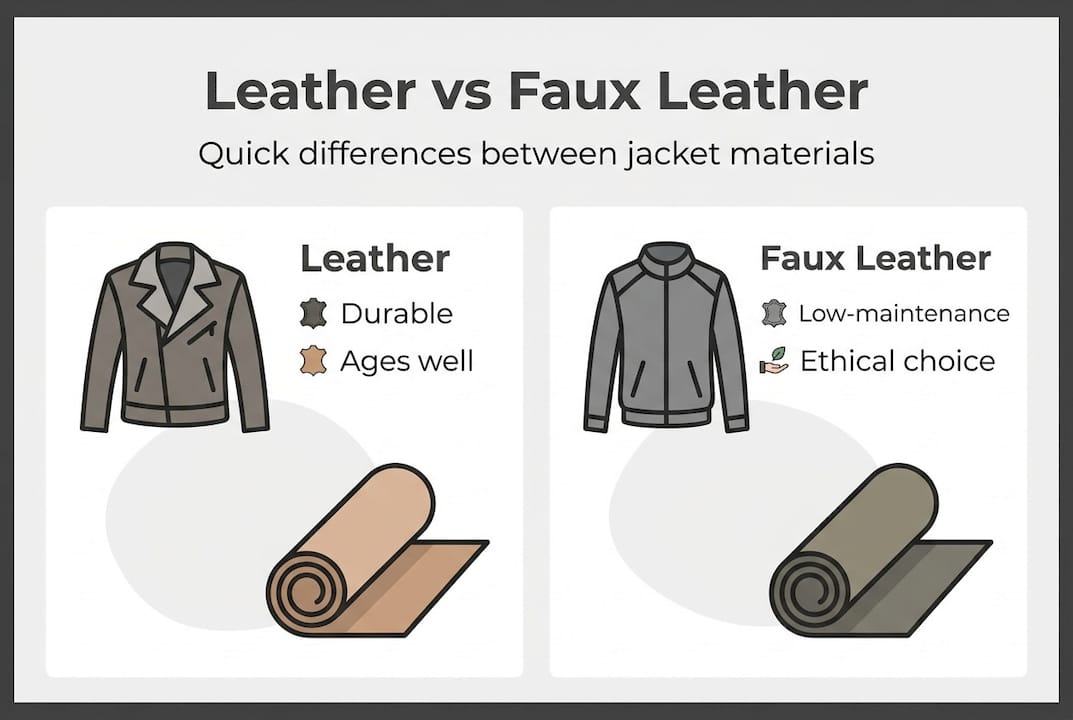
Here’s where perception gets tricky. Many riders and fashion buyers assume faux leather looks cheap or falls apart quickly. That was true of older versions, but modern PU faux leather can closely mimic the texture and appearance of genuine leather. On the flip side, some people believe genuine leather is always the most ethical and sustainable choice, which is also not accurate.
Both materials appear widely across fashion and motorcycle gear. Genuine leather dominates high-end biker jackets, motorcycle suits, and heritage fashion pieces. Faux leather is common in fast fashion, vegan-friendly lines, and budget-conscious motorcycle apparel.
Key properties at a glance:
- Genuine leather: Ages with character, breathes naturally, molds to your body over time
- Faux leather (PU): Uniform appearance, water-resistant, easier to clean
- Faux leather (PVC): Very stiff initially, highly water-resistant, less breathable
- Plant-based faux leather: Emerging option, variable durability, lower environmental footprint
Pro Tip: If you’re buying a jacket for long-term use and plan to wear it constantly, genuine leather’s ability to mold to your shape over months of wear is a real functional advantage, not just a marketing claim.
Leather vs faux leather: Performance and feel
This is where the conversation gets practical. Real leather offers superior durability and is valued for its aging character, while faux leather is more water-resistant and easier to maintain. Both statements are true, but neither tells the full story.
Genuine leather, when cared for properly, can last decades. It develops a patina, a natural sheen that forms with wear, that many enthusiasts actively seek out. It also breathes, which matters enormously on long rides or warm days. The tradeoff is that it requires conditioning, can stiffen in cold weather, and will show water damage if you’re caught in the rain without protection.
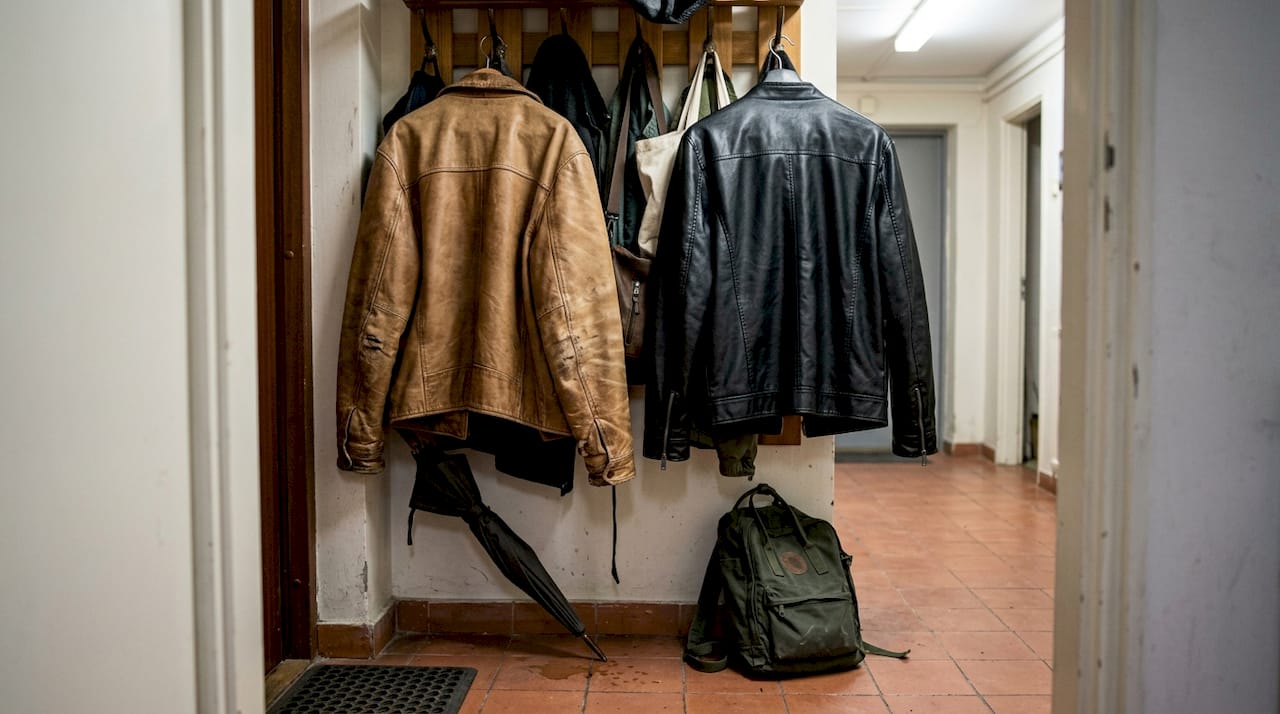
Faux leather doesn’t age the same way. It resists water and stains right out of the box, which makes it low-maintenance. However, it tends to crack and peel over time, especially in areas that flex repeatedly, like elbows and shoulders. Once faux leather starts cracking, it’s very hard to reverse.
| Feature | Genuine leather | Faux leather |
|---|---|---|
| Durability | Decades with care | 2 to 5 years average |
| Water resistance | Low (needs treatment) | High (natural) |
| Breathability | High | Low |
| Maintenance | Conditioning required | Wipe-clean easy |
| Aging | Rich patina | Cracking and peeling |
| Cost | Higher | Lower |
For motorcycle riders, the stakes are higher. Leather jacket durability matters not just for looks but for abrasion resistance in a slide. Genuine leather absorbs and distributes impact energy better than most faux alternatives. Most certified motorcycle gear uses genuine leather for this reason.
That said, faux leather motorcycle jackets do exist and can be suitable for casual urban riding at lower speeds. The key differences become critical when you factor in the riding environment and risk level.
Pro Tip: If you ride regularly on highways or in mixed weather, invest in genuine leather. If you’re a weekend city rider who values easy care over maximum protection, a quality PU faux leather jacket can work well.
Cost, ethical, and environmental considerations
While performance is critical, cost and conscience often influence the final decision. Price is usually the first thing people notice. A genuine leather jacket from a quality maker typically starts around $200 and can climb well past $800 for premium hides or custom work. Faux leather jackets range from $40 to $250, making them accessible to a much wider audience.
But faux leather is usually more affordable, and ethical and environmental impact varies based on the type of faux material and sourcing. This is where it gets complicated.
| Material | Avg. price range | Animal use | Primary environmental concern |
|---|---|---|---|
| Full-grain leather | $300 to $800+ | Yes | Livestock emissions, tanning chemicals |
| Corrected-grain leather | $150 to $400 | Yes | Same as above, more processing |
| PU faux leather | $50 to $200 | No | Plastic production, non-biodegradable |
| PVC faux leather | $40 to $150 | No | Toxic chlorine compounds in production |
| Plant-based faux leather | $100 to $350 | No | Generally lower, varies by source |
The ethical questions aren’t one-sided. Genuine leather is a byproduct of the meat industry in most cases, which means the hide would otherwise be discarded. That doesn’t make it guilt-free, but it complicates the “leather is cruel” narrative. On the other hand, PVC faux leather releases harmful chemicals during production and doesn’t biodegrade, which is a real environmental problem.
“Not all faux leather is created equal. Plant-based and recycled options are genuinely more sustainable, but conventional PVC faux leather can be harder on the planet than tanned leather from responsibly managed sources.”
Greenwashing is a real concern in this space. Brands sometimes label products as “vegan leather” or “eco-friendly” without disclosing the actual materials. Look for specific certifications or material disclosures. The faux vs vegan leather distinction matters here since not all faux leather is vegan-certified or environmentally responsible.
For those interested in eco-friendly jacket trends, the best approach is to ask brands directly about sourcing, tanning methods, and material composition before buying.
Key questions to ask before purchasing:
- Is the leather full-grain or corrected-grain?
- What tanning method was used (vegetable vs. chrome)?
- For faux leather, is it PU, PVC, or plant-based?
- Does the brand provide material certifications?
How to choose the right material for your jacket
By now, you know what each material offers. Here’s how to decide which is right for you, step by step.
- Define your primary use case. Are you buying for motorcycle riding, daily fashion wear, occasional outings, or outdoor activities? Riding demands genuine leather for safety. Fashion wear gives you more flexibility.
- Set your budget honestly. Genuine leather is a long-term investment. If you can spend $300 or more and plan to keep the jacket for years, genuine leather pays off. Under $150, a quality PU faux leather jacket is a smarter buy than a low-grade genuine leather piece.
- Consider your climate. Choosing between leather and faux leather depends heavily on climate. Rainy or humid climates favor faux leather’s water resistance. Dry climates with temperature swings favor genuine leather’s breathability and insulating properties.
- Weigh your ethical priorities. If animal welfare is a dealbreaker, look for certified plant-based faux leather rather than generic PU. If environmental sustainability is your focus, research the specific tanning and production methods.
- Think about maintenance commitment. Genuine leather needs conditioning every few months and careful storage. Faux leather needs very little. Be honest about whether you’ll actually follow a leather care tips routine before committing.
- Evaluate long-term style and durability goals. If you want a jacket that looks better at year five than it did at purchase, genuine leather wins. If you want consistent appearance with minimal effort, faux leather is more predictable.
Pro Tip: Don’t buy based on material alone. A well-made faux leather jacket from a reputable brand will outperform a poorly constructed genuine leather jacket every single time. Craftsmanship matters as much as material.
Our take: The biggest myths about leather and faux leather
Here’s something we’ve noticed after working with thousands of jacket buyers: most people come in with their minds already made up, and most of them are working from at least one myth.
Myth one is that genuine leather is always the better choice. It’s not. For someone who lives in a wet climate, rarely conditions their gear, and wants a jacket they can wipe down after a commute, a quality PU faux leather jacket will serve them better and look sharper longer.
Myth two is that faux leather is always the ethical option. As we’ve covered, conventional PVC faux leather has a serious environmental cost. Choosing faux doesn’t automatically mean choosing responsibly.
We’ve seen clients switch from genuine to faux after realizing they never kept up with conditioning, and we’ve seen the opposite happen when riders discovered that their faux leather jacket offered almost no protection in a low-speed slide. The real leather vs faux insights that matter most come from actual use, not brand messaging. The best material is the one that fits your real life, not your ideal version of it.
Ready to find your perfect jacket material?
Now that you have a clear picture of what each material delivers, the next step is finding a jacket that actually matches your lifestyle and values.
At Maker of Jacket, we offer both genuine leather and faux leather options across every style, from biker and bomber to motorcycle suits and fashion jackets. You can explore custom jacket options to choose your exact material, fit, and finish. If you want to understand the full case for investing in genuine hide, our breakdown of leather benefits covers it in detail. Or browse our full range of handmade leather jackets to see what quality craftsmanship actually looks like. Every jacket ships free worldwide, and our team is ready to help you get the right fit.
Frequently asked questions
Is faux leather more durable than real leather for jackets?
Faux leather is water-resistant but may crack over time, while real leather lasts significantly longer when you maintain it with regular conditioning and proper storage.
Which is better for motorcycle gear: leather or faux leather?
Genuine leather is the clear choice for riders because real leather provides more protection due to its natural toughness and higher abrasion resistance in a slide.
Can faux leather be eco-friendly?
Yes, but only certain types. The environmental impact of faux leather depends entirely on its material base, with plant-based and recycled options being far more sustainable than PVC.
How do I care for a leather or faux leather jacket?
Proper care extends the life of both materials. Wipe down regularly, keep both away from direct heat, and use a leather conditioner for genuine hide or a mild cleaner for faux leather.


