

Jacket zippers: their real impact on style and function


TL;DR:
- Zippers are essential for jacket durability, performance, and aesthetic appeal.
- Different zipper types and gauges suit specific outdoor, fashion, or motorcycle needs.
- Proper care and quality choices extend zipper lifespan and maintain jacket functionality.
Most people pick a jacket for its leather, its cut, or its color. The zipper? It barely gets a second thought. That’s a mistake. Zippers are the mechanical backbone of jackets, handling secure closure, stress under movement, and the full separation that makes a jacket wearable in the first place. Whether you’re building a custom biker jacket or shopping for your next motorcycle layer, the zipper you choose shapes how the jacket looks, how long it lasts, and how well it performs when conditions get rough. This guide breaks down everything you need to know about the role of zippers in jacket design.
Table of Contents
- Why zippers matter: Beyond basic closure
- Types of zippers and their signature features
- Zipper gauges, durability, and function in real-world use
- Special zipper configurations: Two-way, asymmetrical, and technical advantages
- Care, maintenance, and zipper longevity: What owners need to know
- Our take: Why details like zippers separate good jackets from great
- Discover your next custom jacket — designed with detail
- Frequently asked questions
Key Takeaways
| Point | Details |
|---|---|
| Zippers define jacket performance | A high-quality, thoughtfully chosen zipper dramatically influences both how a jacket looks and functions. |
| Choose material and gauge wisely | Match zipper type and gauge to jacket style and use for optimal durability and feel. |
| Advanced designs boost versatility | Two-way and asymmetrical zippers add comfort, utility, and a style edge, especially for riders and urban wearers. |
| Zipper care prevents common failures | Regular cleaning and gentle use extend zipper life, reducing repair needs and frustration. |
Why zippers matter: Beyond basic closure
Think about the last time a zipper failed you. Maybe it split on a cold morning ride, or the pull jammed when you needed to move fast. That frustration points to something bigger: a zipper isn’t just a fastener. It’s a moving structural component that bears repeated stress every single day.
Compared to buttons, snaps, or hook-and-eye closures, zippers offer a level of security and speed that no other fastener matches. They distribute tension evenly across the jacket front, prevent gaping, and allow a clean, tailored silhouette. Buttons can pop. Snaps can loosen. A quality zipper, properly maintained, just works.
“Zippers serve as the mechanical backbone of jackets, providing secure closure, durability under stress, and enabling full separation for wearability.” The difference between a jacket that lasts a decade and one that falls apart in two years often comes down to this single component.
Here are the situations where zipper reliability matters most:
- Motorcycle riding: Wind pressure at highway speeds puts constant force on the jacket front. A weak zipper can separate mid-ride.
- Harsh weather: Rain, sleet, and cold demand a zipper that seals tight and doesn’t corrode.
- Everyday commuting: Repeated open-close cycles wear out low-quality zippers faster than most people expect.
- High-activity use: Hiking, urban cycling, or outdoor work means constant movement and zipper stress.
- Layering: A jacket worn over thick hoodies needs a zipper strong enough to handle the added bulk without binding.
If you’ve ever dealt with a broken zipper mid-season, you already know the value of getting this right. Learning about fixing jacket zippers is useful knowledge, but choosing a quality zipper upfront saves you the hassle entirely.
Types of zippers and their signature features
Not all zippers are built the same. The three main types you’ll encounter in jacket design each bring a distinct personality to the garment, and understanding the difference helps you make smarter choices.
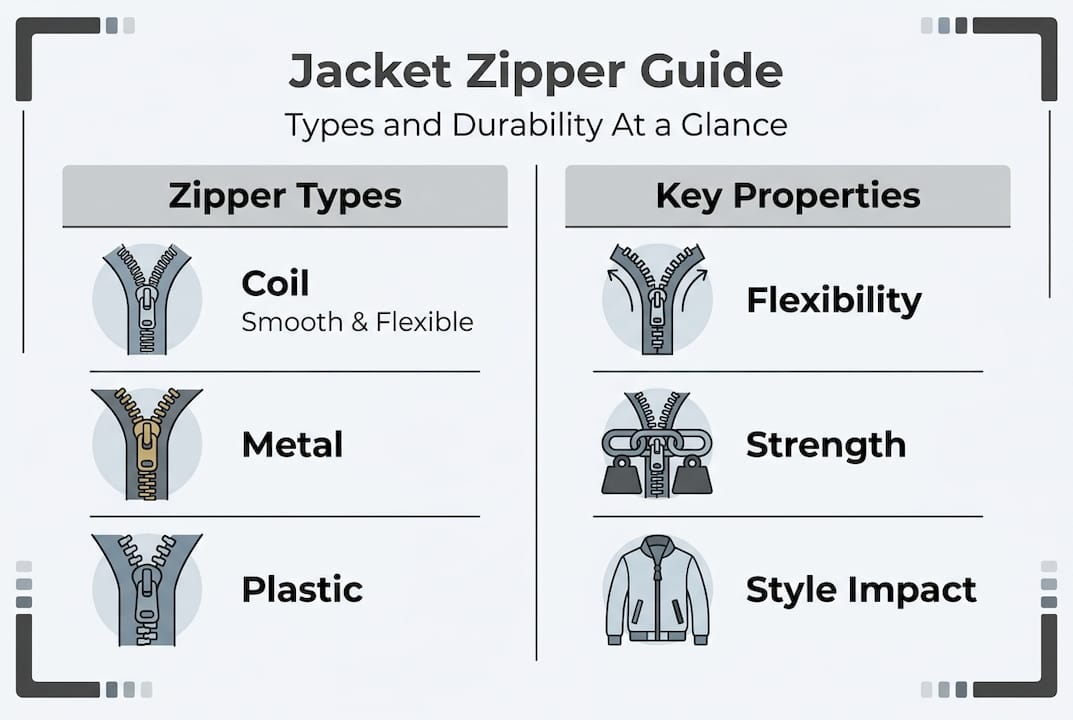
Main zipper types break down like this: coil zippers are flexible and lightweight, making them a natural fit for windbreakers and athletic shells; molded plastic zippers are rigid and water-resistant, ideal for rain jackets and outdoor technical gear; metal zippers are the durability benchmark, the go-to for leather and denim jackets where strength and aesthetics both matter.
| Zipper type | Best use | Style feel | Key property |
|---|---|---|---|
| Coil | Windbreakers, athletic jackets | Sleek, low-profile | Flexible, lightweight |
| Molded plastic | Rain jackets, outdoor gear | Sporty, technical | Rigid, water-resistant |
| Metal | Leather, denim, biker jackets | Bold, rugged, premium | Durable, high-end look |
Brands like YKK and LenZip have become the trusted industry standards because they engineer each type to perform consistently across thousands of open-close cycles. When you see a YKK pull on a jacket, it’s a signal that the manufacturer cared about the details.
Metal zippers, in particular, do something coil and plastic can’t: they become part of the jacket’s visual identity. The weight of a brass zipper on a biker jacket communicates quality before you even touch the leather. That’s design doing double duty.
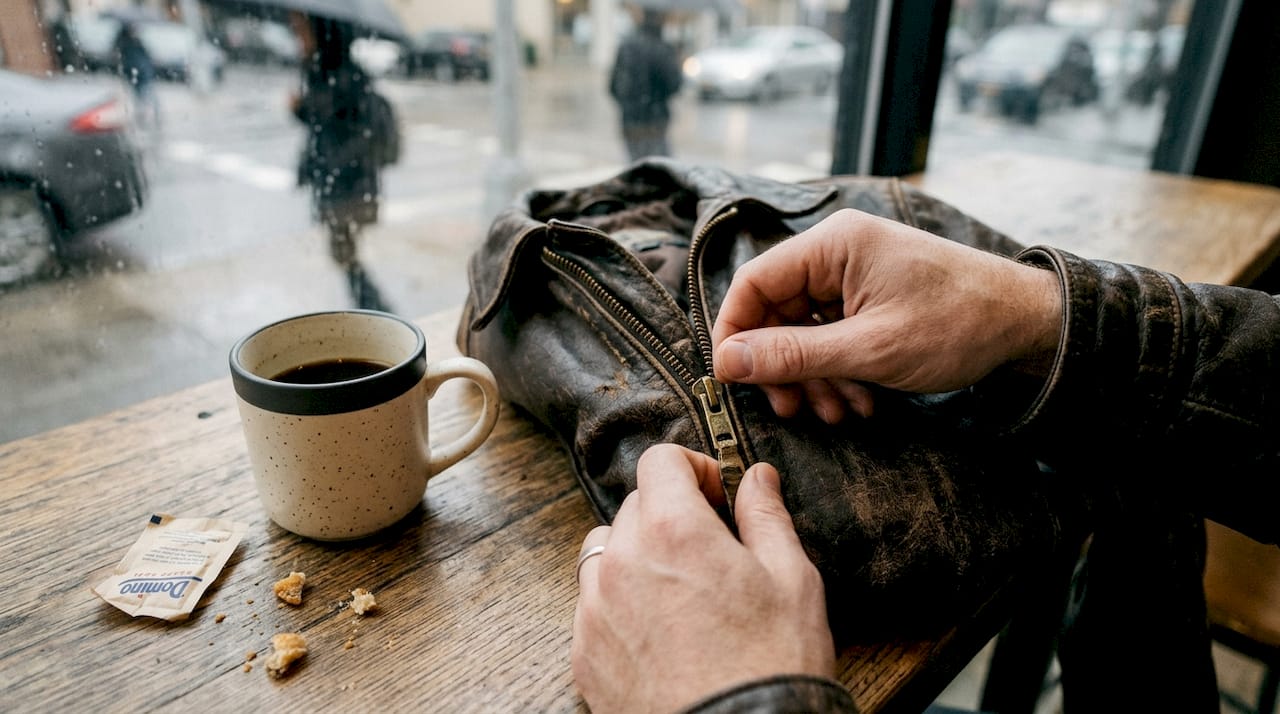
Pro Tip: If you ride with gloves or want a distinctive brand touch, ask for oversized custom pulls or sliders on your zipper. They’re easier to grip with gloved hands and can be engraved or shaped to reflect your personal style. Explore how this plays out across windbreaker jacket designs to see how zipper choices shift the entire aesthetic.
Zipper gauges, durability, and function in real-world use
Zipper gauge refers to the width of the zipper teeth, measured in millimeters. It’s one of the most practical specs you can learn, because gauge directly predicts how long a zipper will hold up under real use.
Gauge sizes work on a simple scale: #5 is the standard for most jackets, while #8 and #10 are reserved for heavy-duty applications. Higher numbers mean wider teeth and greater strength. A #10 zipper on a motorcycle jacket can handle the kind of repeated stress that would destroy a #5 in months.
| Gauge | Application | Durability level |
|---|---|---|
| #5 | Fashion jackets, everyday wear | Standard |
| #8 | Heavy outerwear, work jackets | High |
| #10 | Motorcycle gear, tactical jackets | Maximum |
Larger zippers like #10 last longer because each cycle puts less proportional wear on the teeth. It’s a simple mechanical principle with a real payoff over years of use.
When you’re assessing zipper durability in a new jacket, check for these signs:
- Smooth pull: The slider should glide without catching or requiring force.
- Aligned teeth: Misaligned teeth are a manufacturing defect that will cause early failure.
- Solid slider construction: Flimsy sliders bend and jam. Look for cast metal or reinforced plastic.
- Brand markings: Reputable brands stamp their name on the pull. No marking often means no accountability.
- Tape quality: The fabric tape that holds the zipper to the jacket should be tightly woven and color-stable.
Luxury fashion brands consistently choose heavier gauges because the weight and feel signal quality to the buyer. It’s not just about longevity. It’s about the tactile experience of zipping up. Understanding this spec also helps when you’re reading jacket size charts or deciding whether to go up a size, since a heavier zipper on a snug jacket can create additional tension. If you’re upsizing a jacket, the zipper gauge should factor into your final decision. The same logic applies when choosing jacket linings, since thicker linings add bulk that lower-gauge zippers struggle to handle cleanly.
Special zipper configurations: Two-way, asymmetrical, and technical advantages
Once you understand material and gauge, the next level is configuration. Where the zipper sits, how many sliders it has, and which direction it opens can completely change how a jacket functions in real life.
Two-way separating zippers allow opening from both the top and the bottom, making them ideal for parkas, long coats, and technical outerwear where ventilation and mobility matter. Here’s why they’re worth the upgrade:
- Ventilation control: Open from the bottom while riding a bike or hiking without exposing your chest to the wind.
- Seated comfort: Unzip from the bottom when sitting in a car or on a motorcycle to reduce bunching and pressure.
- Layering flexibility: Add or remove base layers without fully opening the jacket in cold weather.
- Styling versatility: A partially open bottom creates a different silhouette, giving you more outfit options from one jacket.
- Emergency access: In first-aid situations, a two-way zipper allows faster access without removing the jacket.
For motorcycle riders, asymmetrical zippers are arguably the most important configuration to understand. Asymmetrical zippers run diagonally or off-center across the jacket front, which reduces wind intrusion, relieves chest pressure, and eliminates the tank rub that a centered zipper creates when leaning forward on the bike. Riders who switch from symmetric to asymmetric closures consistently report better comfort on long rides.
Pro Tip: When ordering a custom motorcycle jacket, specify your zipper configuration based on your actual riding position. A sport rider leaning forward needs a different zipper placement than a cruiser rider sitting upright. You can also explore asymmetrical biker jackets or motorcycle style jackets to see how these configurations translate into finished designs.
Care, maintenance, and zipper longevity: What owners need to know
Even the best zipper will fail early if you treat it carelessly. The good news is that most zipper failures are preventable with simple habits.
Zippers fail most often from overstuffing pockets, forcing the pull over bulges in fabric, accumulated dirt in the teeth, and bending the zipper around tight curves. Each of these causes mechanical stress that degrades the teeth and slider over time.
Here’s what smart jacket owners do to extend zipper life:
- Clean regularly: Use a soft brush or damp cloth to remove dirt and grit from the teeth. Grit acts like sandpaper on the slider.
- Lubricate occasionally: A small amount of beeswax or zipper lubricant keeps the pull gliding smoothly.
- Don’t force it: If a zipper resists, stop and find the cause. Forcing it bends teeth and damages the slider permanently.
- Avoid overstuffing: Pockets packed too full put lateral stress on the zipper tape, causing splits.
- Store carefully: Hanging a jacket by the collar with a heavy zipper fully open can stretch the tape over time. Close it halfway before hanging.
For quick DIY fixes, a misaligned slider can sometimes be gently squeezed back into alignment with pliers. A stuck zipper often responds to lubrication. But if the teeth are damaged or the tape has torn, it’s time to visit a professional tailor. Knowing when to call in help is part of being a good owner. You can learn more about how to repair a jacket zipper or review broader jacket care basics to keep your whole jacket in top shape.
Pro Tip: When buying a new jacket, look for YKK or another reputable zipper brand stamped on the pull. It’s one of the fastest ways to filter out low-quality construction before you commit.
Our take: Why details like zippers separate good jackets from great
We’ve seen thousands of jackets come through the design process, and the pattern is consistent. Buyers obsess over leather grade, lining color, and stitch detail. Zippers get chosen last, almost as an afterthought. That’s exactly backwards.
A zipper is the one component on a jacket that you interact with every single time you put it on or take it off. It’s the first thing that fails when quality is low. It’s the detail that makes a $300 jacket feel like a $600 jacket when it’s done right. The weight of a solid brass slider, the smooth glide of a YKK coil, the satisfying click of a two-way pull locking into place: these are the moments that build loyalty to a jacket.
The style-versus-function debate around zippers is a false choice. A well-chosen zipper does both. It holds the jacket closed against 70 mph wind and it catches light in a way that makes the whole garment look intentional. When you’re designing a bespoke jacket, give the zipper the same attention you’d give the leather itself. You won’t regret it.
Discover your next custom jacket — designed with detail
Now that you know what separates a thoughtful zipper choice from a generic one, you can put that knowledge to work. At Maker of Jacket, every custom build starts with exactly this kind of detail-first thinking.
From asymmetrical motorcycle closures to two-way pulls on fashion-forward outerwear, our team helps you spec every component of your jacket, including the zipper, so the final product performs as well as it looks. Start your customization journey today, browse our custom leather jackets store, or go straight to ordering your perfect custom jacket. Your next favorite jacket is one good decision away.
Frequently asked questions
Why do luxury jackets use YKK zippers?
YKK zippers are the industry standard for reliability, offering smooth operation and long-lasting durability that protects a brand’s reputation for quality.
How do I pick the right zipper for motorcycle jackets?
Choose an asymmetrical zipper to reduce wind intrusion and tank pressure, and pair it with a #8 or #10 gauge for maximum strength on long rides.
What maintenance can extend zipper life on jackets?
Zippers last longer when you keep them clean, avoid overstuffing pockets, use gentle pulls, and choose reputable brands from the start.
Are two-way zippers worth it in everyday wear?
Two-way zippers add real versatility for layering, seated comfort, and ventilation, making them a smart upgrade for coats and longer jackets you wear daily.
Can I replace a zipper on my favorite jacket?
Yes, zipper replacement is absolutely possible and often worthwhile for a well-loved jacket. For the cleanest result, a professional tailor will give you the best outcome.
Recommended
- Role of Jackets in Fashion: Expression and Function – Maker of Jacket
- Jacket Linings: Enhancing Comfort and Style – Maker of Jacket
- How to Fix Jacket Zippers in 2025: A Step-by-Step Guide – Maker of Jacket
- Evolution of Windbreaker Jackets – Maker of Jacket
- 7 Essential Features of Hoodies and Jackets for Workers


