

Jacket buying checklist: Expert steps for style, fit, and safety

TL;DR:
- Define your primary use, climate needs, style preference, and budget before shopping.
- Check material quality, stitching, and safety certifications to ensure durability and protection.
- Choose a well-fitting jacket that offers comfort, safety, and long-term wearability for your intended purpose.
Picking a jacket sounds simple until you’re standing in a store or scrolling through product pages and suddenly realize you have no idea what separates a great jacket from an expensive mistake. Most buyers focus on how a jacket looks in photos, then end up with something that fits wrong, wears out fast, or fails to protect them on the road. Whether you’re after a head-turning fashion piece, a reliable motorcycle jacket, or a custom build that reflects your personality, this checklist walks you through every critical decision point so you buy with total confidence.
Table of Contents
- Set your priorities: Style, use, and budget
- Check material and construction: Leather, synthetic, or textile?
- Key quality and safety indicators: What to inspect
- Fit and features: Comfort, customization, and common pitfalls
- Why checklists matter: Our hard-won lessons buying jackets
- Find your perfect jacket with Maker of Jacket
- Frequently asked questions
Key Takeaways
| Point | Details |
|---|---|
| Clarify your needs | Decide on your jacket’s primary use, style, and budget before shopping. |
| Material matters | Learn the differences between leather, synthetic, and textile to match your lifestyle. |
| Check quality details | Look for premium stitching, hardware, and protective features, especially for motorcycle jackets. |
| Fit is critical | A jacket should fit snugly for best comfort, performance, and safety. |
Set your priorities: Style, use, and budget
Before you look at a single product, you need to get honest about what you actually need from a jacket. Are you buying for pure fashion? Daily riding? Weekend adventures in changing weather? The answer shapes every decision that follows, from material choice to budget allocation.
Start by defining your primary use case. A fashion leather jacket worn to dinner and concerts has completely different requirements than a motorcycle jacket worn at highway speeds. A versatile all-season jacket needs features that neither of those two require. Getting this wrong from the start is the most common and most expensive mistake buyers make.
Once you know your purpose, set a realistic budget. Fashion leather jackets typically run $200 to $1,500 or more, motorcycle gear ranges from $150 to $1,200 or more, and custom premium pieces start at $600 depending on leather grade and craftsmanship. Understanding whether leather jackets are worth it for your lifestyle helps you decide where to land in that range. And if you’re considering a bespoke build, researching custom jacket costs upfront saves you from sticker shock later.
Here’s a quick checklist of must-haves to define before you start shopping:
- Primary use: Fashion, riding, commuting, or all-purpose?
- Climate: Do you need insulation, ventilation, or waterproofing?
- Style preference: Classic biker, bomber, varsity, trench, or something custom?
- Fit priority: Slim tailored silhouette or relaxed riding position?
- Long-term investment: One jacket for years or a seasonal fashion buy?
Pro Tip: Set a budget range, not a fixed number. Leave 10 to 15 percent flexibility for quality upgrades like better hardware, thicker leather, or added armor. That small buffer often makes the difference between a jacket you wear for two years and one you wear for twenty.
Check material and construction: Leather, synthetic, or textile?
With your priorities locked in, the next step is understanding what materials will actually serve your needs. This is where a lot of buyers get misled by marketing language and glossy product photos.
Genuine leather is the gold standard for both fashion and motorcycle use. It develops a patina over time, feels warm and supple against the skin, and shows irregular natural grain patterns. Synthetics, by contrast, feel cold and uniform, and they tend to peel or crack within a few years of regular use. The quick test: press your palm against the surface for ten seconds. Real leather warms up. Faux leather stays cool.
For motorcycle riders, the material trade-offs are more specific. Leather excels in abrasion resistance and long-term durability but can be heavy and hot in summer. Textile and mesh jackets offer better weatherproofing and ventilation but sacrifice some of leather’s raw protection. Neither is universally better. It depends on your riding style and climate.
Here’s a side-by-side comparison to make the decision easier:
| Material | Abrasion resistance | Weight | Weatherproofing | Lifespan |
|---|---|---|---|---|
| Full-grain leather | Excellent | Heavy | Low (needs treatment) | 10 to 20+ years |
| Split-grain leather | Good | Medium | Low | 5 to 10 years |
| Synthetic leather | Fair | Light | Moderate | 2 to 5 years |
| Textile/mesh | Good | Light | High | 5 to 10 years |
Construction quality matters just as much as material. Check the stitching closely. Double or triple stitching at stress points like shoulders, cuffs, and armhole seams signals a jacket built to last. Single stitching in high-stress areas is a red flag. The benefits of real leather go beyond looks. A well-constructed genuine leather jacket molds to your body over time in ways no synthetic can replicate. For a deeper breakdown of what separates the two, the guide on synthetic vs real leather covers the practical differences in detail.
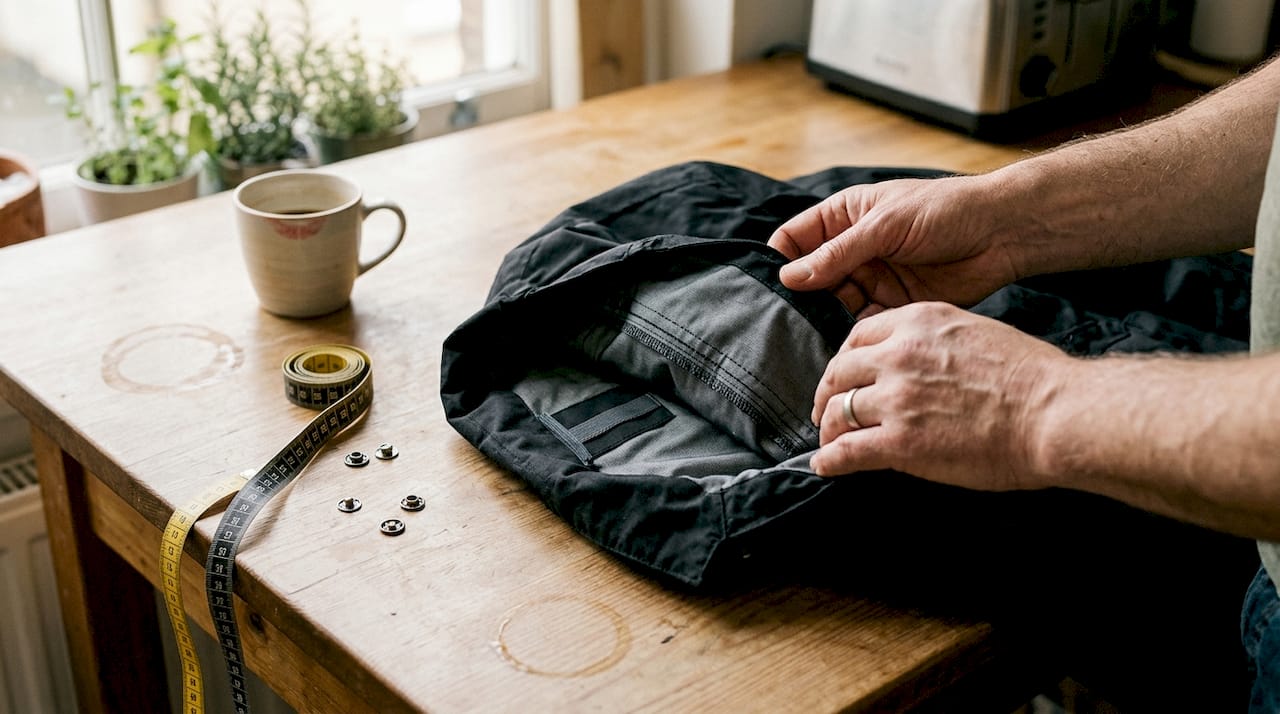
Pro Tip: Always inspect the grain, lining, and hardware in person when possible. Run your fingers along seams, tug gently at stress points, and check that zippers glide smoothly without catching. These small physical checks reveal more than any product description ever will.
Key quality and safety indicators: What to inspect
Now that you understand materials, it’s time to get hands-on with the specific quality markers that separate a premium jacket from one that looks great in photos but disappoints in real life.
For any jacket, start with these visual and tactile checks:
- Grain uniformity: Premium leather shows natural variation. Perfectly uniform grain often signals a corrected or low-grade hide.
- Stitching density: Count the stitches per inch. More stitches mean stronger seams. Loose or uneven stitching is a quality failure.
- Hardware quality: Zippers, snaps, and buckles should feel solid and heavy. Lightweight plastic-feeling hardware wears out fast.
- Lining breathability: Slide your hand inside. A quality lining feels smooth and breathable, not scratchy or plasticky.
- Edge finishing: Raw, unfinished edges on interior panels suggest cost-cutting in production.
These quality indicators including uniform grain, even tight stitching, solid metal hardware, and breathable lining are the most reliable signs of a well-made jacket regardless of brand or price point.
For motorcycle jackets, the stakes are higher. You need to verify safety certifications, not just construction quality. The standard to look for is CE certification. CE-rated Level 1 or 2 armor in shoulders, elbows, and back is non-negotiable for serious riders. Level 2 offers superior impact absorption and is worth the extra cost. Abrasion resistance ratings also matter. Class AA and AAA ratings indicate the jacket can withstand sliding contact at higher speeds.
| Protection rating | Impact absorption | Abrasion resistance | Best for |
|---|---|---|---|
| CE Level 1 | Good | Standard | Casual/urban riding |
| CE Level 2 | Superior | Enhanced | Highway/sport riding |
| Class A | Basic | Entry level | Low-speed use |
| Class AA | Good | Mid-level | General riding |
| Class AAA | Excellent | High performance | High-speed/track |
“The most overlooked safety feature in motorcycle jackets is back protection. Many riders check shoulder and elbow armor but skip the back protector entirely. A CE Level 2 back insert is the single upgrade most likely to prevent a serious injury.” For a step-by-step breakdown of what to look for, the quality check guide covers every inspection point in detail.
Fit and features: Comfort, customization, and common pitfalls
You can have the best materials and the right certifications, but if the jacket doesn’t fit correctly, it fails at both protection and style. Fit is where most buyers make their final and most regrettable mistakes.
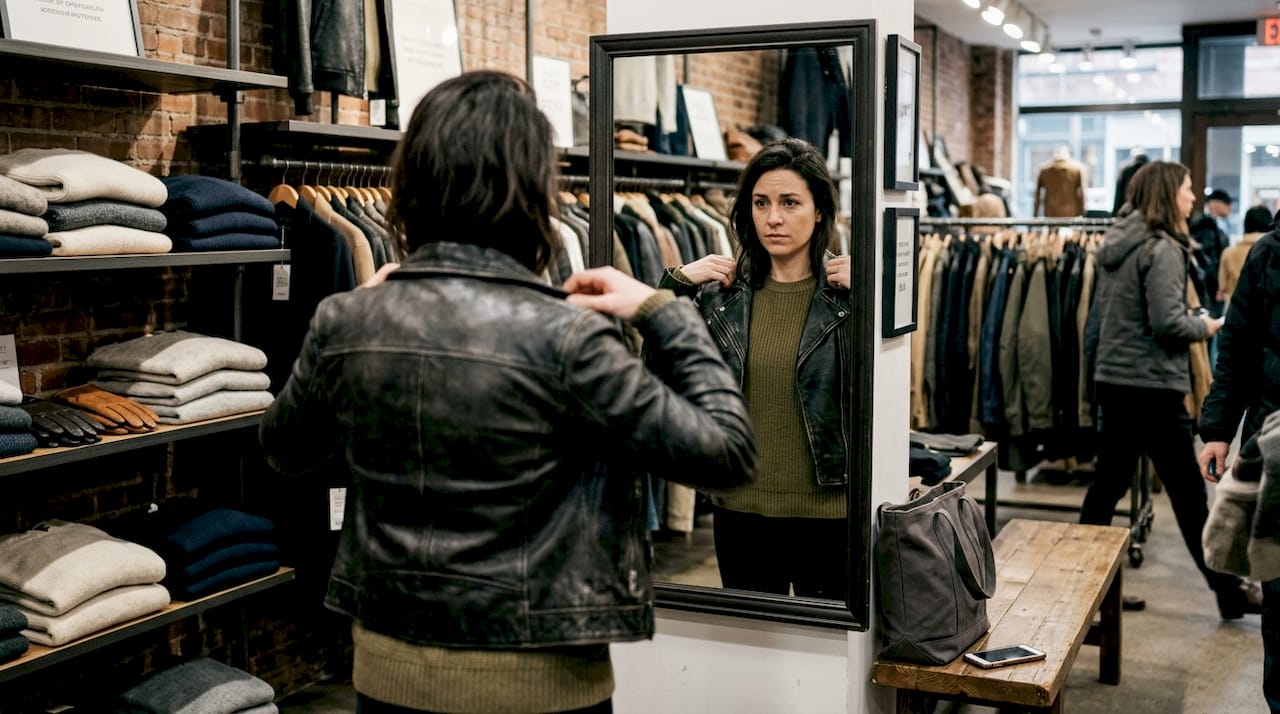
For fashion jackets, poor fit undermines the entire look. A jacket that’s too long in the torso, too wide in the shoulders, or too tight across the chest will never look right no matter how good the leather is. For motorcycle jackets, poor fit creates real danger. Buying too loose allows armor to shift away from the impact zone during a crash. Ignoring climate-specific features like vents and removable liners leads to discomfort that distracts you while riding.
Here’s what to look for during your try-on process:
- Shoulder seams: Should sit exactly at the edge of your shoulder, not drooping down your arm.
- Sleeve length: Wrists should be covered when your arms are extended forward, as in a riding position.
- Chest fit: Snug but not restrictive. You should be able to take a full breath comfortably.
- Pre-curved sleeves: These follow the natural bend of your arms and dramatically improve riding comfort.
- Adjustable cuffs and waist: Allow you to fine-tune fit for layering or different riding positions.
- Gussets under arms: Expand range of motion without pulling the jacket out of position.
The value of jacket fit and comfort is easy to underestimate until you’ve worn a poorly fitting jacket for a full day. Understanding how fit enhances wearability helps you make smarter decisions at the point of purchase. For riders specifically, the guide on jacket fit for motorcycle riders explains how riding posture changes your sizing needs. And if you’re going custom, the custom fit and safety checklist is worth bookmarking.
Pro Tip: If you’re torn between two sizes, always go snugger. A jacket that’s slightly tight can be stretched and broken in. A jacket that’s too loose cannot be fixed without a tailor, and armor placement in a loose moto jacket is genuinely unsafe.
Why checklists matter: Our hard-won lessons buying jackets
Here’s something most jacket guides won’t tell you: the majority of buyer regret doesn’t come from choosing the wrong brand or style. It comes from skipping small checks that seemed unimportant at the time.
We’ve seen it repeatedly. A buyer falls in love with a jacket’s logo and ignores the fact that the lining scratches after an hour of wear. Another rider buys a size up for comfort and discovers their elbow armor sits halfway down their forearm. These aren’t rare edge cases. They’re the norm when people shop without a structured approach.
The lasting value of premium leather only materializes when the jacket actually fits, functions, and holds up over years of use. A checklist isn’t about being overly cautious. It’s about protecting a real investment of both money and time. Spending five extra minutes on a quality inspection before purchase is worth years of better wear and zero regret. The riders and fashion buyers who get this right consistently are the ones who treat jacket shopping like a decision, not an impulse.
Find your perfect jacket with Maker of Jacket
You now have a complete framework for buying a jacket that delivers on style, safety, and long-term value. The next step is finding a source that actually meets those standards.
At Maker of Jacket, every piece in our catalog is built with the quality markers this checklist demands. Whether you’re ready to explore custom jacket options built to your exact measurements and style preferences, browse our full range of handmade leather jackets, or learn more about our customization journey, we make it easy to go from checklist to confident purchase. Worldwide free shipping and a straightforward ordering process mean your ideal jacket is closer than you think.
Frequently asked questions
How can I tell if a leather jacket is real or fake?
Real leather feels warm and supple with irregular natural grain, while synthetics feel cold and uniform and tend to peel or crack over time. Press your palm against the surface for ten seconds. Genuine leather warms up; faux leather stays cool.
What safety features are essential in motorcycle jackets?
Look for CE-rated Level 1 or 2 armor in the shoulders, elbows, and back, along with Class AA or AAA abrasion resistance ratings. Pre-curved sleeves and a secure fit that keeps armor in place during impact are equally important.
Is it better to buy a jacket that’s a little loose or tight?
Always go snugger. A jacket that’s too loose allows armor to shift away from impact zones during a crash, and it undermines the silhouette for fashion wear. A slightly snug jacket breaks in and molds to your body over time.
What price range should I expect for a quality jacket?
Fashion leather starts at $200 and can exceed $1,500, motorcycle gear runs $150 to $1,200 or more, and custom premium jackets start around $600 depending on leather grade and craftsmanship level.


